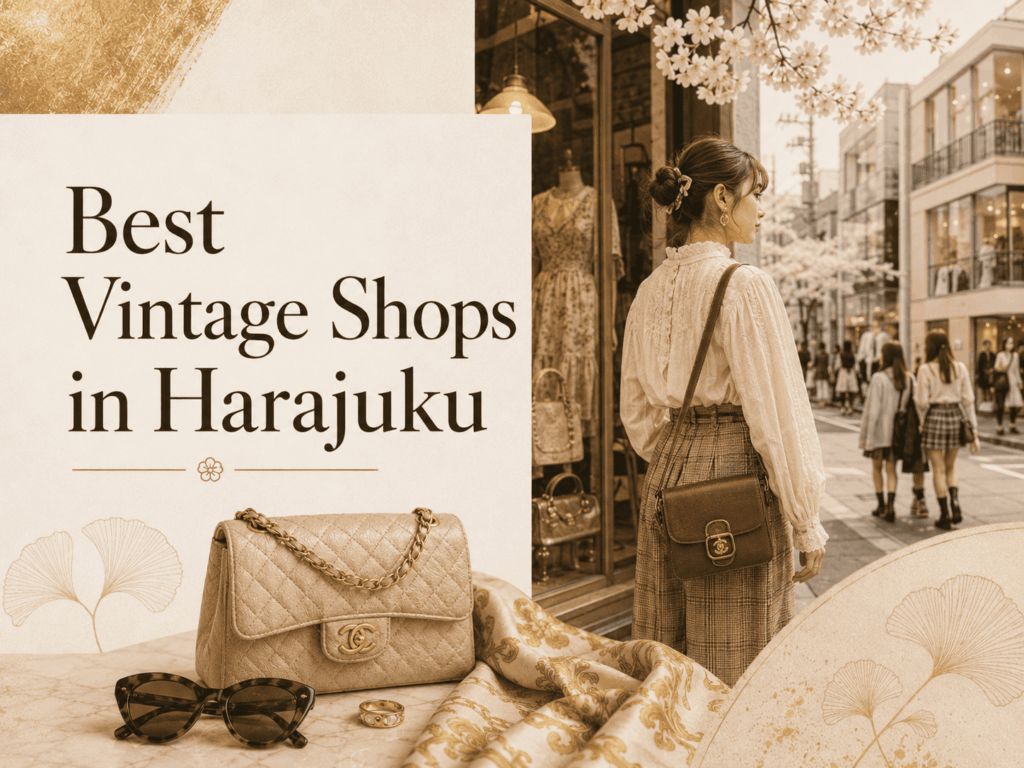
Harajuku can be a useful destination for vintage fashion and designer resale, especially when travelers build the day around practical shop options rather than vague neighborhood advice. It is designed to help travelers compare routes before visiting. It does not claim current inventory, fixed prices, opening hours, tax-free procedures, authentication terms, or specific brand availability. Check the official website and map before visiting.
Instagram DM
Not sure which shops to visit?
JVG Editorial View
Harajuku is useful for fashion-led, youth-culture, and designer resale browsing. Harajuku works well when visitors want clothing, styling ideas, and a route that can connect naturally with Omotesando. International visitors often ask for a direct list of shops, but JVG's editorial view is that the route matters as much as the shop list. A shop can be relevant to your goal and still not have the exact item you imagined on the day you visit. That is why this guide treats each listing as a planning option and encourages travelers to verify details before moving.
This guide is especially useful for travelers interested in vintage fashion and designer resale, first-time visitors, shoppers with limited time, and buyers who want practical shop options. Those readers may have very different needs. One person may want a polished resale environment for a high-consideration purchase, while another may want clothing-led browsing, a convenient stop near a hotel, or a simple way to compare several shop types in one afternoon.
The JVG approach is cautious by design. We do not rank shops by unsupported claims, and we do not assume inventory or policies. Instead, we focus on area fit, category fit, route flow, and the questions travelers should ask before buying. That gives readers a more reliable way to plan a day in Japan, even when shop details change.
Suggested Shopping Route
Use this route as a flexible framework. Check the map before visiting, confirm official shop details, and adjust the order around your hotel, train line, weather, luggage, and energy level.
Half-Day Route
For a half day in Harajuku, begin with the shop type that best matches your category, then add nearby options only if the map supports a simple route. Keep the list short enough for real inspection. Before the first stop, write down one priority: bags, watches, fashion, general resale, route convenience, or comparison research. That simple priority helps you avoid drifting into shops that do not match the purpose of the day.
After each shop, take a short note. Record the shop name, area, category, item condition impression, questions to ask later, and whether the stop deserves a return visit. If you are shopping with someone else, agree on a meeting point or break time so the route stays comfortable.
One-Day Route
For a full day, use Harajuku as the main cluster and add a nearby or complementary area only if it strengthens the route. Leave time for food, transit, and decision breaks. A full day should still have limits. Choose a morning focus and an afternoon focus. If the morning already gives you a strong option, use the afternoon to confirm your decision rather than restart the entire search.
Avoid building the day around exact travel times unless you have checked the map yourself. Station exits, building entrances, crowds, luggage, and meal breaks can all change the real pace. In Harajuku, a shorter route with better notes is usually more useful than a long route that leaves no time for inspection.
Best For Section
Best for First-time visitors
Harajuku can work well when the route is planned around a manageable number of shops.
Best for Vintage fashion and designer resale
The listed shops give travelers a starting point for vintage fashion and designer resale without assuming current inventory.
Best for Careful comparison
The area is more useful when travelers compare condition, category fit, and route convenience.
Best for Limited travel time
A practical shortlist can prevent unnecessary detours.
Best for Route planning
The guide helps readers turn a shop list into a realistic shopping day.
Shop Comparison Notes
BRAND COLLECT Harajuku Takeshita St.
- Area: Harajuku
- Category: fashion
- Best for: fashion-led browsing and condition comparison
- Why it fits this guide: This shop is relevant because the JVG lists it in Harajuku with the category fashion. Use it as a practical route option, not as a claim about current inventory.
- Before visiting: Check the official website and map before visiting.
Kindal Harajuku
- Area: Harajuku
- Category: fashion
- Best for: fashion-led browsing and condition comparison
- Why it fits this guide: This shop is relevant because the JVG lists it in Harajuku with the category fashion. Use it as a practical route option, not as a claim about current inventory.
- Before visiting: Confirm the route from Harajuku Station and check the official website before visiting.
RAGTAG Harajuku
- Area: Harajuku
- Category: fashion
- Best for: fashion-led browsing and condition comparison
- Why it fits this guide: This shop is relevant because the JVG lists it in Harajuku with the category fashion. Use it as a practical route option, not as a claim about current inventory.
- Before visiting: Check the official website and map before visiting.
2nd STREET Aoyama
- Area: Aoyama
- Category: general
- Best for: broader resale context alongside fashion-focused stops
- Why it fits this guide: This shop is relevant because the JVG lists it in Aoyama with the category general. Use it as a practical route option, not as a claim about current inventory.
- Before visiting: Check the official website and map before visiting.
2nd STREET Omotesando
- Area: Omotesando
- Category: general
- Best for: broader resale context alongside fashion-focused stops
- Why it fits this guide: This shop is relevant because the JVG lists it in Omotesando with the category general. Use it as a practical route option, not as a claim about current inventory.
- Before visiting: Check the official website and map before visiting.
ALLU Omotesando
- Area: Omotesando
- Category: general
- Best for: broader resale context alongside fashion-focused stops
- Why it fits this guide: This shop is relevant because the JVG lists it in Omotesando with the category general. Use it as a practical route option, not as a claim about current inventory.
- Before visiting: Check the official website and map before visiting.
JVG Shop Selection Notes
The shops in this guide are included because they fit the route, area, and shopping purpose. Use the list as a practical shortlist, not a fixed ranking, and check official links before visiting.
BRAND COLLECT Harajuku Takeshita St. is included because it gives this Harajuku article a fashion perspective in Harajuku. JVG notes: A second-hand brand store in Harajuku.. Travelers should still confirm current details directly.
Kindal Harajuku is included because it gives this Harajuku article a fashion perspective in Harajuku. JVG notes: A designer resale and vintage fashion shop in Harajuku.. Travelers should still confirm current details directly.
RAGTAG Harajuku is included because it gives this Harajuku article a fashion perspective in Harajuku. JVG notes: A used designer and vintage fashion store in Harajuku.. Travelers should still confirm current details directly.
2nd STREET Aoyama is included because it gives this Harajuku article a general perspective in Aoyama. JVG notes: A 2nd STREET reuse shop for second-hand fashion, bags, watches, and lifestyle items.. Travelers should still confirm current details directly.
2nd STREET Omotesando is included because it gives this Harajuku article a general perspective in Omotesando. JVG notes: A 2nd STREET reuse shop for second-hand fashion, bags, watches, and lifestyle items.. Travelers should still confirm current details directly.
ALLU Omotesando is included because it gives this Harajuku article a general perspective in Omotesando. JVG notes: A curated luxury resale shop in Omotesando.. Travelers should still confirm current details directly.
What to Check Before Visiting
Check the official website before visiting. Store locations, holidays, visitor guidance, available services, and other details may change after a shop entry is created or reviewed.
Confirm the location on Google Maps. Area names are useful for planning, but they are not enough for a real route. Some shops may be inside commercial buildings, near specific station exits, or in streets that are easier to understand once you open the map.
Do not assume current inventory. A shop can be relevant to this guide without currently carrying the exact brand, model, size, color, or condition you want. If one item is the reason for the visit, check official channels or contact the shop before going.
For fashion, inspect fabric, seams, lining, stains, zippers, sizing, odor, and how the piece works with your actual travel wardrobe. If you are comparing several items, write down what is included and what still needs confirmation. Do not rely only on memory.
Prepare your passport if you plan to ask about tax-free procedures, but do not assume a procedure applies. Eligibility and process should be confirmed directly with each shop. JVG does not guarantee store policies.
How to Compare These Shops
The smartest Harajuku route starts with the shop that best matches your goal, then uses the other stops for comparison. If the first few shops answer your questions, you do not need to force every stop. If they do not, use the remaining shortlist to test another shop type or area mood.
Start by comparing shop roles. In this guide, the related shops cover areas such as Aoyama, Harajuku, Omotesando and categories such as fashion, general. That means the smartest route is not always alphabetical or based on the first shop you recognize. Put the shops into roles: first reference point, category comparison, backup option, and optional add-on.
For vintage fashion and designer resale, compare slowly. Ask what you need to know before buying, then step away and review your notes. If the route includes both broad resale shops and category-focused shops, use the broad shops to understand the market and the focused shops to inspect more specific options.
Avoid turning the article title into a promise. A phrase like Best Vintage Shops in Harajuku is a search-friendly starting point, not a guarantee that every traveler should visit every listed shop. The better outcome is a route that matches your category, timing, and comfort level.
Suggested Shop Shortlist
Start with the clearest match
Choose the shop whose area and category best match your main reason for shopping. If your goal is fashion, start with a fashion-focused stop. If your goal is watches or luxury goods, start with a shop that makes comparison easier.
Add one contrast stop
Add one shop that gives you a different resale format or neighborhood mood. Contrast helps you understand whether the first shop was truly a good fit or simply the first place you visited.
Keep one backup option
Keep one backup option for route flexibility. If a shop is crowded, closed, difficult to find, or not relevant after you check the official information, move to the backup rather than forcing the original plan.
Traveler Decision Checklist
Before you leave Harajuku, review your notes as if you were advising another traveler. Which shop helped you compare most clearly? Which item still feels useful after you step away from the rack, display case, or counter? Which question remains unanswered?
Think about luggage and movement. A bulky coat, structured bag, watch box, or fragile accessory can change the rest of your day. If you are moving hotels, taking a train, or continuing sightseeing, make sure the purchase fits your actual travel plan.
Separate excitement from evidence. It is normal to feel excited when you find a promising item, but second-hand shopping rewards careful checks. If condition, fit, accessories, or policy details are unclear, ask before buying or take more time.
Finally, decide whether this area is your final buying location or only your reference point. Sometimes the most valuable result is not a purchase. It is a clearer understanding of what to look for in the next neighborhood.
Related JVG Guides
Use these related JVG guides to compare nearby areas, shop types, and practical shopping questions before you visit:
- Start with vintage shops in Japan.
- Start with thrift stores in Japan.
- For practical shopping preparation, see second-hand shopping tips for international visitors.
- For area planning, use Tokyo vintage shopping guide.
- For a related guide, see Tokyo vintage fashion shopping guide.
Need help planning your vintage shopping route in Japan? Contact JVG for private shopping support.
Shopping Support: /shopping-support/
FAQ
Is Harajuku good for vintage fashion and designer resale?
It can be, depending on your goal and available time. Use the related shops as practical planning options, then check official information before visiting.
Can JVG confirm current inventory at these shops?
No. Inventory changes frequently, and JVG does not confirm live stock. Contact the shop directly if a specific brand, model, size, color, or condition matters.
Should I bring my passport?
Bring your passport if you plan to ask about tax-free procedures, but confirm eligibility and process directly with each shop. Do not assume the same answer applies everywhere.
How many shops should I visit?
For most travelers, three to six well-chosen shops are more useful than a long list. Leave time for map checks, item inspection, breaks, and decision making.
What should I compare before buying?
Compare condition, fit, included accessories, route convenience, and your confidence after a short pause. If a detail affects the purchase, ask the shop before buying.
Continue the shopping journey