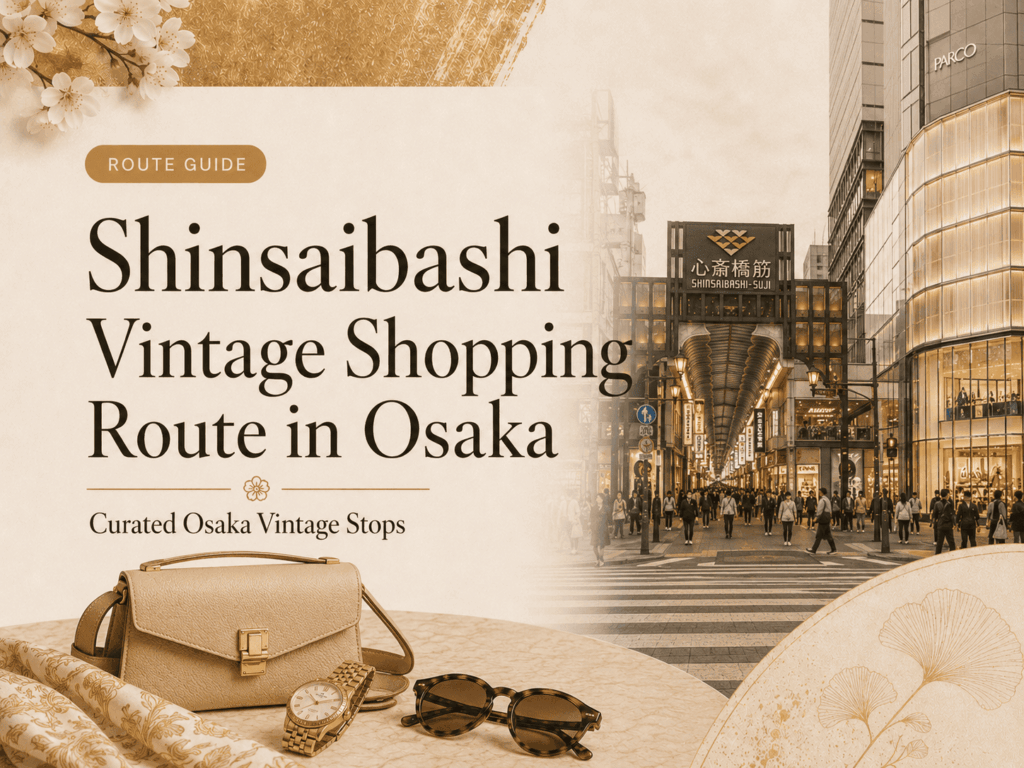
Shinsaibashi is one of Osaka's most useful areas for combining vintage shopping, second-hand fashion, and luxury resale in one focused outing. For international visitors, the main advantage is choice: you can compare different shop styles without making a citywide route the starting point. This guide explains how to organize Shinsaibashi vintage shopping around a clear category, a realistic shortlist, and nearby alternatives.
Start with the item type that matters most to you, then compare a small number of relevant shops before extending the route toward Namba, Amerikamura, or another Osaka area. Inventory, prices, opening hours, tax-free procedures, payment methods, and shop policies can change, so check each official website and map before visiting.
Instagram DM
Not sure which shops to visit?
JVG Editorial View
JVG's editorial view is that Shinsaibashi should be treated as a route, not just a list of shop names. For visitors, the useful question is often practical: should you start near Shinsaibashi Station, stay in one neighborhood, move to another area, or save the next shop for a different day? A strong route reduces wasted transfers and gives you more time to compare condition, accessories, price, and overall fit before making a purchase.
This guide is especially useful for travelers who want Osaka luxury resale, vintage bags, watches, and second-hand shopping without spreading the route too widely. It also works for travelers who have limited time, because the route can be shortened without losing its purpose. If you only have a short window, stay within Shinsaibashi first, then add Namba only if the map and opening details support it. If you have a half day, you can add a second cluster and still leave room for lunch, hotel plans, or sightseeing.
The editorial priority is flexibility. A shop can be useful to include in your plan even if it does not have the exact item you want on the day you visit. Inventory changes frequently, and the better approach is to compare several reasonable options while keeping your expectations specific but not rigid.
How to Get There
Best Starting Station
Shinsaibashi Station is a practical anchor for central Osaka resale shopping, but confirm each shop location before walking. If you are using a JR line, subway line, hotel shuttle, taxi, or airport transfer, the most convenient start may change. Before leaving, open the map, check the official shop location, and decide which exit or street level route makes sense for your day.
Arrival Tips for Visitors
- Save the first shop location before you leave your hotel.
- Confirm whether your route starts from Shinsaibashi Station or another nearby station.
- Avoid planning too many shop visits immediately after a long train ride or flight.
- If you are carrying luggage, check station lockers or hotel storage first.
- Keep your passport accessible if you plan to ask about tax-free shopping, but confirm availability directly with each shop.
Nearby Areas to Consider
Nearby areas that may be useful for the same day include Namba, Higashi-Shinsaibashi, America-mura, Umeda. These areas should not be added automatically. Add them only if the map, weather, opening details, and your energy level make the route realistic. Shinsaibashi is the stronger base when travelers want several resale shops in a compact central Osaka route.
Suggested Shopping Route
Half-Day Route
Start around Shinsaibashi Station and make the first stop the shop that most closely matches your main purpose. If the priority is bags, begin with a bag or luxury resale option. If the priority is fashion, begin with a fashion-focused shop. If the priority is watches, begin with a watch-focused shop. After the first visit, pause for a few minutes and decide whether the next shop should be similar for comparison or different for a broader view of the area.
A practical half-day route can look like this:
- Start with one focused shop near your chosen station.
- Add a second shop with a different resale style.
- Keep a third shop as a backup rather than a fixed appointment.
- Leave time to check item condition, accessories, and return policy details carefully.
- If the area feels crowded, slow the route down instead of adding more stops.
One-Day Route
For a full day, use Shinsaibashi as the main route block and add one nearby area only after the core stops are complete. A full-day route should still have limits. Five or six shops can be enough if you are seriously comparing items. More stops can become tiring, and tired shoppers often rush condition checks.
A full-day route can work well if you divide the day into two parts. Use the morning for the most important category and the afternoon for alternatives. If the first half is focused on luxury bags, use the second half for fashion, watches, or general resale. If the first half is fashion-led, use the second half for calmer comparison or a nearby cafe break before making any purchase decision.
Best For Section
Best for First-Time Visitors
Shinsaibashi is useful for first-time visitors because it gives structure to a shopping day. Instead of moving randomly between famous neighborhoods, you can start from Shinsaibashi Station, compare several shop styles, and decide whether another area is worth the extra time. First-time visitors should prioritize easy navigation, clear official links, and enough time to check item details.
Best for Vintage Bag Shoppers
Bag shoppers should compare condition, size, color, accessories, and price across multiple shops. Do not assume that a specific model will be available. If a shop does not have the item you imagined, use the visit to learn current market feeling, condition language, and what questions to ask at the next stop.
Best for Fashion and Streetwear Browsing
Fashion-focused visitors should allow more time for browsing. Sizing, fabric condition, styling, and seasonal inventory can change quickly. The value of a route is not only finding one item. It is also learning which shop type fits your style before you spend the rest of the day moving between areas.
Best for Limited-Time Travelers
If you have limited time, choose two shops and one backup. This is often better than rushing through six shops. Keep your shopping goal narrow: one bag type, one watch type, one clothing category, or one budget range. A narrow goal makes each stop more useful.
Shop Comparison Notes
ALLU Shinsaibashi
- Area: shinsaibashi
- Category: general
- Nearest station note: Confirm on map
- Why it fits this guide: ALLU Shinsaibashi fits this guide as a general resale and second-hand comparison option in shinsaibashi. It is useful for travelers who want to compare the Shinsaibashi area without assuming current stock, prices, or shop policies. Check the official website and map before visiting. Confirm the closest station and map location before walking.
- Before visiting: Check the official website, map location, and current shop details before visiting.
BRAND OFF Shinsaibashi Store
- Area: shinsaibashi
- Category: general
- Nearest station note: Confirm on map
- Why it fits this guide: BRAND OFF Shinsaibashi Store fits this guide as a general resale and second-hand comparison option in shinsaibashi. It is useful for travelers who want to compare the Shinsaibashi area without assuming current stock, prices, or shop policies. Check the official website and map before visiting. Confirm the closest station and map location before walking.
- Before visiting: Check the official website, map location, and current shop details before visiting.
BRAND OFF Shinsaibashi Annex
- Area: shinsaibashi
- Category: general
- Nearest station note: Shinsaibashi Station
- Why it fits this guide: BRAND OFF Shinsaibashi Annex fits this guide as a general resale and second-hand comparison option in shinsaibashi. It is useful for travelers who want to compare the Shinsaibashi area without assuming current stock, prices, or shop policies. Check the official website and map before visiting. The nearest-station note can help with route planning, but confirm the exact exit before walking.
- Before visiting: Check the official website, map location, and current shop details before visiting.
Gallery Rare Shinsaibashi Main Store
- Area: shinsaibashi
- Category: general
- Nearest station note: Shinsaibashi Station
- Why it fits this guide: Gallery Rare Shinsaibashi Main Store fits this guide as a general resale and second-hand comparison option in shinsaibashi. It is useful for travelers who want to compare the Shinsaibashi area without assuming current stock, prices, or shop policies. Check the official website and map before visiting. The nearest-station note can help with route planning, but confirm the exact exit before walking.
- Before visiting: Check the official website, map location, and current shop details before visiting.
Gallery Rare Higashi-Shinsaibashi
- Area: shinsaibashi
- Category: general
- Nearest station note: Shinsaibashi Station
- Why it fits this guide: Gallery Rare Higashi-Shinsaibashi fits this guide as a general resale and second-hand comparison option in shinsaibashi. It is useful for travelers who want to compare the Shinsaibashi area without assuming current stock, prices, or shop policies. Check the official website and map before visiting. The nearest-station note can help with route planning, but confirm the exact exit before walking.
- Before visiting: Check the official website, map location, and current shop details before visiting.
KOMEHYO Osaka Shinsaibashi
- Area: shinsaibashi
- Category: general
- Nearest station note: Confirm on map
- Why it fits this guide: KOMEHYO Osaka Shinsaibashi fits this guide as a general resale and second-hand comparison option in shinsaibashi. It is useful for travelers who want to compare the Shinsaibashi area without assuming current stock, prices, or shop policies. Check the official website and map before visiting. Confirm the closest station and map location before walking.
- Before visiting: Check the official website, map location, and current shop details before visiting.
OKURA Osaka Main Store
- Area: shinsaibashi
- Category: general
- Nearest station note: Shinsaibashi Station
- Why it fits this guide: OKURA Osaka Main Store fits this guide as a general resale and second-hand comparison option in shinsaibashi. It is useful for travelers who want to compare the Shinsaibashi area without assuming current stock, prices, or shop policies. Check the official website and map before visiting. The nearest-station note can help with route planning, but confirm the exact exit before walking.
- Before visiting: Check the official website, map location, and current shop details before visiting.
2nd STREET Shinsaibashi
- Area: shinsaibashi
- Category: general
- Nearest station note: Confirm on map
- Why it fits this guide: 2nd STREET Shinsaibashi fits this guide as a general resale and second-hand comparison option in shinsaibashi. It is useful for travelers who want to compare the Shinsaibashi area without assuming current stock, prices, or shop policies. Check the official website and map before visiting. Confirm the closest station and map location before walking.
- Before visiting: Check the official website, map location, and current shop details before visiting.
Nearby Alternative Shops
If the first shop does not match your taste, do not treat the day as a failure. Use nearby alternatives to compare condition and shop style. Around Shinsaibashi, a useful backup plan is to keep one similar shop and one different shop in reserve. For example, after checking ALLU Shinsaibashi, BRAND OFF Shinsaibashi Store, BRAND OFF Shinsaibashi Annex, Gallery Rare Shinsaibashi Main Store, you might compare the route with Gallery Rare Higashi-Shinsaibashi, KOMEHYO Osaka Shinsaibashi, OKURA Osaka Main Store, 2nd STREET Shinsaibashi if the map supports the move.
The alternative shop should serve a purpose. Choose it because it helps answer a question: Is the condition better elsewhere? Are prices presented differently? Does the shop type fit your style? Is the area too crowded for careful shopping? This approach is more useful than trying to visit every shop in one list.
How to Compare These Shops
Compare by Route Fit
The first comparison point is route fit. A shop that is easy to reach from your hotel, station, or lunch plan may be more useful than a shop that requires a long transfer. Check the map before visiting and avoid assuming that two places are close just because they are in the same broad area.
Compare by Shopping Purpose
A general resale shop, fashion resale shop, watch shop, and bag-focused shop can all be useful, but they do not serve the same purpose. Before entering, decide what you want to learn from the visit. Are you comparing bag condition? Looking for fashion styling? Checking watches? Seeing general resale prices? A clear purpose helps prevent rushed purchases.
Compare by Item Details
When you find an item that interests you, slow down. Compare exterior condition, interior condition, hardware, stitching, odor, accessories, size, and overall wear. For watches, compare bracelet fit, service information if available, included accessories, and condition language. For clothing, compare sizing, fabric, stains, repairs, and how the item fits your travel wardrobe.
What to Check Before Visiting
- Check the official website before visiting.
- Confirm the location on Google Maps or another map app.
- Check whether the route starts from Shinsaibashi Station or a more convenient nearby station.
- Inventory changes frequently, especially for vintage bags, watches, and fashion.
- Compare item condition, accessories, and price before buying.
- Prepare your passport if you plan to ask about tax-free shopping, but do not assume tax-free availability.
- Do not rely only on social media posts for current stock. Contact the shop directly if one item matters.
- Keep enough time for payment, questions, and careful inspection.
Questions to Ask in the Shop
Useful questions can be simple. Ask whether accessories are included, whether condition details can be explained, whether the shop has current policy information in English, and whether the item can be held while you think. The answer may vary by shop, item, and timing, so treat each visit separately.
JVG Shop Selection Notes
The shops in this guide are included because they fit the route, area, and shopping purpose. They are not ranked in a permanent order. Use them as a practical shortlist, then adjust the route based on your hotel location, train line, map, weather, and the specific category you care about most.
For Shinsaibashi, the main value is not simply having many shops. The value is being able to compare several shop styles in a way that still feels realistic for a visitor. If a shop is not right for your item search, it may still help you understand the local resale market before moving to the next stop.
If You Have Limited Time
If your schedule is tight, use a three-step plan. First, choose the shop that most closely matches your category. Second, choose one nearby alternative with a different style. Third, set a stopping point. A stopping point matters because vintage shopping can become open-ended, especially in a city where another shop is always one more train ride away.
For visitors with only one or two hours, the goal should be research and comparison, not completing every possible stop. Take notes on item condition, price presentation, and what you liked. If you need private help planning a route, JVG can help turn a broad shopping idea into a more focused itinerary.
Related JVG Guides
Use these related JVG guides to compare nearby areas, shop types, and practical shopping questions before you visit:
- For purchase-focused planning, read how to buy second-hand luxury goods in Japan.
- Start with complete guide to second-hand stores in Japan.
- For practical shopping preparation, see second-hand shopping tips for international visitors.
- For area planning, use Osaka vintage shopping itinerary.
- For purchase-focused planning, read how to compare condition when buying used luxury goods in Japan.
Need help planning your vintage shopping route in Japan? Contact JVG for private shopping support.
Shopping Support: /shopping-support/
FAQ
Is Shinsaibashi good for vintage shopping?
Shinsaibashi can be useful for vintage and second-hand shopping if the route matches your purpose. It is especially useful when you start from Shinsaibashi Station, compare a few shop styles, and avoid adding too many stops in one day.
Which station should I use first?
Shinsaibashi Station is the main starting point for this guide, but the best station depends on your hotel, train line, and first shop. Confirm the exact exit and walking route on a map before visiting.
Can I find specific luxury brands in this area?
You may find luxury and designer items, but current inventory changes frequently. Do not assume that a specific brand, model, size, color, or year will be available. Check official websites or contact shops directly when a specific item matters.
Should I visit every shop in this guide?
No. Choose the shops that fit your category and route. A focused route with two to four well-chosen stops is usually more useful than a rushed route with too many shops.
What should tourists check before buying second-hand goods in Japan?
Check condition, accessories, price, payment details, return policy information, and tax-free availability if relevant. Do not assume the same policy applies at every shop. Ask staff or check official information before buying.
Continue the shopping journey