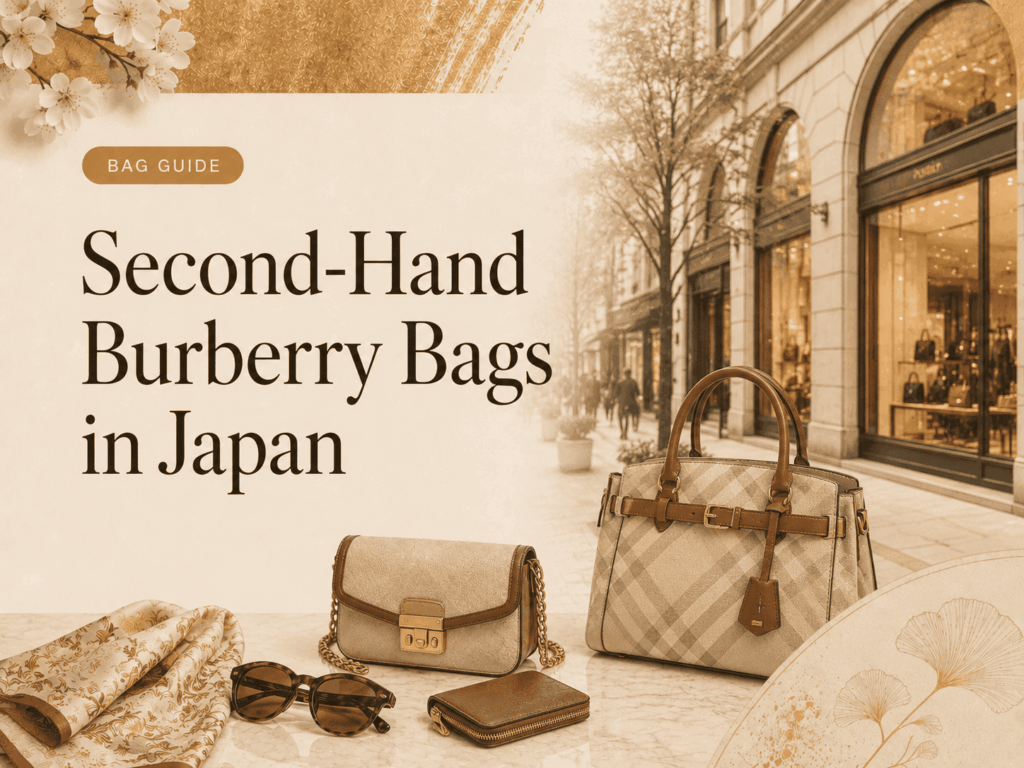
Burberry is one of the designer names travelers often search for when they begin planning luxury resale shopping in Japan. The stronger way to approach second-hand Burberry bags is not to expect one exact item in one exact shop, but to build a calm route where you can compare several resale environments before deciding.
The short answer: Japan can be a strong place to research second-hand Burberry bags if you compare more than one shop, keep your route realistic, and avoid assuming that any listing or guide reflects current inventory. Use this article as a planning guide for international visitors, then confirm locations, store details, and visitor information through official sources before going.
Instagram DM
Not sure which shops to visit?
Quick Answer for Tourists
If you are planning second-hand Burberry bags, start with one route rather than a long list of unrelated shops. In Tokyo, Ginza is useful for classic luxury resale, Omotesando and Aoyama work well for polished vintage-luxury browsing, Shibuya and Harajuku are better for fashion-led resale, and Shinjuku can be practical when it fits your train route. In Kansai, Shinsaibashi is often the easiest luxury resale area to compare. Kyoto works best as a compact central route rather than an all-day bag hunt.
The goal is comparison, not speed. A traveler who visits fewer shops carefully will usually make a better decision than someone who runs through too many stores. Prices, store hours, available brands, tax-free procedures, payment options, and item condition can change, so check the official website before visiting.
JVG Editorial View
This guide is for travelers who want a practical and elegant way to approach second-hand Burberry bags. It is especially useful for:
- Luxury bag shoppers comparing several resale routes before choosing where to spend time
- First-time visitors who do not know the difference between Ginza, Omotesando, Shibuya, Shinsaibashi, and Kyoto routes
- Buyers with limited travel time who want a compact shortlist
- Travelers who care about designer bags but do not want to make a rushed purchase
- Visitors who prefer calm planning over keyword-stuffed shop lists
- People who are already reading JVG bag guides and want a more specific next step
JVG's position is simple: a good Japan shopping route should make comparison easier. It should not pressure you into buying. For higher-value designer bags, the most useful route is one that gives you enough context to walk away confidently if the item, price, condition, or timing does not feel right.
How to Think About Burberry Bags in Japan
When tourists search for second-hand Burberry bags, they are often balancing two different goals. One goal is the emotional side: finding a piece that feels special, travel-worthy, and connected to the trip. The other goal is the practical side: comparing condition, size, accessories, price position, and whether the bag will actually work after the vacation ends.
Japan can be a useful place to research designer resale because major shopping areas often place several second-hand, vintage, and luxury resale shops within a manageable route. That does not mean any shop has current Burberry inventory. Stock changes frequently, and this guide does not make claims about live availability, price, tax-free handling, repair support, or guarantees. Always check official shop information before visiting.
For Burberry, think carefully about how you will use the bag. Some travelers want a classic piece to keep for years. Others want a compact city bag that can be used during the trip. Others are comparing older styles, seasonal designs, or a specific silhouette they have researched before coming to Japan. Your route should support your goal without forcing a rushed decision.
Suggested Shopping Route
Half-day route
For a half-day plan, focus on Shibuya, Harajuku, and Shinjuku for a fashion-focused Tokyo route. Start with the shop that is easiest to reach from your hotel or nearest station, then move to the next stop only after checking the map. Station exits, underground passages, department store floors, and narrow side streets can make routes feel longer than they look.
Before starting, decide what you want to compare. For a brand-specific search, prepare two or three acceptable shapes, sizes, or colors rather than one exact item. For an area guide, decide whether your goal is luxury resale, fashion-led second-hand, or a general browsing route. This keeps the day focused without making it rigid.
One-day route
For a one-day plan, combine one main area with one secondary area. In Tokyo, that might mean Ginza plus Omotesando, or Omotesando plus Shibuya. In Kansai, Shinsaibashi can be paired with Kyoto only if the rest of your trip already makes that movement realistic. For Kyoto, a one-day plan should usually leave enough space for sightseeing, meals, and breaks.
Do not place your most important decision at the end of an exhausting route. If you see something promising, take notes, step outside, and compare what you have learned. Inventory can change, but fatigue can also distort judgment.
Best For Breakdown
Best for first-time visitors
Choose areas with several shops close enough to compare without losing the whole day to transit. First-time visitors usually benefit from seeing different shop types: broad resale, curated vintage, fashion-led second-hand, and luxury-focused shops.
Best for brand-focused shoppers
For brand-focused searches, use the route as research. A shop may be relevant even if it does not have your exact item that day, because it helps you understand condition, sizing, pricing, and how different resale environments present designer bags.
Best for limited travel time
Limit the route to three to five meaningful stops. If you have only half a day, a smaller route is better. Check the official website and map before visiting, and keep enough time to inspect carefully.
Best for careful buyers
Careful buyers should write down their non-negotiables before entering shops. Include size, strap length, weight, preferred condition range, color flexibility, accessories, and whether you need the bag to fit into luggage.
Shop Comparison Notes
BRAND COLLECT Shibuya
- Area: Shibuya
- Category: fashion
- Best for: designer fashion context, accessories, and fashion-led resale browsing
- Why it fits this guide: BRAND COLLECT Shibuya is useful for travelers planning second-hand Burberry bags because it gives a real stop to compare route fit, shop style, and category relevance. BRAND COLLECT Shibuya is a second-hand brand store operated in the Tokyo metropolitan area, suitable for visitors looking for luxury, fashion, or vintage brand items.
- Before visiting: Check the official website and map before visiting.
RAGTAG Shibuya
- Area: Shibuya
- Category: fashion
- Best for: designer fashion context, accessories, and fashion-led resale browsing
- Why it fits this guide: RAGTAG Shibuya is useful for travelers planning second-hand Burberry bags because it gives a real stop to compare route fit, shop style, and category relevance. RAGTAG Shibuya is part of RAGTAG, a used designer and vintage fashion store group in Japan. It is suitable for visitors looking for curated second-hand fashion and branded clothing.
- Before visiting: Check the official website and map before visiting.
Kindal Shibuya
- Area: Shibuya
- Category: fashion
- Best for: designer fashion context, accessories, and fashion-led resale browsing
- Why it fits this guide: Kindal Shibuya is useful for travelers planning second-hand Burberry bags because it gives a real stop to compare route fit, shop style, and category relevance. Kindal Shibuya sells curated second-hand designer fashion and accessories. It is a useful stop for visitors interested in Japanese resale and vintage fashion culture.
- Before visiting: Confirm the route from Shibuya Station and check official shop information before visiting.
RAGTAG Harajuku
- Area: Harajuku
- Category: fashion
- Best for: designer fashion context, accessories, and fashion-led resale browsing
- Why it fits this guide: RAGTAG Harajuku is useful for travelers planning second-hand Burberry bags because it gives a real stop to compare route fit, shop style, and category relevance. RAGTAG Harajuku is part of RAGTAG, a used designer and vintage fashion store group in Japan. It is suitable for visitors looking for curated second-hand fashion and branded clothing.
- Before visiting: Check the official website and map before visiting.
BRAND COLLECT Harajuku
- Area: Harajuku
- Category: streetwear
- Best for: luxury resale comparison and practical route planning
- Why it fits this guide: BRAND COLLECT Harajuku is useful for travelers planning second-hand Burberry bags because it gives a real stop to compare route fit, shop style, and category relevance. BRAND COLLECT Harajuku is a second-hand brand store operated in the Tokyo metropolitan area, suitable for visitors looking for luxury, fashion, or vintage brand items.
- Before visiting: Check the official website and map before visiting.
2nd STREET Shibuya
- Area: Shibuya
- Category: general
- Best for: luxury resale comparison and practical route planning
- Why it fits this guide: 2nd STREET Shibuya is useful for travelers planning second-hand Burberry bags because it gives a real stop to compare route fit, shop style, and category relevance. 2nd STREET is a nationwide Japanese reuse shop chain offering second-hand fashion, bags, watches, accessories, and lifestyle items. This draft row should be reviewed against the official store detail page before publishing.
- Before visiting: Check the official website and map before visiting.
RAGTAG Shinjuku
- Area: Shinjuku
- Category: fashion
- Best for: designer fashion context, accessories, and fashion-led resale browsing
- Why it fits this guide: RAGTAG Shinjuku is useful for travelers planning second-hand Burberry bags because it gives a real stop to compare route fit, shop style, and category relevance. RAGTAG Shinjuku is part of RAGTAG, a used designer and vintage fashion store group in Japan. It is suitable for visitors looking for curated second-hand fashion and branded clothing.
- Before visiting: Check the official website and map before visiting.
KOMEHYO Shinjuku Store
- Area: Shinjuku
- Category: general
- Best for: luxury resale comparison and practical route planning
- Why it fits this guide: KOMEHYO Shinjuku Store is useful for travelers planning second-hand Burberry bags because it gives a real stop to compare route fit, shop style, and category relevance. KOMEHYO Shinjuku Store is a pre-owned luxury resale shop in Shinjuku, suitable for visitors seeking bags, watches, jewelry, and branded items.
- Before visiting: Check the official website and map before visiting.
JVG Shop Selection Notes
The shops listed here are included as practical route options for second-hand Burberry bags. They are not ranked permanently. They also do not guarantee current availability of any brand, model, size, color, condition, accessory, or price.
For brand-specific guides, read the list as a set of useful research stops. A shop can help you compare designer resale even if it does not carry the exact brand or model you want on the day you visit. If a specific bag is the main reason for your trip, check official shop information before visiting.
For area guides, the shortlist is designed to help you decide whether the city or neighborhood can support a realistic route. A compact route with fewer shops can be better than a long list if it gives you enough time to inspect calmly.
How to Compare These Shops
Compare the area first
The best shop on paper may not be the best shop for your day. Consider your hotel, train route, meals, sightseeing plans, and whether you can return later. A realistic route protects you from rushed decisions.
Compare shop style
A luxury resale shop, a curated vintage boutique, a designer fashion resale shop, and a general second-hand chain can all offer different browsing experiences. Use that variety to understand what kind of purchase you are actually looking for.
Compare the item in the same order
Use the same inspection order each time: exterior, corners, handles, strap, glazing or edges, stitching, hardware, zipper, lining, odor, shape, included accessories, and travel practicality. Consistency helps you notice details calmly.
Compare total cost and practicality
Do not look only at the shelf price. Think about exchange rate, payment method, potential tax-free procedure, luggage space, rain, airport handling, and whether you will carry the item during the rest of the trip. Confirm anything important directly with the shop.
What to Check Before Visiting
- Check the official website before visiting.
- Confirm the location on Google Maps or another map app.
- Store hours, holidays, floors, and visitor guidance can change.
- Inventory changes frequently, especially for designer bags.
- Do not assume a shop has a specific brand, model, color, or size.
- Compare item condition, accessories, and price before buying.
- Prepare your passport if you plan to ask about tax-free shopping, but do not assume tax-free availability.
- Ask staff for current payment, shipping, hold, repair, or return information if it matters to your purchase.
- Take a short break before making a high-value decision.
Useful Internal Guides
- For broader planning, read complete guide to vintage bags in Japan.
- For broader planning, read used designer bags in Japan.
- For broader planning, read where to buy used luxury bags in Japan.
- For broader planning, read how to buy second-hand luxury goods in Japan.
- For broader planning, read second-hand shopping tips for international visitors.
Use these guides to connect this article to your wider shopping plan. The broad bag guides help you choose a category, the area guides help you choose where to go, and the shopping tips guide helps you avoid common traveler mistakes.
Planning Tips for International Visitors
If you do not speak Japanese, prepare simple screenshots and written notes. A photo of the style you like, a brand name, a size range, and a short color preference can help staff understand what you are looking for. Keep your questions simple and avoid asking staff to promise anything they cannot confirm.
Useful questions include whether you can inspect the item, whether accessories are included, whether the shop can explain current tax-free procedures, and whether payment details can be confirmed before purchase. If the item is expensive, take your time. A calm pause can be more useful than another shop visit.
Shopping Support CTA
Need help planning your vintage shopping route in Japan? Contact JVG for private shopping support.
Shopping Support: /shopping-support/
If you are planning a focused second-hand shopping day in Japan, JVG can help you organize areas, shop types, and realistic routes. This is especially useful if you are looking for specific categories such as vintage bags, designer resale, watches, or luxury accessories and want to avoid losing time between neighborhoods.
FAQ
Can I reliably find Burberry bags in Japan?
Japan can be useful for researching second-hand Burberry bags, but no shop should be treated as a guarantee of current inventory. Stock changes frequently, so confirm official information before visiting if a specific item matters.
Which area should I visit first?
For Tokyo brand searches, Ginza, Omotesando, Shibuya, and Shinjuku are practical starting points. For Kyoto, keep the route around central shopping areas such as Shijo and Kawaramachi when possible.
Are used designer bags always cheaper in Japan?
Not necessarily. Prices depend on item condition, accessories, demand, exchange rates, and each shop's pricing. Compare carefully rather than assuming Japan is always cheaper.
Should I ask about tax-free shopping?
You can ask, and you should prepare your passport if tax-free shopping is part of your plan. However, tax-free availability, conditions, and procedures vary, so confirm directly with the shop.
How many shops should I visit in one day?
For most travelers, three to six shops is enough for a useful comparison day. More than that can become tiring, especially if you are inspecting higher-value bags carefully.
Continue the shopping journey