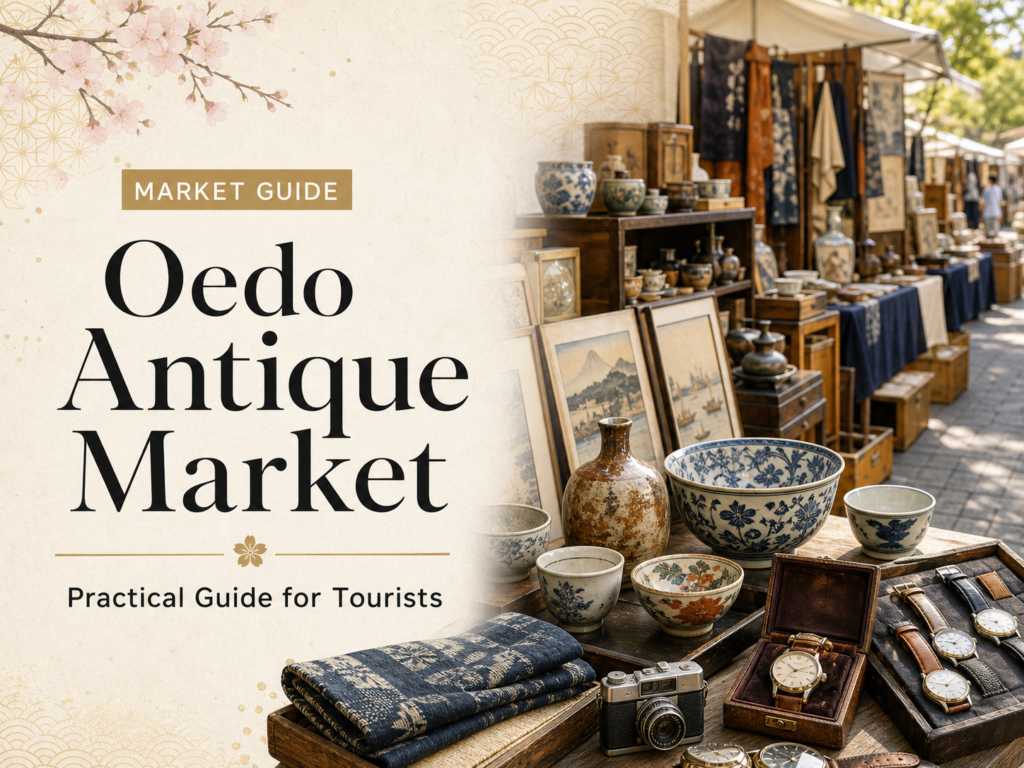
Oedo Antique Market is one of Tokyo's most visible antique-market experiences for international visitors, but a successful visit still begins with current confirmation. The organizer publishes dates and operational notices, and outdoor conditions can affect an event. Check the official page close to your visit instead of relying on a recurring schedule quoted elsewhere.
This guide answers the planning questions that matter before a visitor goes: what kind of market fits the search, how to verify that it is operating, what to inspect, how to handle payment questions, and what to do if the event changes. It does not promise a particular seller, item, price, schedule, admission rule, or service. Always check the organizer or venue information close to the visit.
Instagram DM
Not sure which shops to visit?
Quick Answer for Tourists
Start with the date, not the shopping list. Find a current notice from the organizer or venue, confirm the event name and location, read any weather or cancellation message, and save the page on your phone. Then decide whether the stated market type fits what you want to browse. A flea market, antique market, craft market, and general weekend market can offer very different products.
Arrive with flexible expectations. Markets are strongest for discovery because every seller brings a different mix. If you need one exact bag model, watch reference, clothing size, camera body, or collectible, a permanent specialist or reuse store may be a more reliable route. Keep one fixed-store option in the same city as a backup.
JVG Editorial View
JVG sees Oedo Antique Market as a strong introduction to dealer-based antique browsing because travelers can compare many object types in one setting. The market is not a substitute for specialist appraisal, and the presence of a dealer does not remove the buyer's responsibility to inspect condition, ask questions, and understand payment and return terms.
The value of a market is not measured only by whether you buy something. It can help travelers understand materials, styles, regional objects, seller language, and the difference between mass resale and individual-dealer curation. A useful visit leaves enough time to look carefully, ask permission before handling or photographing, and walk away when information is unclear.
JVG does not rank individual dealers or certify items. Every purchase remains item-specific. Ask the seller what they know, inspect within the event rules, and decide based on the object, information provided, total price, portability, and your own comfort level.
Flea Market, Antique Market, or Craft Market?
Flea Market
A flea market may contain household goods, clothing, accessories, toys, hobby items, small furniture, tools, and miscellaneous used objects. Some sellers may be individuals, while others may be regular dealers. The term does not guarantee age, rarity, condition, or a particular product category.
Antique Market
An antique market usually signals a stronger focus on older objects, decorative arts, textiles, ceramics, prints, coins, toys, or collectibles. That label is not an appraisal. Age, authorship, material, repairs, and origin can be difficult to confirm, especially when communication is limited.
Craft or Mixed Market
Craft markets may feature handmade new products, food, plants, and design goods. Mixed events can include both new and used sellers. Read the current event description so you do not arrive expecting second-hand goods at an event centered on contemporary craft.
Temple, Shrine, or Neighborhood Event
The venue may be a religious or community space rather than a commercial facility. Follow local etiquette, keep entrances and worship areas clear, and respect photography rules. Event operation should never be inferred solely from the temple, shrine, park, or plaza being open.
What You May Find
Ceramics and Tableware
Look for chips, hairline cracks, repairs, unstable bases, and surface wear. Ask before handling fragile objects and consider safe transport home.
Textiles and Clothing
Inspect stains, fading, odors, tears, alterations, fiber damage, and size. Older textiles may require careful storage rather than immediate travel use.
Prints, Paper, and Small Art
Check edges, moisture damage, foxing, framing, signatures, and any explanation provided by the dealer. Do not infer age or authorship from appearance alone.
Toys, Watches, Jewelry, and Collectibles
Condition and function can be difficult to judge at a market. Ask what the seller knows, what is included, and whether any return or guarantee applies before payment.
Vendor selection changes from one event to the next. Even a recurring market may feel different because of season, weather, attendance, and the dealers who participate. Treat category examples as possibilities, not a live inventory list.
How to Confirm the Event Before You Go
Check the Oedo Antique Market organizer page for the current date, venue, opening information, weather decision, and visitor rules. Do not rely on a generic monthly pattern.
Use this sequence:
- Confirm the exact event name; different markets may use similar venue descriptions.
- Check the current date rather than a generic recurring pattern.
- Confirm the venue and nearest access point shown for that date.
- Read cancellation, rain, heat, or severe-weather notices.
- Check whether the organizer states any admission rule or visitor restriction.
- Review photography, baggage, pet, food, and handling guidance when available.
- Recheck on the morning of the visit if the event is outdoors.
Screenshots and old blog posts are useful for inspiration but not final confirmation. A recurring market can skip a month, move, change hours, reduce vendors, or cancel for weather and operational reasons.
Suggested Shopping Route
Use the confirmed market as the first activity, when you have energy to inspect items and ask questions. Afterward, continue with Marunouchi, Ginza, or Yurakucho plans only if they fit the venue shown on the current official notice. Keep one permanent shop cluster as a weather or cancellation backup.
Before Leaving the Hotel
Save the event page, venue map, one transit route, and one fixed-store backup. Carry only what you can manage while browsing. Large suitcases make narrow aisles, fragile objects, and crowded transport harder. Check lockers independently because availability and size cannot be guaranteed.
At the Market
Walk through one section before buying immediately unless the item is truly unique and you are comfortable with the information provided. Note dealer positions if the event map allows it. Ask before taking close photographs, especially when people, artworks, or privately owned objects are visible.
After the Market
Review purchases, packaging, and receipts before moving on. If you bought fragile goods, reconsider a crowded or distant afternoon route. A nearby cafe, museum, or fixed-store cluster can be more realistic than another market across the city.
Best For Breakdown
Best for first-time antique-market visitors
The event format makes comparison possible within one visit. Confirm the current event and keep a permanent-store alternative before traveling.
Best for ceramics, textiles, and small objects
These categories often suit travelers when condition and packing are considered. Confirm the current event and keep a permanent-store alternative before traveling.
Best for central Tokyo itineraries
The market can pair with a nearby city-center plan when the current venue is confirmed. Confirm the current event and keep a permanent-store alternative before traveling.
Best for browsers without a fixed brand target
Dealer variety favors discovery over guaranteed inventory. Confirm the current event and keep a permanent-store alternative before traveling.
JVG Shop Selection Notes
The following permanent shops are not presented as market vendors. They are fixed-store alternatives in the same city for travelers who need a more predictable address, a different category, or a backup after cancellation. Their inventory, hours, policies, and services still change and should be checked directly.
2nd STREET Ginza
- Area: Ginza
- Role: A permanent-store alternative when the market schedule, weather, or vendor mix does not suit the trip.
- Before visiting: Check the current address, product categories, hours, and map on the business website. Inventory and visitor services are not confirmed here.
ALLU Ginza
- Area: Ginza
- Role: A permanent-store alternative when the market schedule, weather, or vendor mix does not suit the trip.
- Before visiting: Check the current address, product categories, hours, and map on the business website. Inventory and visitor services are not confirmed here.
BRAND OFF Ginza Main Store
- Area: Ginza
- Role: A permanent-store alternative when the market schedule, weather, or vendor mix does not suit the trip.
- Before visiting: Check the current address, product categories, hours, and map on the business website. Inventory and visitor services are not confirmed here.
BOOKOFF PLUS Ueno-Hirokoji
- Area: Ueno
- Role: A permanent-store alternative when the market schedule, weather, or vendor mix does not suit the trip.
- Before visiting: Check the current address, product categories, hours, and map on the business website. Inventory and visitor services are not confirmed here.
How to Compare These Markets
Compare Event Type
Ask whether the current event is flea, antique, craft, food, or mixed. A broad event can be entertaining but inefficient for a narrow category. An antique-focused event can support deeper object comparison but may demand more knowledge and caution.
Compare Seller Information
Some sellers can explain age, material, repair, or origin; others may provide limited information. Language access varies. A confident story is not a substitute for documentation or item inspection. If the answer affects whether you would buy, make sure you understand it before payment.
Compare Condition and Portability
Check chips, cracks, repairs, stains, tears, odor, missing parts, unstable fittings, corrosion, and signs of moisture where relevant. Consider weight, airline baggage, customs rules, and safe packing. A large bargain can become an expensive problem if it cannot travel safely.
Compare the Backup Plan
A strong itinerary survives a canceled market. The backup should be a permanent district, reuse store, museum, or sightseeing plan that suits the same part of the city. Do not cross the entire city solely because one event is unavailable.
Payment, Negotiation, and Purchase Terms
Payment methods vary by dealer. Carrying some Japanese yen may be useful, but do not assume every seller accepts cash only or that cards and digital payments are available. Ask before committing to an item. Keep cash secure and separate from your passport.
Negotiation customs vary. A polite question may be acceptable in some settings, while aggressive bargaining can be unwelcome. Begin by showing genuine interest and asking for the stated price. Never pressure a seller, and accept a clear refusal. The objective is a respectful exchange, not winning every transaction.
Returns, exchanges, receipts, guarantees, repairs, shipping, and tax-free procedures can differ by seller and event. Confirm the terms before payment. Market sales may be final, but this should not be assumed without asking. Prepare your passport if you plan to ask about tax-free shopping, while recognizing that eligibility is not guaranteed.
Authenticity, Age, and Condition
JVG cannot authenticate an item from a market description or photograph. The word antique does not guarantee a specific age, maker, provenance, material, or value. Reproductions, later versions, repaired pieces, and objects with incomplete histories can appear in any market environment.
For higher-value art, jewelry, watches, branded goods, or collectibles, ask what information and documentation the seller provides. If you cannot evaluate the item confidently, pause the purchase or seek appropriate independent expertise. A memorable travel experience does not require taking an uncertain item home.
Shopping Without Speaking Japanese
Prepare short questions and a translation app. Useful questions include:
- "May I pick this up?"
- "Is there any damage or repair?"
- "What material is this?"
- "What is included?"
- "Do you accept cards?"
- "Can I have a receipt?"
- "Are returns or exchanges possible?"
- "May I take a photo?"
Show the item while asking and confirm numbers carefully. If a translated answer remains unclear, do not pretend to understand. Sellers may be busy, so keep questions focused and respectful.
What to Check Before Visiting
- Check the current organizer or venue page.
- Confirm the date, location, and access for that specific event.
- Read weather, cancellation, and seasonal notices.
- Confirm any admission or visitor rule directly.
- Bring a manageable bag and protection for fragile purchases.
- Prepare cash and another payment method without assuming either will work.
- Ask before handling, photographing, or filming.
- Inspect condition and ask about repairs or missing parts.
- Confirm receipts, returns, shipping, and tax-free procedures before payment.
- Keep a fixed-store or sightseeing backup.
Related JVG Guides
- second-hand stores in Japan
- how reuse shops work in Japan
- thrift stores in Japan for international visitors
- shopping tips for international visitors
- Japanese second-hand shopping terms
- Japan's second-hand shopping cities
Planning Support
If you are trying to combine a market with fixed second-hand stores, JVG can help you choose realistic areas and backup routes. Market planning is most useful when dates, weather, luggage, and specialist categories need to fit one travel day.
Need help planning your vintage shopping route in Japan? Contact JVG for private shopping support.
Shopping Support: /shopping-support/
FAQ
Are flea markets in Tokyo open every weekend?
Do not assume so. Some events are recurring, seasonal, irregular, or weather-dependent. Check the current organizer or venue information for your actual travel date.
Do I need cash?
Cash may be useful, but payment methods vary by seller. Ask before buying and keep another payment option available without assuming it will be accepted.
Can tourists negotiate prices?
Practices vary. A polite question may be acceptable, but aggressive bargaining is not. Respect the stated price and the seller's answer.
Are market items authentic antiques?
The market name does not guarantee age, origin, maker, authenticity, or value. Inspect the item, ask what information is available, and seek specialist advice for higher-value purchases.
What happens if it rains?
Policies differ. Outdoor events may cancel, shorten, move, or continue. Check the current notice close to the event and keep a permanent-store or sightseeing backup.
Can I return an item?
Return and exchange terms vary by seller and may be restrictive. Ask before payment and keep any receipt or seller information provided.
Continue the shopping journey