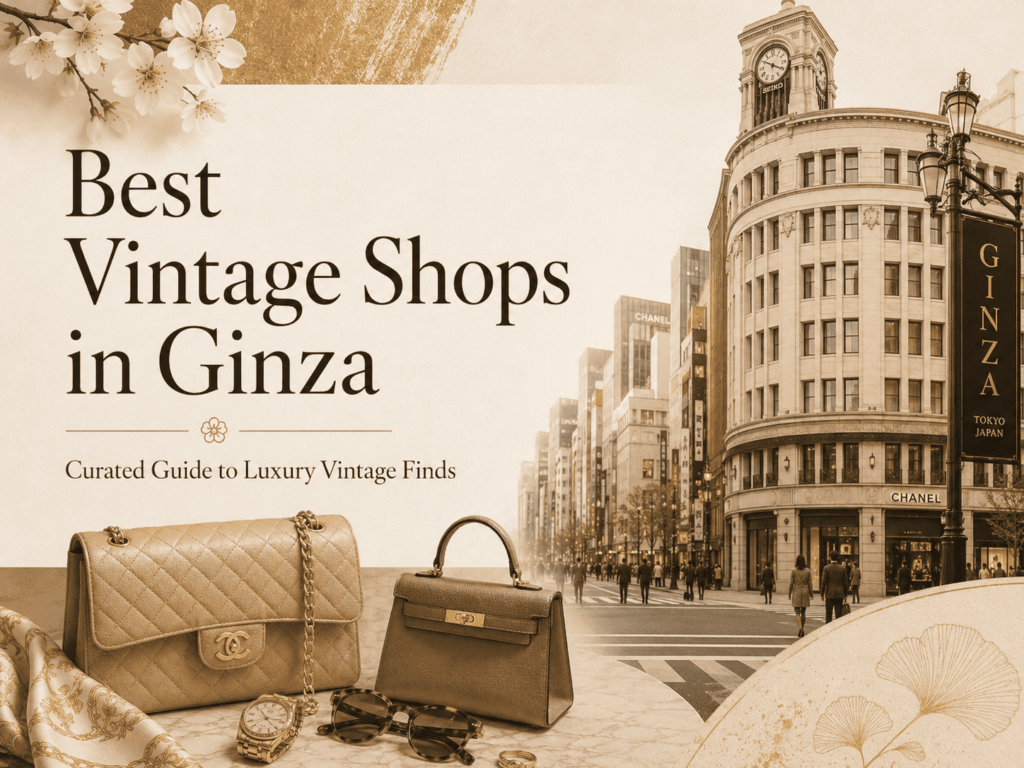
Ginza vintage shopping is best for travelers who want second-hand luxury, refined vintage bags, watches, jewelry, and polished resale shops in one central Tokyo area. If you are searching for vintage shopping in Ginza, use this guide to plan a realistic route rather than a rushed list of shop names. Ginza works especially well when you want to compare condition, accessories, shop atmosphere, and nearby alternatives before buying.
- Area: Ginza, central Tokyo
- Category focus: second-hand luxury, vintage bags, watches, jewelry, and designer resale
- Best for: first-time visitors, luxury shoppers, and tourists with limited time
- Route value: a compact comparison area that can be paired with Tokyo Station, Yurakucho, Omotesando, or Shibuya
Inventory, prices, opening details, tax-free procedures, repair terms, warranty terms, and return policies can vary by shop and by item. Check the official website and map before visiting, and use this article as a planning guide for comparing shops calmly.
Instagram DM
Not sure which shops to visit?
JVG Editorial View
JVG sees Ginza as a comparison district rather than a bargain-hunting district. If your idea of vintage shopping is digging through racks for casual streetwear, Ginza may not be the only area you need. If your goal is to compare second-hand luxury goods, refined vintage bags, watches, jewelry, or carefully presented resale items, Ginza becomes much more useful.
For first-time visitors, Ginza is easier to understand than many Tokyo shopping areas. The streets are broad, landmarks are clear, and several shops are concentrated around a central luxury retail zone. That makes it suitable for travelers who want to keep the route manageable. It is also helpful for people who are nervous about comparing expensive second-hand goods in a foreign country, because Ginza encourages a slower, more careful shopping style.
For luxury bag shoppers, Ginza is useful because it lets you compare condition, color, size, accessories, and price across several resale environments. Do not assume that a particular model or brand will be in stock. Use the area to understand the range, then compare carefully.
For watch shoppers, Ginza can be paired with a dedicated watch route because JVG includes watch-focused Ginza entries as well as broader luxury resale shops. Watch buyers should still confirm current details directly with each shop before visiting.
For travelers with limited time, Ginza is one of the easiest areas to combine with other Tokyo plans. You can shop for a few hours, take a break, and still continue to a department store, restaurant, or another nearby area. The main mistake is rushing. Ginza rewards patient comparison more than speed.
Suggested Shopping Route
Use this as a flexible route framework, not a fixed map. Always check the map before visiting, confirm official information, and build your own route around the shops that matter most to your category.
Half-Day Route
Start with a clear priority. If your main goal is bags or luxury accessories, begin with broader resale shops such as ALLU Ginza, BRAND OFF Ginza Main Store, Daikokuya Ginza, KOMEHYO Ginza, or KOMEHYO Ginza Plus. These shops are useful options for comparing luxury resale categories, but the exact inventory will vary.
After your first two stops, pause and write down what you saw. Note item condition, visible wear, included accessories, price, and whether you need to ask about payment or tax-free procedures. Preparing a passport can be useful if you plan to ask about tax-free shopping, but availability and conditions should be confirmed directly with each shop.
For the second half of the route, add a different kind of Ginza stop. Atlantis Vintage Ginza and Casanova Vintage Ginza are useful for a more vintage-focused luxury bag and fashion angle. 2nd STREET Ginza can be relevant for a broader reuse or fashion comparison. The value of the route is not only finding one item; it is learning how different shop types present second-hand goods.
One-Day Route
For a full day, use Ginza as your careful comparison base. Begin with general luxury resale shops in the morning, take a break, then continue with vintage-focused or category-specific stops in the afternoon. If you also want watches, add a Ginza watch stop or save part of the day for a Tokyo watch route. If your focus shifts toward streetwear or casual vintage fashion, consider continuing to Shibuya, Harajuku, or Omotesando after Ginza.
Do not schedule too many shops too tightly. Second-hand shopping takes time because condition checks matter. A shorter list with better notes is more useful than a long list you cannot evaluate.
Best For Section
Best for Luxury Bag Shoppers
Ginza is especially useful for travelers comparing pre-owned luxury bags and accessories. The district gives you several resale formats in one area, from broader second-hand luxury stores to vintage-focused boutiques. Compare corners, handles, hardware, interior condition, included accessories, and overall usability. Do not treat price as the only decision point.
Best for Watch and Jewelry Comparison
Ginza can work well for high-consideration items, including watches and jewelry, because the area supports a more deliberate shopping pace. If a specific model matters, check official websites or contact shops before visiting. Inventory can change quickly.
Best for First-Time Visitors
First-time visitors often benefit from Ginza because it is central, easy to combine with other plans, and less chaotic than some fashion districts. It is also a good place to learn how Japanese resale shops describe condition and present accessories.
Best for Refined Vintage Fashion
If your goal is refined designer resale or vintage bags rather than low-priced digging, Ginza can be a strong fit. For casual streetwear, use Ginza as one stop within a wider Tokyo plan.
Best for Careful Buyers
Ginza is best for travelers who want to compare, pause, and make a calm decision. If you have only one afternoon in Tokyo, choose fewer shops and inspect items carefully.
Shop Comparison Notes
ALLU Ginza
- Area: Ginza
- Category: General resale
- Best for: Visitors comparing luxury resale options in central Ginza
- Why it fits this guide: ALLU Ginza is useful for travelers who want a polished resale comparison route in central Ginza.
- Before visiting: Check the official store list and map before visiting.
BRAND OFF Ginza Main Store
- Area: Ginza
- Category: General resale
- Best for: Brand resale shoppers who want a central Ginza stop
- Why it fits this guide: This shop helps travelers compare second-hand luxury categories within the same Ginza shopping day.
- Before visiting: Confirm current details through the official store page.
2nd STREET Ginza
- Area: Ginza
- Category: General resale
- Best for: Travelers who want to compare Ginza with a broader reuse format
- Why it fits this guide: 2nd STREET Ginza adds a wider second-hand shopping angle to a route that may otherwise feel mostly luxury-focused.
- Before visiting: Check official shop information and avoid assuming specific inventory.
Atlantis Vintage Ginza
- Area: Ginza
- Category: General resale
- Best for: Visitors interested in vintage luxury style
- Why it fits this guide: Atlantis Vintage Ginza gives the route a style-led resale option for shoppers comparing bags and accessories.
- Before visiting: Check official and source links before building a route around it.
Casanova Vintage Ginza
- Area: Ginza
- Category: General resale
- Best for: Vintage bag and fashion comparison
- Why it fits this guide: This shop is relevant for travelers who want a more vintage-focused Ginza stop rather than only broad resale shops.
- Before visiting: Inventory can change, so verify current details before visiting.
Daikokuya Ginza
- Area: Ginza
- Category: General resale
- Best for: Second-hand luxury research
- Why it fits this guide: Daikokuya Ginza is useful as part of a practical comparison route for visitors checking condition and included accessories.
- Before visiting: Use official links to confirm store details and ask directly about any purchase conditions that matter.
KOMEHYO Ginza Plus
- Area: Ginza
- Category: General resale
- Best for: Luxury goods and accessories comparison
- Why it fits this guide: KOMEHYO Ginza Plus helps round out a Ginza route for travelers comparing second-hand luxury options in the same central area.
- Before visiting: Check the official website and map before visiting.
KOMEHYO Ginza
- Area: Ginza
- Category: General resale
- Best for: First-time resale shoppers who want a calm comparison stop
- Why it fits this guide: KOMEHYO Ginza is useful as part of a structured route where travelers compare condition, accessories, and overall buying confidence.
- Before visiting: Check the official website and map before visiting.
JVG Shop Selection Notes
ALLU Ginza and BRAND OFF Ginza Main Store are useful central Ginza resale stops for travelers to check before visiting. They are useful for travelers who want to compare luxury resale options in a central area.
2nd STREET Ginza is useful when the article needs a broader reuse angle. It should not be described as having a fixed inventory, but it can help travelers compare Ginza's luxury-focused feel with a wider second-hand retail format.
Atlantis Vintage Ginza and Casanova Vintage Ginza are relevant because they add a vintage-focused luxury and fashion perspective. They fit readers who are interested in designer bags and style-led resale, but visitors should confirm current details before visiting.
Daikokuya Ginza, KOMEHYO Ginza, and KOMEHYO Ginza Plus help round out the comparison route for second-hand luxury research. Use them as practical options, not as guarantees of specific brands or items.
What to Check Before Visiting
Check the official website before visiting. This is the safest habit for travelers because locations, opening details, and store policies may change.
Confirm the exact location on Google Maps before leaving your hotel. Some Ginza shops may be inside buildings or near station exits that are easy to miss. A neighborhood name alone is not enough.
Remember that inventory changes frequently. Even if a shop is relevant to luxury bags or watches, that does not mean a specific model, color, size, or condition will be available.
Compare condition, accessories, and price before buying. For bags, check corners, handles, hardware, interiors, odor, and included accessories. For watches, compare model details, condition, bracelet fit, and documents if provided. For fashion, check fabric, stains, zippers, seams, and fit.
Prepare your passport if you plan to ask about tax-free shopping, but confirm eligibility and procedures directly with each shop. Do not assume the same policy applies everywhere.
How to Make a Better Buying Decision in Ginza
The best Ginza shopping day is not the fastest one. Before you buy, compare at least two options when possible. Ask yourself whether the item still feels strong after a short break. Write down the condition notes in plain language, not only the price. If the price is attractive but the condition bothers you, it may not be the right travel purchase.
Travelers should also think about luggage and aftercare. A large bag, watch box, or fragile accessory can affect the rest of the day. If you are leaving Japan soon, make sure you are comfortable carrying the item and storing any included accessories.
Traveler Decision Checklist
Before you leave Ginza, review your notes as if you were advising another traveler. Which shop helped you compare most clearly? Which item had the strongest condition for your needs? Which purchase still feels useful after you step away from the display case? This small pause is especially important in Ginza because the polished environment can make many items feel more tempting than they may feel later in the trip.
For bags, compare the item against your actual travel use. A beautiful bag may not be the best choice if it is too delicate, too large for your luggage, or difficult to carry during the rest of the day. Check whether straps, pouches, cards, dust bags, or other accessories are included only when those details matter to your decision. Do not assume every item includes the same accessories.
For watches and jewelry, think about comfort and documentation as well as appearance. A watch that looks good in the display case still needs to fit your wrist and your travel plans. Jewelry should be checked for size, condition, and whether you are comfortable transporting it. Ask the shop directly if a detail is unclear.
For fashion and accessories, inspect the piece in better light if possible. Look at fabric, seams, lining, zippers, stains, and odor. Vintage and second-hand items can have character, but the condition should match your expectations.
Finally, decide whether Ginza is the end of your route or the beginning of your comparison. If the item is not clearly right, it may be better to continue to Omotesando, Shibuya, Harajuku, Shinjuku, or another area that fits your category. Ginza is valuable because it gives you a serious reference point, even when you decide not to buy there.
Related JVG Guides
Use these related JVG guides to compare Ginza with nearby category-specific planning:
- second-hand stores in Ginza - Use this for a broader Ginza resale route beyond vintage-only shopping.
- pre-owned luxury bags in Ginza - Best if bags are your main Ginza category.
- vintage watch shops in Ginza - Useful for travelers comparing watches in central Tokyo.
- second-hand jewelry in Ginza - Helpful when jewelry is part of your Ginza resale day.
- how to buy second-hand luxury goods in Japan - Use this before making higher-value purchase decisions.
Need help planning your vintage shopping route in Japan? Contact JVG for private shopping support.
Shopping Support: Plan your route with JVG
FAQ
Is Ginza good for vintage shopping?
Yes, Ginza can be useful for vintage and second-hand shopping, especially if you are comparing luxury resale, watches, bags, jewelry, and refined fashion. If you want casual thrift digging or streetwear, pair Ginza with another Tokyo area.
Are these shops guaranteed to have specific brands?
No. Current inventory can change. Check the official website before visiting and contact the shop directly if a specific model or brand matters.
How many shops should I visit in Ginza?
For a half-day, three to five carefully chosen shops can be enough. For a full day, add more stops only if you still have time to compare condition and accessories calmly.
Should I bring my passport?
Bring your passport if you plan to ask about tax-free shopping. Availability, eligibility, and procedures should be confirmed directly with each shop.
Is Ginza better than Shibuya for vintage shopping?
It depends on your goal. Ginza is stronger for polished comparison and luxury resale. Shibuya may be better for fashion, streetwear, and a younger shopping atmosphere.
Continue the shopping journey