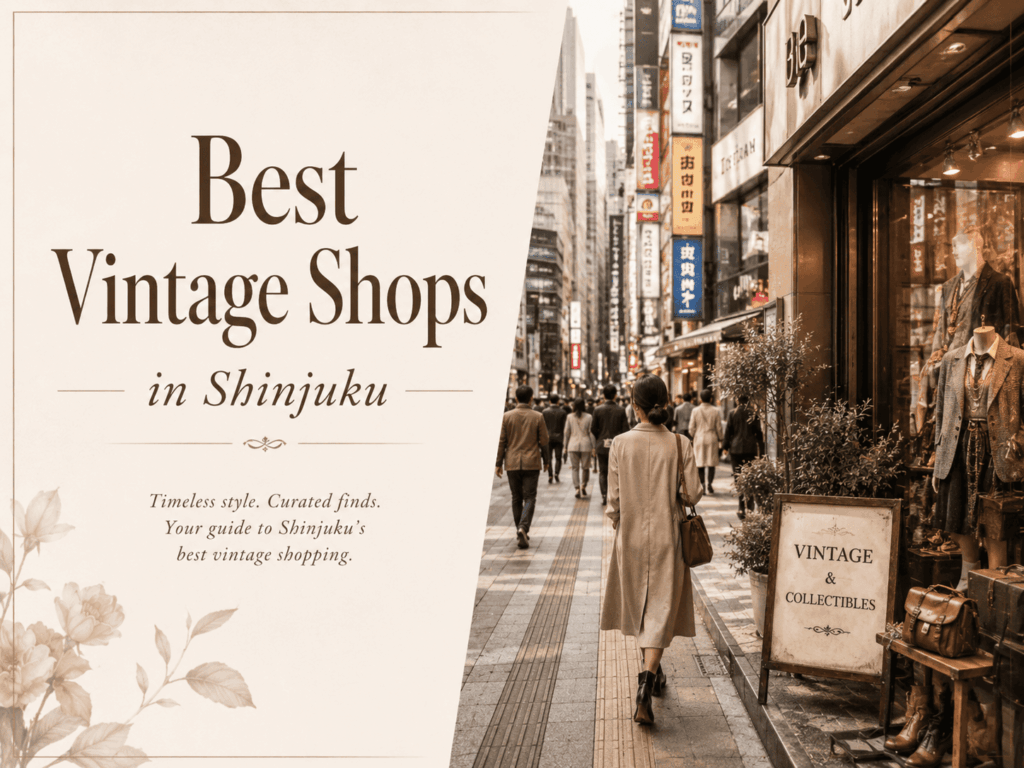
Shinjuku is one of Tokyo's most practical areas for travelers who want second-hand shopping to fit around transport, hotels, restaurants, and evening plans. It is not only a nightlife district. JVG includes resale, reuse, and luxury-oriented options in Shinjuku, which makes it useful for visitors who want a compact shopping route without leaving the west side of Tokyo. This article focuses on practical shop options and route planning while avoiding assumptions about current inventory, prices, opening details, tax-free procedures, or authentication policies. Check the official website before visiting.
Instagram DM
Not sure which shops to visit?
Quick Answer: Shinjuku Second-Hand Stores
Shinjuku is one of Tokyo's easiest areas for travelers who want second-hand stores, vintage browsing, and used luxury bag comparison in the same day. It is especially useful when you are staying near Shinjuku or want resale shopping to fit around trains, hotels, restaurants, and evening plans.
If your search is focused on second hand luxury bags in Shinjuku, use this area as a comparison route rather than a single-shop answer. Start with the most relevant resale shop, then compare nearby second-hand or luxury resale options before deciding whether Ginza or Omotesando deserves a separate bag-focused day.
JVG Editorial View
Shinjuku is a convenience-first resale area: strong for practical routing, varied shop formats, and travelers who need flexibility. International visitors often search for a simple list of shops, but a better JVG article should help them decide where to spend limited travel time. Shinjuku is especially relevant for travelers staying near Shinjuku, first-time visitors, resale comparison shoppers, luxury researchers, and buyers who want a route near major train connections. Those readers do not all need the same route, so this guide separates area logic, buying priorities, and pre-visit checks.
JVG's editorial view is that second-hand shopping in Japan should be planned with the same care as restaurant reservations or train transfers. A shop may be perfectly relevant to your goal and still not have the item you imagined on the day you visit. That is why this guide focuses on route design, shop type, and comparison behavior rather than making strong claims about stock.
For luxury resale shoppers, the key is to compare condition, accessories, and confidence across several environments. For fashion shoppers, the key is to compare fabric, fit, styling, and how the piece will work during travel. For first-time visitors, the key is keeping the route understandable. A strong shopping day is not the day with the most stops; it is the day where you can make calm decisions.
Suggested Shopping Route
Use this route as a flexible framework rather than a fixed itinerary. Check the map before visiting, confirm official shop details, and adjust the order around your hotel, train line, and energy level.
Half-Day Route
Begin with the shops closest to your station exit or hotel area, then add two nearby resale stops. Shinjuku can be confusing above and below ground, so use the map before walking. If you are shopping for higher-consideration goods, leave time after the first stop to compare notes rather than rushing across the district. Before the first stop, write down your main buying goal in plain language. For example, you might be comparing black leather shoulder bags, designer outerwear, pre-owned watches, or general reuse shops. That small note keeps the route from turning into unfocused browsing.
After each shop, pause for one minute and record what you learned. Note the area, item category, condition impression, included accessories if they matter, and any question you would need to ask before buying. Avoid relying only on memory, because multiple shops can blur together quickly.
One-Day Route
For a full day, Shinjuku can work as either the main route or the final comparison area after Ginza or Shibuya. If you start here, use the morning for general resale and the afternoon for more focused luxury or fashion checks. If you end here, keep the list shorter so you still have enough energy to inspect condition carefully. A full-day route should still have a limit. Choose a morning cluster and an afternoon cluster, then leave room for food, station transfers, and a final decision break. If you are buying a higher-value item, do not schedule the purchase at the end of an exhausting route. You need enough attention left to inspect details.
If the route starts to feel rushed, remove a stop. A shorter route with better comparison notes is more useful than visiting every shop name on a list. This is especially true when you are shopping in a language or city layout that is not familiar.
Best For Section
Best for Travelers based near Shinjuku
The area is helpful when your hotel or train plans already bring you here.
Best for General resale comparison
Shinjuku has several general resale options, which makes it useful for comparing shop formats in one district.
Best for Luxury research
Luxury-oriented resale shops can help travelers compare condition and accessories, but specific items should be confirmed directly.
Best for Efficient routes
A focused Shinjuku route can fit into a half day more easily than a cross-city itinerary.
Best for Evening plans
Because Shinjuku has many restaurants and transport options, shopping can sit naturally before dinner or another plan.
Shop Comparison Notes
BRAND OFF Shinjuku Store
- Area: Shinjuku
- Category: general
- Best for: luxury resale comparison in Shinjuku
- Why it fits this guide: It gives travelers a broader resale reference point without assuming a specific item is available.
- Before visiting: Check the official website and map before visiting.
2nd STREET Shinjuku
- Area: Shinjuku
- Category: general
- Best for: general reuse shopping near Shinjuku Station
- Why it fits this guide: It gives travelers a broader resale reference point without assuming a specific item is available.
- Before visiting: Confirm the route from Shinjuku Station and check the official website before visiting.
2nd STREET Shinjuku 2nd
- Area: Shinjuku
- Category: general
- Best for: adding another general reuse comparison point in Shinjuku
- Why it fits this guide: It gives travelers a broader resale reference point without assuming a specific item is available.
- Before visiting: Confirm the route from Shinjuku Station and check the official website before visiting.
ALLU Shinjuku
- Area: Shinjuku
- Category: general
- Best for: polished resale comparison in Shinjuku
- Why it fits this guide: It gives travelers a broader resale reference point without assuming a specific item is available.
- Before visiting: Check the official website and map before visiting.
BOOKOFF Shinjuku Yasukuni-dori
- Area: Shinjuku
- Category: general
- Best for: broad second-hand browsing in Shinjuku
- Why it fits this guide: It gives travelers a broader resale reference point without assuming a specific item is available.
- Before visiting: Check the official website and map before visiting.
Daikokuya Shinjuku 2nd Building
- Area: Shinjuku
- Category: general
- Best for: luxury resale research in Shinjuku
- Why it fits this guide: It gives travelers a broader resale reference point without assuming a specific item is available.
- Before visiting: Check the official website and map before visiting.
Daikokuya Shinjuku Main Store
- Area: Shinjuku
- Category: general
- Best for: adding another Shinjuku luxury resale comparison point
- Why it fits this guide: It gives travelers a broader resale reference point without assuming a specific item is available.
- Before visiting: Check the official website and map before visiting.
Gallery Rare Shinjuku-Higashiguchi
- Area: Shinjuku
- Category: general
- Best for: luxury goods comparison near Shinjuku Station
- Why it fits this guide: It gives travelers a broader resale reference point without assuming a specific item is available.
- Before visiting: Confirm the route from Shinjuku Station and check the official website before visiting.
JVG Shop Selection Notes
The shops below are included because their area and shop type match the purpose of this guide. The goal is not to rank them in a fixed order, but to give travelers a practical shortlist they can check before visiting.
BRAND OFF Shinjuku Store is included because it gives travelers a practical general resale or second-hand reference point in Shinjuku. Use it as a planning option, not as a guarantee of current inventory, price, or service terms.
2nd STREET Shinjuku is included because it gives travelers a practical general resale or second-hand reference point in Shinjuku. Use it as a planning option, not as a guarantee of current inventory, price, or service terms.
2nd STREET Shinjuku 2nd is included because it gives travelers a practical general resale or second-hand reference point in Shinjuku. Use it as a planning option, not as a guarantee of current inventory, price, or service terms.
ALLU Shinjuku is included because it gives travelers a practical general resale or second-hand reference point in Shinjuku. Use it as a planning option, not as a guarantee of current inventory, price, or service terms.
BOOKOFF Shinjuku Yasukuni-dori is included because it gives travelers a practical general resale or second-hand reference point in Shinjuku. Use it as a planning option, not as a guarantee of current inventory, price, or service terms.
Daikokuya Shinjuku 2nd Building is included because it gives travelers a practical general resale or second-hand reference point in Shinjuku. Use it as a planning option, not as a guarantee of current inventory, price, or service terms.
Daikokuya Shinjuku Main Store is included because it gives travelers a practical general resale or second-hand reference point in Shinjuku. Use it as a planning option, not as a guarantee of current inventory, price, or service terms.
Gallery Rare Shinjuku-Higashiguchi is included because it gives travelers a practical general resale or second-hand reference point in Shinjuku. Use it as a planning option, not as a guarantee of current inventory, price, or service terms.
What to Check Before Visiting
Check the official website before visiting. Store details, location guidance, holidays, and visitor policies may change, and use this article as a planning reference rather than live confirmation.
Confirm the location on Google Maps. Neighborhood names are helpful, but they are not enough for a real shopping route. Some shops may be inside buildings, near station exits, or in areas where similar street names can be confusing.
Remember that inventory changes frequently. Do not assume a shop currently has a specific brand, model, size, color, year, or condition. If one item is the reason for your visit, contact the shop or check official channels before going.
Compare item condition, accessories, and price context before buying. For bags, check corners, handles, hardware, interior, odor, and included accessories. For clothing, check fabric, seams, stains, zippers, sizing, and lining. For watches, check fit, visible condition, accessories, and any information the shop provides.
Prepare your passport if you plan to ask about tax-free procedures, but do not assume availability. Eligibility, procedure, and item handling should be confirmed directly with each shop.
How to Compare These Shops
Shinjuku rewards a route that is practical rather than romantic. Pick the exits and shop order before you start, because the station area can make a simple plan feel larger than it is. If your priority is luxury resale, compare condition and included accessories across several shops. If your priority is general reuse, compare category breadth and overall convenience. The smartest Shinjuku route is the one that keeps you from backtracking.
A useful method is to compare shops by role. One shop may be your luxury resale reference point, another may be useful for fashion browsing, and another may simply help you understand the local second-hand market. Treat each stop as a source of information. If you buy, buy because the item fits your needs after comparison, not because the route made you feel pressured.
Keep a simple note format on your phone: shop, item, condition, question, and next step. This works better than a long paragraph and helps you compare quickly later. If you are traveling with someone else, share the route in advance so the day stays manageable.
Traveler Decision Checklist
Before you leave Shinjuku, review your notes. Which shop helped you compare most clearly? Which item still feels useful after you step away from the display case or rack? Which question remains unanswered? If the answer is unclear, wait or ask the shop directly.
Think about luggage and travel movement. A fragile item, bulky coat, large bag, or watch box can affect the rest of the day. If you are moving hotels or taking a train later, make sure the purchase fits the trip, not only the moment.
Also consider your home-country rules and aftercare needs. JVG does not provide legal, customs, repair, or authentication advice, so buyers should check relevant rules independently when needed. The safest travel purchase is one you understand, can carry comfortably, and still want after a short pause.
Related JVG Guides
Use these related JVG guides to compare nearby areas, shop types, and practical shopping questions before you visit:
- Start with vintage shops in Japan.
- Start with complete guide to second-hand stores in Japan.
- For practical shopping preparation, see second-hand shopping tips for international visitors.
- For area planning, use Tokyo vintage shopping guide.
- For a related guide, see how to shop second-hand in Japan without speaking Japanese.
Need help planning your vintage shopping route in Japan? Contact JVG for private shopping support.
Shopping Support: /shopping-support/
FAQ
Is Shinjuku good for vintage shopping?
Yes, Shinjuku can be useful for vintage and second-hand shopping when the route matches your goal. Use the shop list as a planning shortlist, then check official websites before visiting.
Can JVG confirm current inventory at these shops?
No. JVG can identify relevant shop options from the current guide, but inventory changes frequently. Contact the shop directly if a specific brand, model, size, or condition matters.
Should I bring my passport for second-hand shopping in Japan?
Bring your passport if you plan to ask about tax-free procedures, but do not assume availability or eligibility. Confirm details directly with each shop before buying.
How many shops should I visit in one day?
For most travelers, three to six well-chosen shops are more useful than a long list. Leave time for map checks, item inspection, breaks, and decision making.
What should I compare before buying?
Compare condition, included accessories, fit, usability, price context, and your confidence after stepping away from the item. If a detail is unclear, ask the shop before purchasing.
Continue the shopping journey