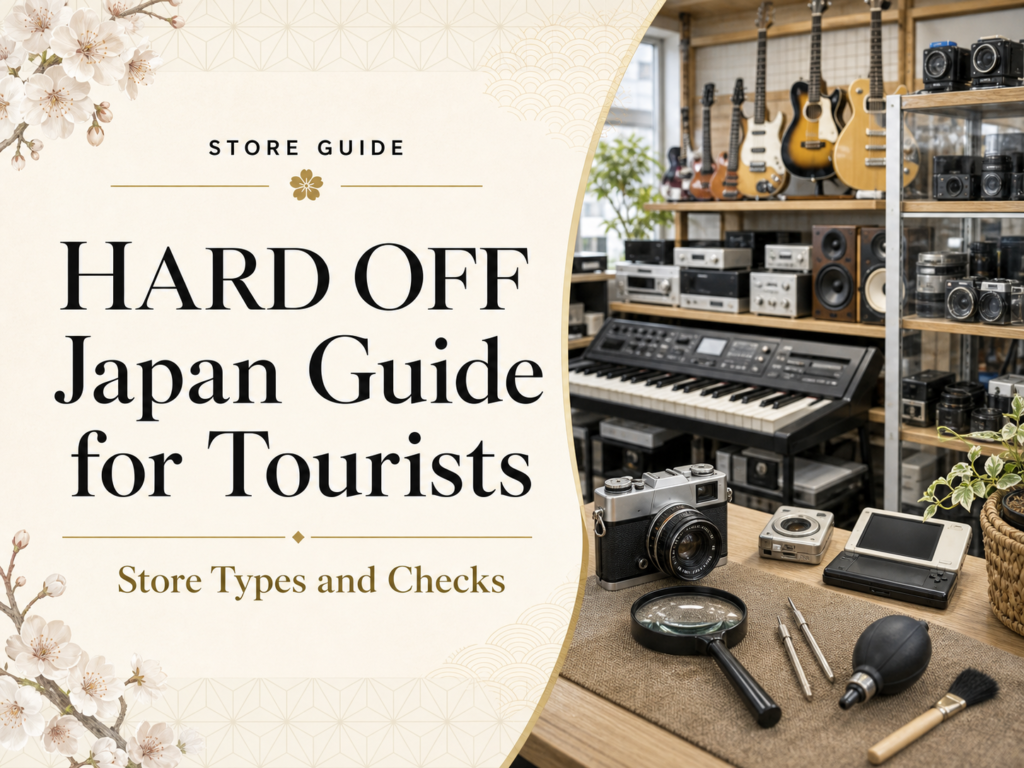
The quick answer for tourists is that HARD OFF should be planned branch by branch. The broader OFF store family uses different store names and category concepts, and even two locations with the same sign can have different merchandise, floor space, testing information, and local character. Never assume that a HARD OFF location has a particular camera, audio component, game console, instrument, computer, watch, tool, or collectible today.
Start with the official shop search, identify the exact store concept and listed categories, then decide whether the transport makes sense. Many locations are outside the visitor districts where first-time tourists spend most of their time, so a speculative trip can consume a half day. A realistic plan includes access, compatibility checks, luggage, and one backup activity.
Instagram DM
Not sure which shops to visit?
Quick Answer for Tourists
Choose HARD OFF when used electronics, audio, instruments, cameras, computers, games, or related equipment are central to your search and the exact branch information supports the trip. Consider OFF HOUSE, HOBBY OFF, MODE OFF, GARAGE OFF, or another related concept only after confirming what that exact location is intended to handle. Co-located signs do not mean every department shares one inventory or purchase policy.
Branch merchandise varies because used goods arrive locally and store layouts differ. Some locations may emphasize categories that are barely present elsewhere. Check official details shortly before travel and contact the shop when one model or category is the sole reason for the journey.
JVG Editorial View
JVG sees HARD OFF as a destination for prepared category shoppers, not an automatic stop for every Japan itinerary. The appeal lies in browsing used equipment and comparing unfamiliar items, but technical compatibility and transport can create more risk than with a simple clothing purchase.
The store sign is only the first filter. The exact branch, category, item label, test status, included accessories, voltage, region, language, and purchase terms matter more. A low displayed price cannot make incompatible equipment useful.
Tourists should also value time. A suburban branch may be enjoyable when it fits a day trip or several members of a group have relevant interests. It is less sensible when the entire plan depends on one uncertain product and a tight return connection.
Understand the OFF Store Concepts
HARD OFF
The HARD OFF name is commonly associated with used electronics and equipment categories, which may include audio, instruments, cameras, computers, games, or tools depending on the branch. Treat that as a direction for research, not a branch-level promise. Check the exact store page and ask about the relevant department.
OFF HOUSE
OFF HOUSE may point toward home, lifestyle, clothing, furniture, or household reuse categories. The mix can differ substantially by location, and large items may be impractical for travelers. Confirm category, dimensions, transport, and any testing or delivery information before planning around an item.
HOBBY OFF
HOBBY OFF may be relevant to figures, toys, models, cards, games, and other hobby goods. Collectors should confirm edition, completeness, language, condition, and package status. Ask before opening, operating, or closely handling protected products.
MODE OFF
MODE OFF may be relevant to second-hand fashion. Size labels, condition, fabric, odor, alterations, and return terms require item-level inspection. Do not assume that a co-located HARD OFF has the same merchandise or checkout conditions.
GARAGE OFF and other concepts
GARAGE OFF and other OFF-family names may indicate still different category intentions. Automotive goods, tools, outdoor items, or large equipment can pose fit, safety, customs, and transport questions. Visitors should research the exact item and local rules before purchase.
Choose a Store by Category
Cameras and lenses
Confirm mount, sensor or film format, voltage, battery, charger, language menus, included caps, accessories, and any displayed test information. Inspect lens glass for scratches, haze, fungus-like marks, separation concerns, and mechanical operation only as staff permits. A short in-store test cannot answer every long-term reliability question.
If photography is your main goal, compare HARD OFF with a camera specialist rather than assuming a general reuse store is the right final seller.
Audio equipment
Check voltage, plug, frequency considerations, channels, connectors, remote controls, cartridges, cables, speakers, dimensions, weight, and shipping feasibility. Vintage audio can be heavy and fragile. Ask what operation was checked and what remains untested.
Musical instruments
Inspect structural condition, neck or key action, electronics, hardware, included case, accessories, and transport limits. Ask staff before tuning, plugging in, or playing. Airlines and customs may impose practical constraints beyond the shop purchase.
Games and computers
Confirm region, language, operating system, keyboard layout, storage, power supply, controllers, cables, accounts, locks, and included media. Older equipment may need accessories that are hard to source during a short trip.
Junk-labeled or untested items
Some reuse shopping contexts use "junk" for items sold with limited testing, incomplete function, parts value, or significant uncertainty. Read the label and terms carefully. Tourists without tools, spare parts, technical knowledge, or local return access should treat unresolved function as a real cost rather than a bargain.
Technical Checks Before You Buy
Voltage, plugs, and frequency
Japan commonly uses 100-volt power, and equipment intended for Japan may not be designed for your home supply. Plug shape alone does not establish compatibility. Read the rating label, power supply, and manual, then seek qualified advice when needed. Do not improvise with an adapter for equipment whose voltage requirements you do not understand.
Region and language
Games, discs, tuners, keyboards, software, cameras, and smart devices may have region or language limitations. Confirm the exact model and firmware rather than relying on the product family. Check whether setup requires a domestic account, phone number, or service.
Included accessories
Power supplies, remotes, batteries, chargers, proprietary cables, lens caps, controllers, manuals, stands, cases, and software can materially affect usability. Confirm what is physically included and whether replacements are available in your home country.
Testing and condition labels
Ask what was tested, how the result is described, and whether any function remains unchecked. Do not translate a colored label or brief demonstration into a complete guarantee. Inspect cosmetic condition separately from operation.
Size, weight, and transport
Measure the item and packed dimensions. Consider rail travel, hotel storage, airline limits, lithium-battery rules, fragile-item handling, customs, and insurance. Shipping services and acceptance can vary, so confirm directly rather than planning around an assumption.
Know when to leave the item
Walk away when compatibility is unresolved, required accessories cannot be identified, a critical function cannot be checked, or the transport plan depends on an unconfirmed service. The purchase price is only one part of the cost. A transformer, repair, proprietary cable, replacement battery, checked-baggage fee, specialist packing, or unusable region setting can change the decision substantially.
Pause outside the store and describe how you will power, use, carry, service, and store the item after returning home. If any answer relies on guesswork, search the exact model documentation or consult a qualified specialist before buying. Travel excitement is not a substitute for a workable ownership plan.
Pack for the remaining trip
Keep receipts, condition descriptions, removable accessories, and small proprietary parts together. Protect controls, screens, lens mounts, plugs, and moving parts without applying pressure. Ask what packing options the shop can discuss, but evaluate them against the rest of your itinerary and airline rules. Do not place spare lithium batteries in luggage without checking the carrier's current requirements.
Suggested Shopping Route
Add-on visit
Use a branch already near a sightseeing stop, regional station, or driving route. Check its exact category information that morning and set a time limit. This suits broad browsing and reduces the cost of uncertainty.
Category-focused half day
Choose one branch whose official details match your category, then identify a specialist retailer or another reuse format as a comparison. Include transit buffers and a nearby non-shopping backup. Do not schedule the return immediately before a reserved train.
Multi-concept location
Some destinations may place more than one OFF-family concept together or nearby. Confirm each store separately and decide which departments matter. Set a meeting point for groups and keep time for checkout, packing, and transport.
Best For Breakdown
Technical hobbyists
- Arrive with model numbers, compatibility notes, and required accessories.
- Understand which uncertainties you can evaluate yourself.
- Compare the item with specialist alternatives.
Camera, audio, and instrument shoppers
- Check branch category information before travel.
- Ask what functions were tested and what is included.
- Plan voltage, servicing, and transport after the trip.
Collectors and game shoppers
- Confirm edition, region, language, completeness, and package condition.
- Treat accounts, locks, software, and proprietary parts as part of the item.
- Avoid opening or testing products without permission.
Casual tourists
- Visit only when a branch fits an existing route.
- Browse without expecting one specific item.
- Skip technically uncertain or difficult-to-carry purchases.
JVG Shop Selection Notes
For HARD OFF, branch selection must begin with the official shop search because merchandise differs by location and store concept. This guide does not name individual branches as fixed recommendations. Choose a location only after confirming its exact name, categories, map, access, and current visitor information.
Use three filters. First, verify that the store concept aligns with your category. Second, calculate the complete trip from your hotel or sightseeing route. Third, prepare a specialist alternative in case the used selection or technical information does not meet your needs. This method is more reliable than choosing the closest familiar logo.
How to Compare These Shops
Compare a HARD OFF or related OFF-family location by category fit, access, testing information, compatibility, included accessories, purchase terms, and transport burden. Do not rank branches by size or online photographs alone. Those signals do not establish what will be useful when you arrive.
Compare store types as well. A general reuse store can be useful for discovery, while a camera, audio, instrument, computer, or game specialist may provide deeper product knowledge. The better choice depends on your ability to evaluate the item and obtain support at home.
Shopping Without Speaking Japanese
Save the exact store name, Japanese address, category, model number, voltage requirements, and required accessories. Useful questions include "May I test this?", "What was checked?", "What is included?", "Does this work?", "Is this sold as junk or for parts?", and "What are the purchase terms?"
Ask staff to point to written condition and test information. Translation tools help, but technical details deserve time. If the answer remains unclear and the item would be hard to return or repair, leave it.
What to Check Before Visiting
- Confirm the exact store concept, branch, categories, map, access, and opening information.
- Remember that merchandise differs by location and changes with local second-hand supply.
- Save model numbers and check voltage, plug, region, language, compatibility, and required accounts.
- Confirm included power supplies, batteries, chargers, cables, remotes, controllers, cases, and manuals.
- Ask what was tested and understand any junk, parts, or untested wording before payment.
- Confirm returns, warranty, shipping, payment, tax-free procedure, and aftercare directly with the store.
- Plan luggage, battery rules, customs, insurance, fragile handling, and service options at home.
Related JVG Guides
- Read the reuse shops in Japan guide.
- Read the second-hand stores in Japan complete guide.
- Read the thrift stores in Japan guide.
- Read the shopping tips for international visitors.
- Read the shopping second-hand without speaking Japanese.
- Read the how to buy pre-owned watches in Japan.
- Read the how to compare condition on used luxury goods.
FAQ
Does every HARD OFF store sell the same categories?
No. Store concepts and individual branches can differ substantially, and used merchandise changes locally. Check the exact official branch information before traveling.
Is HARD OFF only for electronics?
The HARD OFF name is strongly associated with equipment categories, but the broader OFF store family includes other concepts. The exact branch name and listed categories should guide your plan.
Are Japanese electronics usable overseas?
Sometimes, but never assume compatibility. Check voltage, frequency, plug, region, language, power supply, accounts, wireless bands where relevant, and service access for the exact model. Seek qualified advice for mains-powered equipment.
What does a junk or untested item mean for a tourist?
It means uncertainty should be treated seriously. Read the label and purchase terms. Without tools, repair knowledge, spare parts, or local support, an inexpensive item can become unusable luggage.
Can I rely on returns, warranty, shipping, or tax-free shopping?
No single arrangement should be assumed. Ask the exact branch about the exact item before payment and consider whether any support can realistically be used after leaving Japan.
Shopping Support CTA
Need help planning your vintage shopping route in Japan? Contact JVG for private shopping support.
Shopping Support: Plan your route with JVG
Continue the shopping journey