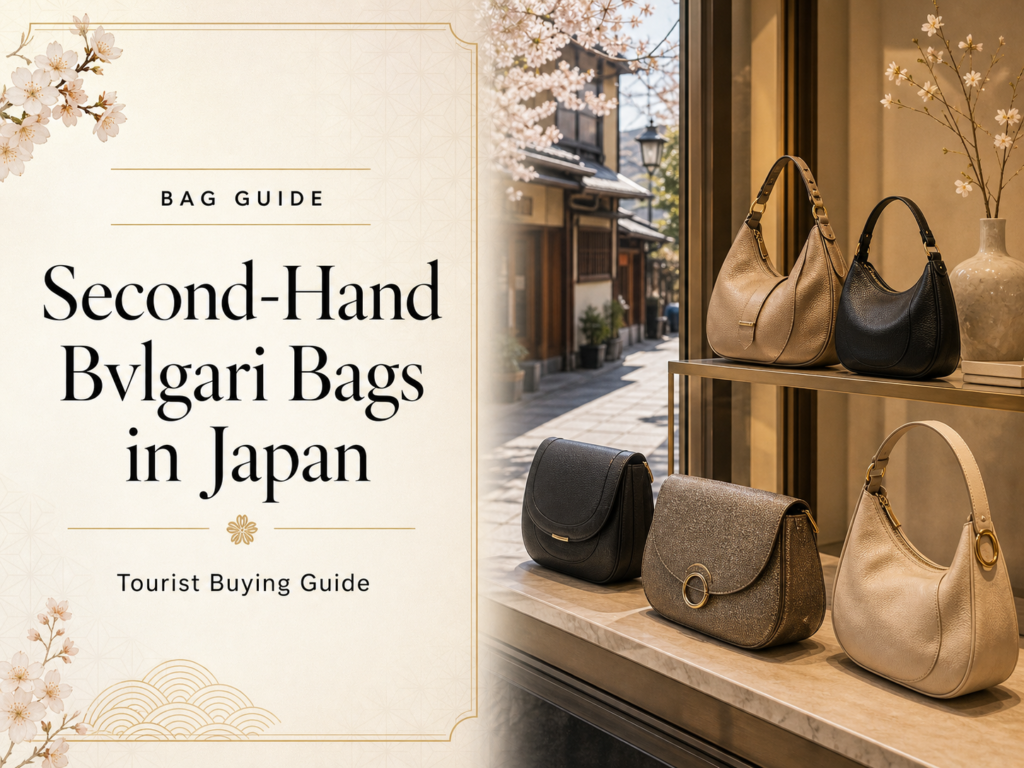
Japan can be a practical place to compare second-hand Bvlgari bags while traveling, but a useful plan begins with uncertainty: inventory changes frequently, and one model, color, size, or material may not appear on the day you visit. The goal is to create a compact comparison route, recognize the design details that matter, and judge each individual bag against your own needs.
This guide gives international visitors a fast answer, a brand-specific inspection framework, realistic Tokyo and Osaka route options, store-format comparisons, questions to confirm, and a final decision method. Check official shop pages and map pins before visiting, especially when one particular design is central to your trip.
Instagram DM
Not sure which shops to visit?
Quick Answer for Tourists
For most travelers, the efficient way to look for a second-hand Bvlgari bag in Japan is to choose one major resale district and compare two or three shop formats there. Start with a broad luxury reseller to learn the local range, add a fashion-led shop when the brand's styling is important, and keep a nearby backup. Do not cross Tokyo or Osaka for an unconfirmed possibility.
Before the first visit, write down your preferred bag type, maximum dimensions, essential contents, acceptable signs of use, and total purchase budget. Ask each shop about the individual item's condition description, included accessories, price, payment process, and policies. Tax-free handling, returns, warranties, repairs, and other services can differ, so confirm current details directly before paying.
JVG Editorial View
Bvlgari bag searches often begin with jewelry-like hardware and the Serpenti motif, but the practical decision is broader than visual impact. Curved closures, chain sections, structured bodies, decorative surfaces, and smooth leather can age in different ways. A bag that photographs well may still feel formal, heavy, or small for a traveler's normal routine.
JVG recommends a function-first shortlist. A specific model name can help staff understand your taste, but it should not override weight, access, capacity, condition, and comfort. The strongest comparison is not between an online image and a bag in front of you. It is between two real candidates inspected under the same sequence.
Bvlgari buyers often trade visual detail against everyday ease. Decide whether jewelry-like hardware is the main purpose of the purchase or whether the bag must also handle long sightseeing days.
Bvlgari Bag Families to Compare
These design families are useful search vocabulary, not a statement about current store inventory. Product details can vary by size, material, season, and generation, so examine the individual item rather than assuming every bag with a familiar name is constructed in the same way.
Serpenti shoulder and crossbody shapes
Treat the snake-head closure as both decoration and a working component. Check alignment, opening action, enamel or stone-like decorative surfaces, nearby leather, chain contact points, and how the bag balances when worn.
Structured top-handle bags
Compare base stability, handle anchoring, side-panel symmetry, and access to the main compartment. A crisp silhouette can highlight pressure or corner wear, so inspect it from the side and underneath.
Compact evening formats
Capacity and closure comfort matter more than the exterior dimensions suggest. Decide whether the bag can hold your phone, travel wallet, hotel key, and glasses without stressing the frame or chain.
Softer leather day bags
Look for natural relaxation versus uneven stretching. The most useful comparison is how the leather, lining, strap, and edge finish have aged together rather than whether one panel looks nearly unused.
Bvlgari-Specific Decision Guide
A Bvlgari shortlist should be built around the relationship between jewelry-like detail and bag function. The following tests help separate an attractive display piece from a bag that works for your actual travel and wardrobe needs.
Treat the Serpenti closure as a working system
Look at the closure straight on and from the side, then open it gently with staff permission. The decorative head, leather opening, magnetic or mechanical action, and flap should work together without awkward pulling. Compare visible marks with how often you expect to operate the bag.
Check chain comfort before visual impact
A polished chain can define the design while concentrating weight on the shoulder. Try the likely carry length over your travel clothing, notice whether a leather section reaches the shoulder, and consider how the chain rests against delicate fabrics.
Use real essentials to judge a compact shape
Structured Serpenti and evening formats may hold less than their outer dimensions suggest. Compare the opening and internal divisions with your phone, wallet, hotel key, glasses, and passport pouch measurements. Avoid stressing a closure merely to gain a little capacity.
Inspect decorative surfaces under ordinary light
Enamel-like details, glossy hardware, crystals, and smooth leather can look different under display lighting. Change your viewing angle and check edges where decorative elements meet metal or leather. Decide whether the observed wear fits the price and intended occasion.
Compare symmetry without expecting mechanical perfection
Study flap alignment, side profile, base, handle position, and the relationship between paired decorative elements. Small handmade or use-related variation should be judged in context; the key question is whether shape or operation feels compromised.
Decide whether this is an occasion bag or a day bag
Write the answer before choosing between candidates. An occasion piece can prioritize visual detail and compact proportions, while a day bag needs comfortable access, secure carry, and practical capacity. Applying the same standard to both leads to confused comparisons.
Comparing Two Real Bvlgari Candidates
If Candidate A is a compact Serpenti with cleaner decorative hardware and Candidate B is a softer day bag with more visible leather character, do not reduce the choice to condition grade. Test Candidate A against phone fit, chain pressure, and closure access. Test Candidate B against weight, strap comfort, shape, and daily security. Then compare which one performs the role written before the route. The better occasion piece can be the wrong sightseeing bag, and the more practical bag can be the wrong choice when jewelry-like design was the actual goal.
Use this two-candidate method even when the bags are not the same model. The purpose is to compare function, condition, and intended use under a consistent decision, not to award points to whichever item most closely resembles the original search image.
Brand-specific mistakes to avoid
- Avoid letting the snake-head motif distract from closure operation.
- Avoid assuming a compact structured shell has generous usable capacity.
- Avoid checking polished hardware only from the front.
- Avoid buying an occasion design without testing it over normal clothing.
Shop Comparison Notes
Multi-category luxury resellers
These are useful first stops because bags may be presented with detailed condition notes and other luxury categories nearby. Their main value is establishing a reference point for materials, structure, and the local presentation of pre-owned goods. Check current listings or contact the shop if seeing Bvlgari is essential.
Fashion-focused second-hand stores
Fashion-led stores can be useful for labels whose bags relate closely to ready-to-wear and styling. The browsing context may help you judge proportion and outfit use. Selection can be narrower or different from a luxury specialist, so treat this format as a complementary comparison rather than a guaranteed source.
Curated vintage boutiques
Curated stores may emphasize design character, age, or styling. Ask how the item is described and inspect it with the same discipline you would use elsewhere. A compelling edit is not a substitute for checking closures, corners, straps, lining, measurements, and the written sale terms.
Online listings before the route
Current online listings can help you learn terminology and decide whether a district is worth your time. A listing is a planning signal, not a reservation unless the shop explicitly confirms one. Item status can change before arrival, and photographs cannot answer every question about odor, weight, feel, or comfort.
Suggested Shopping Route
The most suitable starting cluster for this Bvlgari search is Ginza. Check the official pages for ALLU Ginza, KOMEHYO Ginza, and BRAND OFF Ginza Main Store before the day. These names are route anchors only; they do not indicate that Bvlgari bags are currently present.
Begin with a jewelry-detail baseline
Use ALLU Ginza only after checking current information and any useful listing signals. If a Bvlgari candidate appears, focus the first notes on closure detail, chain, dimensions, structure, and the relationship between decorative wear and function.
Seek a second luxury-resale explanation
Continue to KOMEHYO Ginza when it adds a credible comparison. Ask for clarification of the individual condition description and accessories, then apply the same closure and carry tests rather than allowing a different display style to change your standard.
Finish with a decision-focused backup
Use BRAND OFF Ginza Main Store as the optional final stop after confirming its details. If no candidate appears, stop the brand search. If one does, compare it against your recorded Bvlgari reference and take a break before returning to either shop.
How to Inspect a Second-Hand Bvlgari Bag
Start with the written item description
Read the condition explanation before focusing on the cleanest surface. Ask staff to clarify marks, repairs, replaced parts, odor, or included accessories when the wording is unclear. Store grading systems can differ, so translate the description into visible and functional facts.
Inspect in a repeatable order
Use the same sequence for every candidate:
- decorative closure alignment and opening action
- enamel-like, stone-like, or polished surfaces for chips and abrasion
- chain and leather contact points for concentrated wear
- structured corners, base, and side panels for pressure
- lining around the closure and interior pockets
- included straps or small accessories listed with the individual item
Move from exterior to structure, hardware, interior, and carry test. This order reduces the chance that a strong first impression will make you skip a less visible problem.
Test function gently
With staff permission, operate zippers, snaps, buckles, turn locks, and adjustable straps without forcing them. Check whether the bag opens naturally, whether the closure aligns, and whether your hand can reach the interior comfortably. Stop and ask for assistance if a mechanism resists.
Compare shape from several angles
View the front, back, sides, base, and opening. A structured bag may lean or show pressure away from the front display. A soft bag may have natural folds, but uneven stretching around handles or corners can affect how it carries.
Assess odor and interior condition
Smell can be difficult to judge online and difficult to resolve after purchase. Check the main compartment and pockets for strong fragrance, smoke-like odor, dampness, residue, peeling, ink, or makeup marks. Decide what you can realistically accept without assuming a future treatment will solve it.
Wear it with your travel layers
Try the bag over the clothing you are wearing when the shop allows. Consider strap width, chain pressure, handle clearance, opening access, and balance. Imagine the bag filled with your normal essentials; an empty fitting can hide a weight or capacity problem.
Best For Breakdown
First-time second-hand bag buyers
Choose a major district, begin with a broad reseller, and use the written checklist. Limit the route to a few shops so you have enough attention for condition and policy questions.
Brand-focused travelers
Check recent official shop information before committing the day, keep two design families acceptable, and maintain a no-purchase fallback. A wider brief can improve comparison without lowering your condition standards.
Fashion-led shoppers
Add one fashion-focused store and evaluate how the bag works with your wardrobe. Proportion, color, and carry style matter, but they should remain connected to closure, capacity, and physical condition.
Practical everyday buyers
Prioritize weight, strap comfort, opening security, interior organization, and materials that suit your routine. A visually quieter bag may deliver more value if it works on an ordinary day after the trip.
What to Check Before Visiting
- Confirm the shop's current address, entrance, floor, opening information, and any closure notices on its official page.
- Ask about current inventory only when one Bvlgari model is essential; inventory can change between inquiry and arrival.
- Save dimensions or screenshots for your target shapes, but expect differences among materials and generations.
- Bring your passport if you plan to ask whether tax-free procedures apply, and confirm eligibility and handling directly.
- Decide how you will pay, but verify accepted methods and any transaction requirements with the shop.
- Ask about returns, exchanges, warranties, repairs, authentication-related explanations, and included documents before purchase because policies vary.
- Leave room in your luggage and consider weather protection rather than carrying an unprotected bag through the rest of the day.
JVG Shop Selection Notes
The related shops for this guide were chosen to support a route across broad luxury resale and fashion-focused formats in major shopping districts. They are not included as a promise of Bvlgari stock. Current inventory, prices, condition, services, policies, and business information should be checked with each shop.
For a short trip, use one geographic cluster and compare store types. For a brand-only mission, review recent listings or contact shops before traveling. If no relevant item is confirmed, keep the district useful by pairing the search with a broader bag or fashion objective rather than adding distant stops.
Related JVG Guides
- Vintage Bags in Japan: Complete Shopping Guide - Start with the national overview when you are still choosing a city or bag category.
- Used Designer Bags in Japan: Where to Buy and What to Check - Compare resale shop formats and the core checks that apply across designer labels.
- How to Buy Second-Hand Luxury Goods in Japan - Review the buying process before committing valuable trip time to a search.
- How to Check a Vintage Bag Before Buying in Japan - Use the inspection sequence when an individual bag reaches your shortlist.
- Japan Vintage Bag Buyer Checklist for Tourists - Keep a compact traveler checklist ready for the final comparison.
- Tax-Free Shopping in Japan for Second-Hand Goods - Understand what to confirm directly when tax-free procedures affect your budget.
FAQ
Are second-hand Bvlgari bags easy to find in Japan?
Availability varies by shop, city, and day. Major resale districts provide more comparison opportunities, but they cannot ensure a particular brand, model, size, material, or color. Check current listings or ask shops directly when the search is the main purpose of your trip.
Are prices lower than in my home country?
Not necessarily. Compare the total in your own currency, item condition, included accessories, payment conversion, and any applicable tax procedure. A lower displayed amount is not automatically better value when condition or travel costs differ.
How can I judge authenticity-related information?
Ask the shop to explain its assessment process and the information supplied with the individual item. Review identifiers and construction only as part of the whole item; one feature is not a complete conclusion. For a high-stakes purchase, decide in advance whether you need additional expert review.
Can I return the bag after leaving Japan?
Do not assume so. Return and exchange rules vary, and some second-hand sales may have restrictive terms. Read the receipt and written policy, ask how overseas issues are handled, and resolve every important question before paying.
Should I plan a full day for this search?
A half-day in one district is often enough for a disciplined comparison. A full day only makes sense when you are comfortable with several product families or are combining bags with wider vintage shopping. More stops do not automatically improve the decision.
Shopping Support
Need help planning your vintage shopping route in Japan? Contact JVG for private shopping support.
Shopping Support: Plan your shopping support
Continue the shopping journey