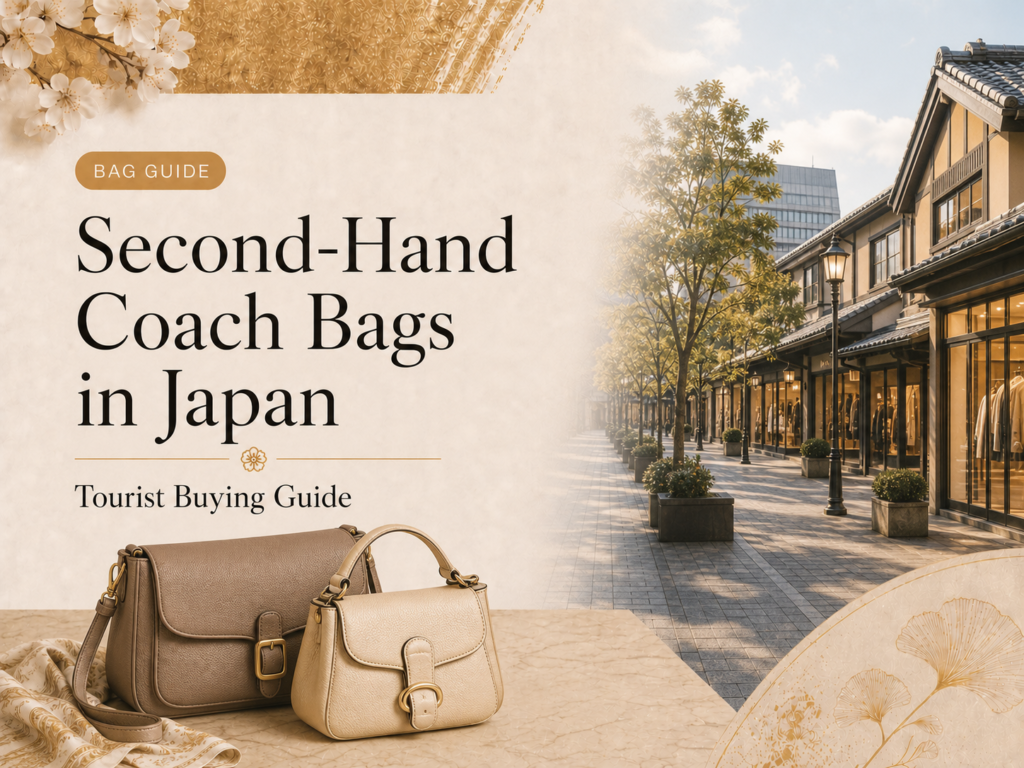
Japan can be a practical place to compare second-hand Coach bags while traveling, especially if you approach the search as a category comparison rather than a hunt for one guaranteed item. Luxury resale stores, fashion-focused second-hand shops, and curated vintage boutiques can offer very different shopping experiences. The right route depends on the bag format you want, the condition you are comfortable with, and how much of your trip you want to spend shopping.
Inventory changes frequently, so no guide can confirm that a particular model, color, material, or size will be waiting when you arrive. Use this guide to choose shopping areas, understand store formats, and compare individual bags consistently. Check official shop information and current listings before visiting when one exact item is central to your plans.
Instagram DM
Not sure which shops to visit?
Quick Answer for Tourists
For most visitors, the simplest way to look for a second-hand Coach bag in Japan is to choose one major resale district and visit two or three different store formats. Begin at a multi-category luxury reseller to understand the local range. Continue to a fashion-led or curated shop for a different style perspective. Keep one nearby backup instead of crossing the city for every possible option.
Ginza and Shinjuku work well for structured luxury-resale comparisons. Shibuya and nearby fashion districts suit travelers who want to compare bags with contemporary clothing and accessories. Shinsaibashi is a useful Osaka base. These areas are planning anchors, not promises of Coach inventory. Confirm current details directly if a particular bag is the reason for your journey.
JVG Editorial View
Coach is relevant to several kinds of resale shopper. Some visitors want a dependable everyday shoulder bag or tote. Others are interested in an older design, a compact crossbody format, or a bag that feels different from the current retail selection available at home. These searches should not be treated as one identical buying mission.
JVG recommends deciding what the bag needs to do before deciding how many shops to visit. A traveler who wants an easy daily bag should prioritize weight, strap comfort, closure, and capacity. A traveler searching for a distinctive older piece may give more attention to shape, leather character, hardware, and signs of previous use. Both should compare condition carefully, but the acceptable tradeoffs may be different.
Japan's resale environment can make comparison convenient, yet presentation should not replace judgment. A clean display and a recognizable label do not answer whether the bag fits your body, carries your essentials, or remains comfortable after a full day. The strongest purchase is one that still makes sense after you step away, review your notes, and compare at least one alternative.
Decide What Kind of Coach Bag You Need
Everyday shoulder and crossbody bags
An everyday bag should be evaluated while wearing a similar coat or layer to what you use most often. Check strap length, strap adjustment, opening width, closure, and how the bag sits when filled. A compact exterior can hide an awkward interior, while a slightly larger bag may feel lighter because the strap distributes weight better.
Think about access as well as capacity. A bag that is easy to open in a store may feel less convenient on a train or busy street. Compare whether the main compartment closes, whether important items can be separated, and whether you can reach the contents without completely removing the bag.
Totes and larger daily bags
For a tote, inspect the handles, attachment points, base, corners, and top edge. Ask yourself whether you plan to carry a laptop, camera, water bottle, travel documents, or shopping purchases. The bag should not only hold those items; its handles and structure should feel suitable for the intended load.
Open-top totes may be convenient, but travelers should consider how they will use the bag in crowded transport and changing weather. If a pouch, zipper, or interior closure matters, confirm that feature on the individual item rather than assuming it from the general design.
Structured handbags and satchel-style formats
Structured bags require a close look at shape retention, base stability, side panels, handles, and hardware. A bag can appear excellent from the front while showing pressure, leaning, or creasing from another angle. Place it on a flat surface when the shop permits and inspect how it sits.
Check whether the opening is wide enough for your normal use and whether a detachable strap is included when relevant. Accessories vary by item. Confirm exactly what comes with the bag before comparing it with another listing.
Smaller bags for travel and evenings
Small bags are useful only when their capacity matches your essentials. Test mentally or with measurements whether they fit your phone, wallet, hotel key, glasses, and other necessities. Do not assume that a small bag will be easier to use simply because it is light.
The strap, chain, closure, and interior organization often matter more when space is limited. A beautiful bag that cannot carry the items you need may become luggage rather than a useful purchase.
Where to Look for Second-Hand Coach Bags in Japan
Ginza
Ginza suits visitors who want a compact luxury comparison within a polished central Tokyo district. Multi-category resellers can help you compare Coach with other designer bags, materials, and formats. The area also works when bags are only one part of a wider watches, jewelry, or luxury-shopping day.
Store entrances and floors can be easy to miss, so save the exact map pin and building name before arriving. Choose two priority shops and one backup. A focused route leaves more time to inspect each item and reduces the temptation to make a rushed decision at the end of the day.
Shinjuku
Shinjuku is practical for travelers staying near a major transport hub or combining shopping with another Tokyo itinerary. Stores can be spread across different sides of the station, and the station itself can add time. Group stops by exit and check the map before visiting.
The area's value is comparison convenience, not a guarantee of a particular brand. Use the first stop to establish a reference for condition and size. Visit a second store only when it can answer a different question, such as whether a softer bag, larger tote, or more fashion-led option suits you better.
Shibuya and nearby fashion districts
Shibuya is useful when you want to compare designer bags with second-hand fashion and accessories. A fashion-led store may provide a different context from a traditional luxury reseller. Nearby Harajuku and Omotesando can extend the route, but crowds, hills, and side streets make a selective plan more realistic than trying to cover every district.
Choose one primary area and add only one neighboring cluster. Check which shop format is most likely to match your purpose before traveling between them.
Shinsaibashi and central Osaka
Shinsaibashi provides a natural base for a Kansai luxury-resale day. It can be paired with nearby Namba when the second area adds meaningful options, but a compact Shinsaibashi comparison may be enough for travelers with limited time.
Save official locations because shop names may reference Osaka, Shinsaibashi, or surrounding commercial streets. Leave time for a final comparison rather than filling the schedule with distant stops.
How to Compare an Individual Bag
Exterior and high-contact areas
Inspect corners, edges, handles, strap attachment points, the base, and areas that touch clothing. Look under the handles and around hardware rather than examining only the largest visible panels. Light-colored materials may show transfer or marks differently from darker surfaces.
Condition language can vary by shop. Read the written description and ask staff to explain anything unclear. Do not convert a store's grade into a universal standard without checking the actual item.
Shape and construction
View the bag from the front, back, sides, base, and top. Check whether the shape is intentionally soft or has changed through storage and use. Examine seams and attachment points without pulling or forcing them.
For a structured bag, look for leaning, uneven panels, or base movement. For a soft bag, consider whether the slouch works when carried with your normal belongings.
Handles, straps, and hardware
Check comfort, length, adjustment, surface wear, and the connection between strap and bag. If a strap is detachable, confirm that it is included and that the hardware operates as expected within shop rules. Listen and feel for closures that do not move smoothly, but do not force them.
Metal finishes can show scratches or color changes. Decide whether those signs are acceptable for your use rather than expecting a used item to look identical to a new one.
Interior, odor, and storage evidence
Use available light to inspect the lining, pockets, seams, and base. Ask before moving fillers or opening every compartment. Odor can be difficult to evaluate in a busy shop, so take enough time and avoid relying only on a quick first impression.
Check for residue, marks, loose material, or evidence that affects your comfort. If an interior issue cannot be understood, ask a focused question or leave the item for comparison.
Included items and written details
Boxes, dust bags, detachable straps, pouches, tags, cards, and other accessories vary. Confirm exactly what is included. Their presence does not replace an item inspection, and their absence does not automatically make a bag unsuitable.
Keep the receipt and item description after purchase. They are useful for your own records and for organizing the item during the rest of the trip.
Suggested Shopping Route
Half-day Tokyo route
Choose Ginza for a luxury-led comparison or Shibuya for a fashion-led comparison. Begin with a broad reseller, then visit one store with a contrasting presentation or category mix. Take a short break and review your notes before adding the backup stop.
Record the bag format, dimensions, visible condition, strap information, included items, and total displayed price. When photographs are permitted, capture the item reference rather than relying on memory. If you find a strong candidate, ask whether you can return later and confirm current shop procedures.
One-day Tokyo route
Use the morning in one central district and the afternoon in one contrasting district. Ginza followed by Shibuya or Shinjuku can provide variety, but allow realistic transfer and station time. Do not plan a third major district unless the first two clearly fail to answer your search.
Carry as little luggage as possible during detailed comparison. A crowded schedule makes it harder to judge comfort and condition. Leave a final decision window before dinner or the next transport commitment.
Osaka route
Start in Shinsaibashi and compare two nearby resale formats. Add Namba only if it broadens the search or fits naturally with sightseeing. A half-day may be enough for a general Coach search; a full day is more appropriate when you are comparing several bag types or luxury categories.
Best For Breakdown
First-time resale shoppers
- Choose stores that make written item details easy to review.
- Compare at least two bags using the same checklist.
- Keep the route in one main area so the decision is not rushed.
Travelers seeking an everyday bag
- Prioritize weight, strap comfort, closure, and capacity.
- Think about public transport, weather, and the contents you carry.
- Check whether the bag works with your normal clothing and routine.
Visitors interested in older designs
- Compare shape, material character, hardware, and signs of storage.
- Ask for the shop's item description rather than guessing the period.
- Accept only the wear that fits your own use and care expectations.
Buyers with limited travel time
- Select one district, two priority stops, and one backup.
- Check current listings before making a brand-specific journey.
- Skip distant branches unless they offer a clearly different comparison.
JVG Shop Selection Notes
The following stores represent practical luxury-resale stops in major visitor areas. They are not ranked, and inclusion does not confirm current Coach inventory. Check official shop information and current categories before visiting.
ALLU Ginza
- Area: Ginza
- Best for: A polished luxury-resale starting point
- Why it fits this guide: It gives travelers a central place to compare designer bags before visiting another Ginza format.
- Before visiting: Confirm the location, current categories, and shop information through official channels.
BRAND OFF Ginza Main Store
- Area: Ginza
- Best for: Multi-category luxury comparison
- Why it fits this guide: It can serve as a broad reference stop for bags and related designer accessories in central Tokyo.
- Before visiting: Check the official website and map, and do not assume current brand inventory.
KOMEHYO Ginza
- Area: Ginza
- Best for: Comparing bags within a wider resale selection
- Why it fits this guide: It adds another established resale format to a compact Ginza route.
- Before visiting: Confirm current details and the exact branch before traveling.
BRAND OFF Shibuya Store
- Area: Shibuya
- Best for: Combining luxury bags with a fashion-focused day
- Why it fits this guide: It provides a central Shibuya option for travelers who want a different district from Ginza.
- Before visiting: Check the official location, current categories, and map.
ALLU Shinjuku
- Area: Shinjuku
- Best for: A station-area Tokyo comparison
- Why it fits this guide: It works for travelers building a focused Shinjuku luxury-resale route.
- Before visiting: Confirm the shop location and plan the correct station exit.
KOMEHYO Shinjuku Store
- Area: Shinjuku
- Best for: Broad luxury-resale research
- Why it fits this guide: It gives Shinjuku visitors another format for comparing bags and related categories.
- Before visiting: Check official information and current item categories.
ALLU Shinsaibashi
- Area: Shinsaibashi
- Best for: A central Osaka luxury-resale route
- Why it fits this guide: It provides a Kansai comparison point for travelers searching beyond Tokyo.
- Before visiting: Confirm current shop information and map location.
BRAND OFF Shinsaibashi Store
- Area: Shinsaibashi
- Best for: Comparing another Osaka resale format
- Why it fits this guide: It can be paired with one nearby stop without turning the route into a citywide search.
- Before visiting: Check the official website and exact entrance before visiting.
How to Compare These Shops
Give each stop a role
Use the first shop to establish a reference for size, condition, and price context. Use the second to compare a different store format or district. Add a third only when it answers a remaining question. This is more useful than visiting several similar stores without a comparison plan.
Repeat the same item checklist
For every candidate, record format, dimensions, material description, visible wear, shape, strap, closure, interior, included items, and total price. Consistency helps you notice meaningful differences and reduces the influence of lighting or presentation.
Separate the product from the label
A familiar brand may attract your attention, but the individual bag still needs to work. Ask whether you would choose the same shape, capacity, and condition if you saw it without travel pressure. The answer can clarify whether the item fits your purpose.
Shopping Without Speaking Japanese
Save a short note on your phone with the brand, preferred bag type, approximate dimensions, color range, material preference, and budget. A reference image can help explain shape, but it should not be treated as proof that the store carries the same item.
Useful questions include:
- "Can I check the condition?"
- "What are the dimensions?"
- "Is the strap included?"
- "What is included with this bag?"
- "Could you explain this condition note?"
- "What are the current purchase terms?"
English support varies. Translation tools can help, but important details should be confirmed through the item description and staff explanation before payment.
What to Check Before Visiting
- Check the official website and map before visiting.
- Confirm that the exact branch currently handles designer bags.
- Remember that inventory, displayed items, and prices change frequently.
- Save one nearby backup shop rather than relying on a single stop.
- Bring measurements and reference images for the bag format you need.
- Prepare your passport if you plan to ask about tax-free shopping, but confirm current eligibility and procedures directly.
- Ask about payment, returns, repairs, warranties, shipping, and included items before buying; policies vary.
Related JVG Guides
- Start with the vintage bags in Japan complete shopping guide for the national overview.
- Read the used designer bags in Japan guide for broader bag-planning advice.
- Compare another brand search with the second-hand Gucci bags in Japan guide.
- Review the how to buy second-hand luxury goods in Japan guide before a higher-value purchase.
- Use the shopping tips for international visitors for practical travel preparation.
- Learn how to shop second-hand in Japan without speaking Japanese before visiting stores.
Planning Support
If you are planning a focused second-hand bag shopping day in Japan, JVG can help you organize areas, shop types, and a realistic route. Planning is especially useful when you want to compare a specific bag format without spending the entire trip crossing between districts.
Need help planning your vintage shopping route in Japan? Contact JVG for private shopping support.
Shopping Support: /shopping-support/
FAQ
Can I expect to find a specific Coach bag in Japan?
No guide can confirm current inventory. Check official listings or contact shops when a particular model, color, size, or material is essential, and keep at least one alternative in your plan.
Which area is easiest for a first comparison?
Ginza and Shinjuku are practical for luxury-resale comparisons, while Shibuya offers a more fashion-led context. Choose the area that fits the rest of your itinerary and verify exact shop locations before visiting.
What condition details matter most?
Inspect corners, edges, handles, straps, attachment points, shape, hardware, closure, interior, odor, and included items. Read the shop's condition notes and ask about anything unclear.
Should I choose the lowest-priced bag?
Compare price together with condition, dimensions, comfort, material, included items, and purchase terms. Two bags with the same label may not be equivalent.
Can tourists ask about tax-free shopping?
You can ask, but availability and eligibility vary. Bring your passport if you plan to inquire and confirm the current procedure directly with the shop before payment.
Continue the shopping journey