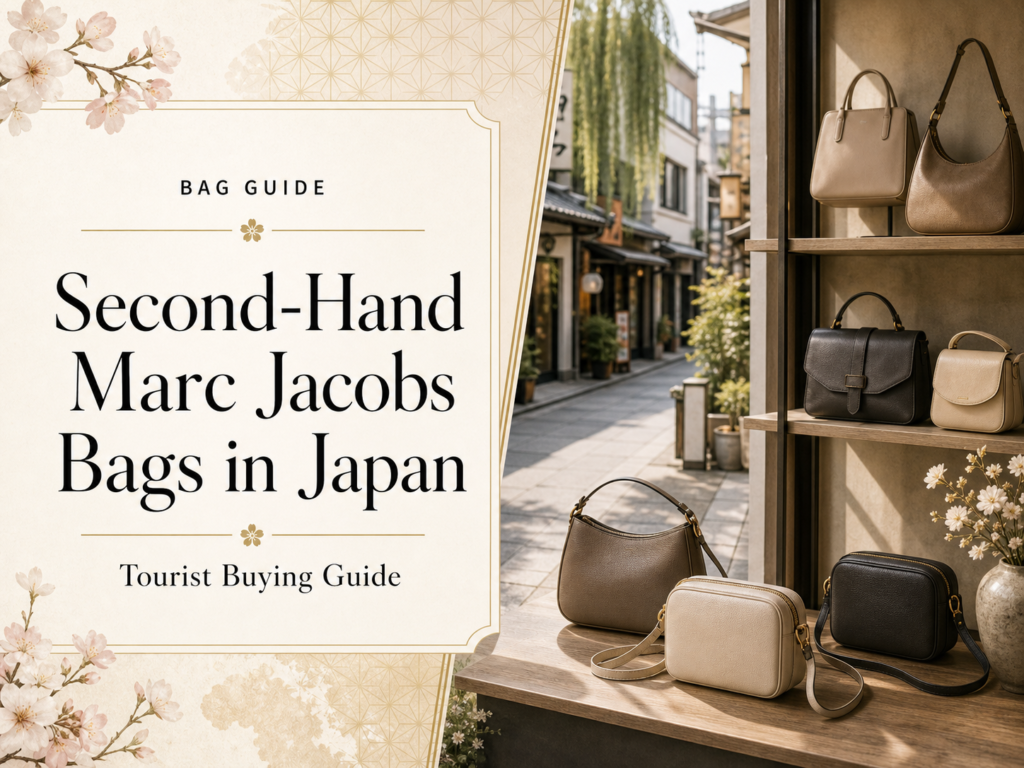
Japan can be a practical place to compare second-hand Marc Jacobs bags while traveling, but a useful plan begins with uncertainty: inventory changes frequently, and one model, color, size, or material may not appear on the day you visit. The goal is to create a compact comparison route, recognize the design details that matter, and judge each individual bag against your own needs.
This guide gives international visitors a fast answer, a brand-specific inspection framework, realistic Tokyo and Osaka route options, store-format comparisons, questions to confirm, and a final decision method. Check official shop pages and map pins before visiting, especially when one particular design is central to your trip.
Instagram DM
Not sure which shops to visit?
Quick Answer for Tourists
For most travelers, the efficient way to look for a second-hand Marc Jacobs bag in Japan is to choose one major resale district and compare two or three shop formats there. Start with a broad luxury reseller to learn the local range, add a fashion-led shop when the brand's styling is important, and keep a nearby backup. Do not cross Tokyo or Osaka for an unconfirmed possibility.
Before the first visit, write down your preferred bag type, maximum dimensions, essential contents, acceptable signs of use, and total purchase budget. Ask each shop about the individual item's condition description, included accessories, price, payment process, and policies. Tax-free handling, returns, warranties, repairs, and other services can differ, so confirm current details directly before paying.
JVG Editorial View
Marc Jacobs searches can mix recent logo-forward formats with older leather collections, soft quilted bags, totes, and compact camera shapes. The resale value for a traveler is often practical variety, but names and generations can be confusing. Start with dimensions, material, carry style, and intended use rather than expecting every shop to classify pieces identically.
JVG recommends a function-first shortlist. A specific model name can help staff understand your taste, but it should not override weight, access, capacity, condition, and comfort. The strongest comparison is not between an online image and a bag in front of you. It is between two real candidates inspected under the same sequence.
Marc Jacobs buyers often choose between a recognizable graphic format and an older leather design with less obvious branding. Compare utility and condition first; visual familiarity should not hide an awkward strap or limited capacity.
Marc Jacobs Bag Families to Compare
These design families are useful search vocabulary, not a statement about current store inventory. Product details can vary by size, material, season, and generation, so examine the individual item rather than assuming every bag with a familiar name is constructed in the same way.
Snapshot and camera-bag formats
Test the double-zip layout, strap width, hardware, and actual phone or wallet capacity. Compact rectangular shapes can be useful for travel, but the internal divisions may reduce usable space.
The Tote Bag family
Compare fabric or leather condition, handle feel, top closure, base shape, and size. Printed surfaces and high-contact corners can show use differently, so inspect in ordinary light where possible.
Stam and quilted older designs
Look closely at chain weight, frame or clasp operation, quilting, corner rub, and lining. Older design appeal is meaningful only if the hardware and carry comfort work for your intended use.
Older leather shoulder and satchel bags
Check edge finish, pocket zippers, handle glazing, interior labels, and whether the body has relaxed evenly. Do not dismiss normal leather character, but distinguish it from cracking or structural stress.
Marc Jacobs-Specific Decision Guide
Marc Jacobs resale spans very different design periods and price contexts. A useful decision guide compares compact logo-forward bags, practical totes, and older leather or quilted designs according to function instead of placing them in one undifferentiated shortlist.
Measure a Snapshot-style interior, not its shell
Two zipper compartments and a firm rectangular body can reduce usable room. Compare each section with the dimensions of your phone, wallet, and glasses. Also check whether the zipper pulls remain easy to reach when the bag is worn crossbody.
Choose a Tote Bag material for your real routine
Textile, canvas-like, and leather versions ask different questions about weight, corners, cleaning, and shape. A light travel tote may tolerate visible character differently from a leather work bag, so do not rank them by surface condition alone.
Inspect wide straps as separate components
Graphic webbing straps can be central to comfort and styling. Check clips, adjustment hardware, edges, stitching, and any printed surface. Confirm which strap comes with the individual bag because combinations can vary.
Judge printed branding at high-contact points
Large lettering and logo hardware attract the eye, but handles, top edges, corners, and the back panel usually reveal daily use. View the print for abrasion or color change, then decide whether that wear changes the design for you.
Give older leather lines their own condition standard
Stam, Classic Q, and other earlier designs may use heavier hardware, chains, soft leather, or different linings. Compare frame action, quilting, zipper function, and interior condition without expecting them to feel like a recent compact camera bag.
Protect against an impulse created by familiarity
Recognizable shapes can make a candidate feel easy to decide. Pause and test capacity, strap comfort, opening, and wardrobe fit. The brand's accessible everyday appeal should strengthen practical judgment, not shorten it.
Comparing Two Real Marc Jacobs Candidates
Suppose Candidate A is a recent Snapshot-style camera bag and Candidate B is an older leather shoulder bag. A should be tested for compartment width, phone fit, zipper access, wide-strap comfort, and logo-surface wear. B needs a review of leather, chain or hardware weight, lining, pockets, and edge finish. Compare the likely number of uses after the trip. Familiar branding can favor A emotionally, while better capacity or comfort can favor B in practice.
Use this two-candidate method even when the bags are not the same model. The purpose is to compare function, condition, and intended use under a consistent decision, not to award points to whichever item most closely resembles the original search image.
Brand-specific mistakes to avoid
- Avoid judging a camera bag's capacity from exterior dimensions.
- Avoid assuming a named tote size will fit a particular device.
- Avoid overlooking the condition of a detachable graphic strap.
- Avoid applying recent-product expectations to older leather and quilted lines.
Shop Comparison Notes
Multi-category luxury resellers
These are useful first stops because bags may be presented with detailed condition notes and other luxury categories nearby. Their main value is establishing a reference point for materials, structure, and the local presentation of pre-owned goods. Check current listings or contact the shop if seeing Marc Jacobs is essential.
Fashion-focused second-hand stores
Fashion-led stores can be useful for labels whose bags relate closely to ready-to-wear and styling. The browsing context may help you judge proportion and outfit use. Selection can be narrower or different from a luxury specialist, so treat this format as a complementary comparison rather than a guaranteed source.
Curated vintage boutiques
Curated stores may emphasize design character, age, or styling. Ask how the item is described and inspect it with the same discipline you would use elsewhere. A compelling edit is not a substitute for checking closures, corners, straps, lining, measurements, and the written sale terms.
Online listings before the route
Current online listings can help you learn terminology and decide whether a district is worth your time. A listing is a planning signal, not a reservation unless the shop explicitly confirms one. Item status can change before arrival, and photographs cannot answer every question about odor, weight, feel, or comfort.
Suggested Shopping Route
The most suitable starting cluster for this Marc Jacobs search is Shinjuku. Check the official pages for ALLU Shinjuku, Kindal Shinjuku, and RAGTAG Shinjuku before the day. These names are route anchors only; they do not indicate that Marc Jacobs bags are currently present.
Start with format breadth
Confirm ALLU Shinjuku's current details and use the first visit to separate compact logo bags, totes, and older leather formats. Record dimensions and carry style before becoming attached to one color or graphic treatment.
Compare the bag inside a fashion assortment
At Kindal Shinjuku, if current information supports the stop, judge proportion and wardrobe use alongside physical condition. This is where a less obvious older Marc Jacobs design may become a meaningful alternative to a familiar recent shape.
Resolve the recent-versus-older question
Use RAGTAG Shinjuku as a final fashion-led check rather than another broad scan. Compare only the formats that passed your capacity and comfort limits, then leave the station-area route for a decision pause.
How to Inspect a Second-Hand Marc Jacobs Bag
Start with the written item description
Read the condition explanation before focusing on the cleanest surface. Ask staff to clarify marks, repairs, replaced parts, odor, or included accessories when the wording is unclear. Store grading systems can differ, so translate the description into visible and functional facts.
Inspect in a repeatable order
Use the same sequence for every candidate:
- logo hardware and zipper paths on compact formats
- printed canvas or fabric for abrasion and color change
- wide straps, clips, and adjustment holes
- tote handles, top edges, and base corners
- quilted surfaces and chain contact points
- interior divisions against your real travel essentials
Move from exterior to structure, hardware, interior, and carry test. This order reduces the chance that a strong first impression will make you skip a less visible problem.
Test function gently
With staff permission, operate zippers, snaps, buckles, turn locks, and adjustable straps without forcing them. Check whether the bag opens naturally, whether the closure aligns, and whether your hand can reach the interior comfortably. Stop and ask for assistance if a mechanism resists.
Compare shape from several angles
View the front, back, sides, base, and opening. A structured bag may lean or show pressure away from the front display. A soft bag may have natural folds, but uneven stretching around handles or corners can affect how it carries.
Assess odor and interior condition
Smell can be difficult to judge online and difficult to resolve after purchase. Check the main compartment and pockets for strong fragrance, smoke-like odor, dampness, residue, peeling, ink, or makeup marks. Decide what you can realistically accept without assuming a future treatment will solve it.
Wear it with your travel layers
Try the bag over the clothing you are wearing when the shop allows. Consider strap width, chain pressure, handle clearance, opening access, and balance. Imagine the bag filled with your normal essentials; an empty fitting can hide a weight or capacity problem.
Best For Breakdown
First-time second-hand bag buyers
Choose a major district, begin with a broad reseller, and use the written checklist. Limit the route to a few shops so you have enough attention for condition and policy questions.
Brand-focused travelers
Check recent official shop information before committing the day, keep two design families acceptable, and maintain a no-purchase fallback. A wider brief can improve comparison without lowering your condition standards.
Fashion-led shoppers
Add one fashion-focused store and evaluate how the bag works with your wardrobe. Proportion, color, and carry style matter, but they should remain connected to closure, capacity, and physical condition.
Practical everyday buyers
Prioritize weight, strap comfort, opening security, interior organization, and materials that suit your routine. A visually quieter bag may deliver more value if it works on an ordinary day after the trip.
What to Check Before Visiting
- Confirm the shop's current address, entrance, floor, opening information, and any closure notices on its official page.
- Ask about current inventory only when one Marc Jacobs model is essential; inventory can change between inquiry and arrival.
- Save dimensions or screenshots for your target shapes, but expect differences among materials and generations.
- Bring your passport if you plan to ask whether tax-free procedures apply, and confirm eligibility and handling directly.
- Decide how you will pay, but verify accepted methods and any transaction requirements with the shop.
- Ask about returns, exchanges, warranties, repairs, authentication-related explanations, and included documents before purchase because policies vary.
- Leave room in your luggage and consider weather protection rather than carrying an unprotected bag through the rest of the day.
JVG Shop Selection Notes
The related shops for this guide were chosen to support a route across broad luxury resale and fashion-focused formats in major shopping districts. They are not included as a promise of Marc Jacobs stock. Current inventory, prices, condition, services, policies, and business information should be checked with each shop.
For a short trip, use one geographic cluster and compare store types. For a brand-only mission, review recent listings or contact shops before traveling. If no relevant item is confirmed, keep the district useful by pairing the search with a broader bag or fashion objective rather than adding distant stops.
Related JVG Guides
- Vintage Bags in Japan: Complete Shopping Guide - Start with the national overview when you are still choosing a city or bag category.
- Used Designer Bags in Japan: Where to Buy and What to Check - Compare resale shop formats and the core checks that apply across designer labels.
- How to Buy Second-Hand Luxury Goods in Japan - Review the buying process before committing valuable trip time to a search.
- How to Check a Vintage Bag Before Buying in Japan - Use the inspection sequence when an individual bag reaches your shortlist.
- Japan Vintage Bag Buyer Checklist for Tourists - Keep a compact traveler checklist ready for the final comparison.
- Tax-Free Shopping in Japan for Second-Hand Goods - Understand what to confirm directly when tax-free procedures affect your budget.
FAQ
Are second-hand Marc Jacobs bags easy to find in Japan?
Availability varies by shop, city, and day. Major resale districts provide more comparison opportunities, but they cannot ensure a particular brand, model, size, material, or color. Check current listings or ask shops directly when the search is the main purpose of your trip.
Are prices lower than in my home country?
Not necessarily. Compare the total in your own currency, item condition, included accessories, payment conversion, and any applicable tax procedure. A lower displayed amount is not automatically better value when condition or travel costs differ.
How can I judge authenticity-related information?
Ask the shop to explain its assessment process and the information supplied with the individual item. Review identifiers and construction only as part of the whole item; one feature is not a complete conclusion. For a high-stakes purchase, decide in advance whether you need additional expert review.
Can I return the bag after leaving Japan?
Do not assume so. Return and exchange rules vary, and some second-hand sales may have restrictive terms. Read the receipt and written policy, ask how overseas issues are handled, and resolve every important question before paying.
Should I plan a full day for this search?
A half-day in one district is often enough for a disciplined comparison. A full day only makes sense when you are comfortable with several product families or are combining bags with wider vintage shopping. More stops do not automatically improve the decision.
Shopping Support
Need help planning your vintage shopping route in Japan? Contact JVG for private shopping support.
Shopping Support: Plan your shopping support
Continue the shopping journey