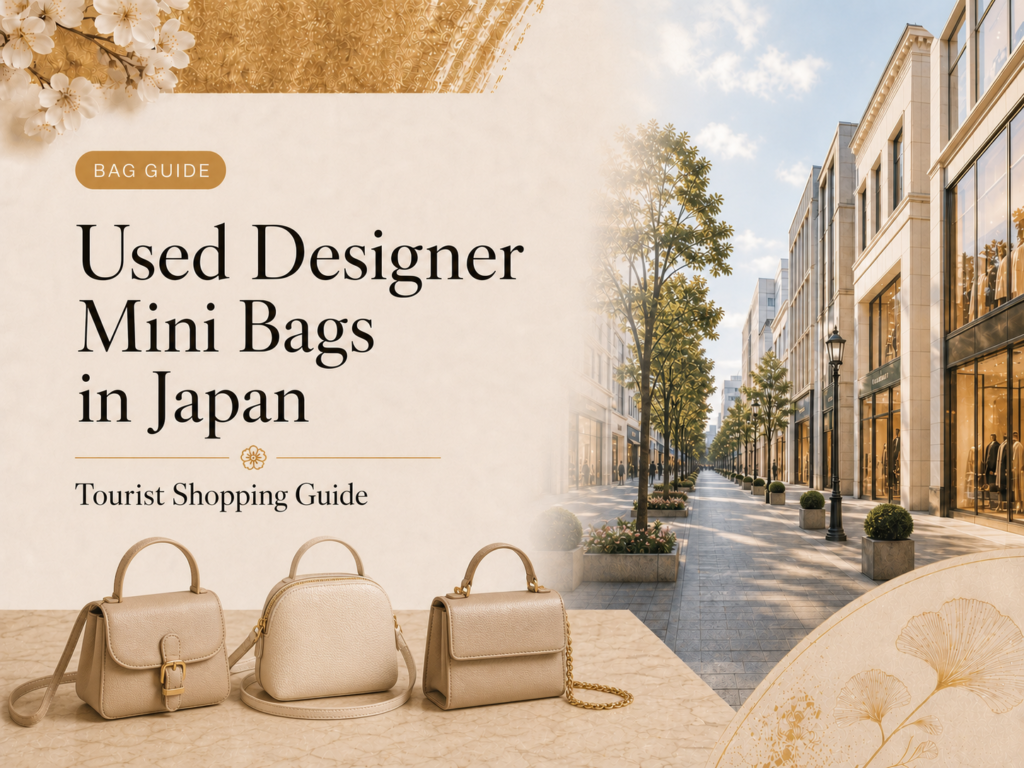
Used designer mini bags can be attractive travel purchases in Japan, but small dimensions make careful comparison more important, not less. A bag may look ideal in a display and still fail to hold a phone, wallet, glasses, hotel key, or other daily essentials. The opening, strap, closure, and interior shape can matter as much as the exterior design.
Japan has luxury-resale stores, curated vintage boutiques, and designer-fashion second-hand shops where travelers may compare compact bags. Inventory changes frequently, so this guide does not promise a particular brand, model, color, price, or condition. Use it to choose an area, test practical fit, and compare individual items. Check official shop information before visiting.
Instagram DM
Not sure which shops to visit?
Quick Answer for Tourists
Before shopping, make a short list of everything the mini bag must carry. Record the dimensions of your phone and wallet, then decide whether a passport, power bank, glasses case, or compact camera must also fit. Choose one main shopping district and compare two different store formats. Do not travel across the city until you know what size and opening style actually work.
Ginza is useful for a luxury-led comparison. Shibuya, Harajuku, and Omotesando offer a fashion-focused context. Shinjuku is convenient for a station-centered route, while Shinsaibashi is a strong Osaka base. These areas can support a search, but no district guarantees current mini-bag inventory.
JVG Editorial View
Mini bags sit between fashion object and practical accessory. Their appeal often comes from proportion, color, hardware, or the way they complete an outfit. Their weakness is that even a small difference in interior width, opening, or closure can decide whether the bag is usable.
JVG recommends treating capacity as a first-stage filter. If the bag cannot carry the essentials you need, condition and price comparisons become secondary. Once the basic fit is confirmed, compare comfort, security, material, and wear. This order prevents a visually exciting item from becoming an inconvenient souvenir.
Travel adds another layer. A mini bag may be used on crowded trains, during long walking days, at restaurants, or for an evening out. Think about whether it keeps important items secure and whether the strap is comfortable over the clothing you packed. A good route should help you answer those questions calmly.
What Counts as a Mini Bag?
The term mini bag can describe many shapes: a reduced version of a larger handbag, a small crossbody, a compact top-handle bag, a chain bag, or an evening-oriented design. Store labels and brand terminology can vary. Do not rely on the word mini alone.
Use dimensions and interior layout. A narrow but tall bag may hold different items from a wider shallow bag. Rigid construction can reduce usable space, while a soft bag may expand but lose its intended shape. The opening can be smaller than the widest exterior measurement.
When comparing online information, treat measurements as a starting point. The placement of zippers, dividers, pockets, and closures can change practical capacity. Confirm the individual item in person when possible.
Define Your Capacity Before Shopping
Phone
Measure the phone with its case. A bag opening may be too narrow even when the exterior dimensions appear sufficient. Consider whether the phone needs to be removed frequently for maps, tickets, translation, or photography.
A phone that fits only diagonally can make the remaining space difficult to use. Check access without forcing the bag or closure.
Wallet and travel documents
A compact wallet may be necessary. If you carry a passport, decide whether it belongs in the bag or in a separate secure location. Do not assume every mini bag can hold both a phone and passport comfortably.
Receipts, train tickets, and hotel cards accumulate during travel. A bag with no usable pocket may become disorganized even when the main items technically fit.
Glasses, keys, and small essentials
Hard glasses cases, power banks, keys, cosmetics, and medicine can take more space than expected. Make a real essentials list rather than imagining an ideal minimal day. If several items must be left behind, the bag may not suit its intended role.
Camera and technology
Most mini bags are not designed around a camera, charger, or multiple devices. If a compact camera is essential, use its exact dimensions and allow for protection. Do not place hard objects against delicate lining or hardware without considering wear.
Choose the Right Carry Style
Crossbody
Crossbody wear can be useful for sightseeing, but strap length and bag position matter. Check whether the bag rests securely without bouncing or twisting. A chain-heavy strap may feel different after several hours than it does during a short try-on.
Consider how the bag opens while worn. A secure closure can be reassuring, but a complicated opening may be inconvenient when you frequently use your phone or transit card.
Shoulder
For shoulder wear, test the strap over your travel clothing. A short strap may not work over a coat, while a smooth chain or narrow strap may slide. Check the relationship between strap length, bag weight, and body position.
Inspect the strap connection and the areas where hardware touches the bag. Mini bags can concentrate weight on small attachment points.
Top handle
A top-handle mini bag can feel polished, but it may occupy one hand throughout the day. Confirm whether a detachable shoulder strap is included if that flexibility matters. Check the handle attachment, shape, and opening when the handle is held.
Think about restaurants, shopping bags, stairs, and public transport. A beautiful handle-only format may be better for short occasions than full-day sightseeing.
Chain or evening style
Chains add visual interest but can affect weight, comfort, and storage. Examine the chain, connection points, finish, and how it sits against clothing. Ask whether it can be adjusted or removed; do not assume.
Delicate materials and prominent hardware may require protection during the rest of the trip. Plan how the bag will travel in your luggage.
Where to Look in Japan
Ginza
Ginza works well for travelers who want to compare mini bags within a wider luxury-resale selection. A multi-category shop can help you understand how small bags differ in material, construction, and price context. The district can also support a bags, watches, and jewelry itinerary.
Choose two stores within a manageable section of Ginza. Building entrances and floors can slow the route, so save the exact locations. Use the first shop to define your minimum usable dimensions before continuing.
Shibuya, Harajuku, and Omotesando
These areas suit visitors who care about styling and want to compare mini bags with designer clothing and accessories. Shibuya offers broad fashion energy, Harajuku can add second-hand fashion formats, and Omotesando provides a more curated luxury setting.
Do not attempt every area automatically. Select one main cluster and one nearby contrast. Crowds and hills can make a simple-looking route take longer than expected.
Shinjuku
Shinjuku is practical for travelers using the station or staying nearby. Group shops by station side and avoid unnecessary crossings. A station-centered route can work well when the mini bag is one part of a broader shopping day.
Check exact exits and building names. The best backup is usually the closest relevant store, not the most distant name on a list.
Shinsaibashi
Shinsaibashi is a useful Osaka base for luxury resale. It allows travelers to compare compact bags without committing to a citywide route. Nearby Namba can be an extension when it offers a different store format or fits naturally with the itinerary.
Confirm exact branch locations and leave time to review your shortlist before moving on to dining or sightseeing.
How to Inspect a Used Designer Mini Bag
Opening and closure
The opening may be smaller than the body. Test whether your essentials can enter and leave without scraping edges or forcing hardware. Check zippers, snaps, clasps, flaps, drawstrings, and other closures only as permitted.
Ask whether the closure feels suitable for your travel use. Fast access and security can pull in opposite directions, so choose the balance that fits you.
Corners, edges, and base
Mini bags often have prominent corners and a small base that receives concentrated wear. Inspect edge finishing, piping, glazing, and the points where the bag touches surfaces. Place the bag on a flat surface when permitted and look for unevenness.
Light colors and glossy surfaces may reveal wear differently from dark or textured materials. View the item from several angles.
Strap and attachment points
Check bends, adjustment holes, clips, chain links, stitching, and connection points. Confirm whether the strap is original to the item only when the shop provides that information; do not make assumptions from appearance.
Wear the bag at the intended length. The position can affect access, comfort, and how much the bag moves while walking.
Interior and usable shape
Inspect lining, pockets, dividers, seams, and the interior base. A divider can organize the bag but reduce space for a phone or glasses case. A rigid interior may be less forgiving than the exterior dimensions suggest.
Ask about marks, odor, or residue you cannot evaluate. If an issue matters and cannot be clarified, keep looking.
Material and hardware
Use the written item description for material information. Leather, coated surfaces, fabric, metal chains, and decorative hardware age differently. Compare condition according to the actual construction rather than a generic expectation.
Prominent hardware can show scratches or finish changes. Decide whether those signs fit your intended use and the item's overall condition.
Suggested Shopping Route
Half-day capacity-first route
Start in Ginza or Shibuya at a broad reseller. Do not begin by choosing the prettiest design. First identify the minimum dimensions, opening, and strap length that work. Visit a second store with those requirements already written down.
Take a break and arrange the candidates by usability. Only then compare styling, condition, included items, and price. Use the third shop as a backup if the first two reveal that your original size assumption was wrong.
Half-day style-focused route
Begin in Omotesando or Shibuya with one curated or fashion-led store. Compare how different mini-bag shapes work with the clothing you wear. Continue to a broader reseller for condition and price context.
Keep the route compact. Mini-bag decisions benefit from repeated try-on and capacity checks, which require more time than a quick display scan.
One-day Tokyo route
Use the morning to determine practical size in Ginza or Shinjuku. Move to Shibuya or Omotesando after lunch only when you want a different style perspective. Carry your essential-item measurements and leave enough time to revisit the strongest option.
Osaka route
Anchor the day in Shinsaibashi. Compare two resale formats, then review capacity and comfort before adding Namba. Avoid purchasing immediately before a long train journey when you have not had time for a final check.
Best For Breakdown
Travelers who pack lightly
- Define the exact essentials rather than relying on the word mini.
- Check phone and wallet access separately from total capacity.
- Choose a secure carry style for the places you plan to visit.
Evening and dining plans
- Compare formal appearance with practical closure and capacity.
- Check chain or strap comfort over the clothing you packed.
- Plan protective storage for the rest of the trip.
Fashion-focused visitors
- Use Shibuya or Omotesando for styling context.
- Compare a curated shop with a broad reseller.
- Make sure visual appeal does not override usability.
Buyers with limited time
- Bring dimensions before shopping.
- Visit two priority stores and one nearby backup.
- Check current category information before making a special trip.
JVG Shop Selection Notes
The following stores represent different luxury and designer-resale formats. They are route options, not a ranking, and their inclusion does not confirm current mini-bag inventory.
ALLU Ginza
- Area: Ginza
- Best for: A polished luxury comparison
- Why it fits this guide: It gives travelers a central place to compare compact designer formats with broader bag categories.
- Before visiting: Check official shop details and current categories.
BRAND OFF Ginza Main Store
- Area: Ginza
- Best for: Multi-category bag research
- Why it fits this guide: It can serve as the broad first stop in a capacity-focused Ginza route.
- Before visiting: Confirm current information and exact location.
AMORE Vintage Omotesando
- Area: Omotesando
- Best for: Curated vintage-luxury styling
- Why it fits this guide: It adds a boutique perspective for travelers interested in distinctive compact designs.
- Before visiting: Check the official website, map, and current categories.
BRAND OFF Shibuya Store
- Area: Shibuya
- Best for: Combining bags with a fashion day
- Why it fits this guide: It provides a central Shibuya resale stop outside the polished Ginza context.
- Before visiting: Confirm shop details and current inventory directly.
Kindal Shibuya
- Area: Shibuya
- Best for: Designer fashion and accessory context
- Why it fits this guide: It can help visitors compare a mini bag as part of a wider second-hand fashion look.
- Before visiting: Confirm that the branch currently handles relevant bag categories.
ALLU Shinjuku
- Area: Shinjuku
- Best for: A convenient station-area comparison
- Why it fits this guide: It suits travelers who want a focused luxury-resale stop near a major Tokyo hub.
- Before visiting: Save the correct station exit and map location.
ALLU Shinsaibashi
- Area: Shinsaibashi
- Best for: An Osaka luxury-resale route
- Why it fits this guide: It gives Kansai travelers a central point for comparing compact bags.
- Before visiting: Check official information before visiting.
How to Compare These Shops
Use capacity as the first filter
Remove any candidate that cannot carry the essentials you defined. This makes the remaining comparison clearer and prevents a visually attractive but impractical bag from controlling the decision.
Compare store roles
A broad luxury reseller can establish size and price context. A curated boutique can add design range. A fashion-led shop can show how the bag works with clothing. Choose different roles instead of repeating the same store format.
Record the same details
For each candidate, note exterior dimensions, opening width, usable interior, phone fit, closure, strap, weight impression, visible wear, included items, and price. Consistent notes are especially valuable when the bags are small and visually similar.
Shopping Without Speaking Japanese
Save the dimensions of your phone, wallet, and required items on your phone. Add a simple description of the carry style and color range you prefer. Show the item tag when asking staff to explain condition or included accessories.
Useful questions include:
- "Will this phone fit?"
- "What are the interior dimensions?"
- "Can I try the strap?"
- "Is the strap included?"
- "Could you explain this condition note?"
- "What are the current purchase terms?"
English support varies. Translation apps are useful for short questions, but confirm measurements and purchase terms directly.
What to Check Before Visiting
- Check the official website and map before visiting.
- Confirm that the branch currently handles designer bags or accessories.
- Remember that inventory, prices, and displayed items change frequently.
- Bring exact phone, wallet, and essential-item dimensions.
- Save one nearby backup shop.
- Prepare your passport if you plan to ask about tax-free shopping, but confirm current eligibility.
- Ask about payment, returns, warranties, repairs, shipping, and included items before buying.
Related JVG Guides
- Start with the vintage bags in Japan complete shopping guide.
- Compare broader formats in the used designer bags in Japan guide.
- Read the used designer crossbody bags in Japan guide when hands-free use matters.
- Compare larger capacity with the used designer tote bags in Japan guide.
- Review how to buy second-hand luxury goods in Japan before purchasing.
- Use the shopping tips for international visitors for travel preparation.
Planning Support
If you are looking for a specific designer bag format, planning a compact route can help you compare capacity, store types, and realistic travel use. JVG can help organize areas and priorities for a focused shopping day.
Need help planning your vintage shopping route in Japan? Contact JVG for private shopping support.
Shopping Support: /shopping-support/
FAQ
How small is a designer mini bag?
There is no universal size. Compare exact dimensions, opening width, and usable interior. The store or brand label alone does not tell you what will fit.
Should my passport fit inside?
Only if you plan to carry it there. Decide on your security approach first, then measure the passport and other essentials. Do not force documents into a narrow bag.
What should I inspect most carefully?
Check the opening, closure, corners, base, strap, attachment points, interior, hardware, and included items. Test capacity and comfort within shop rules.
Is a chain bag comfortable for sightseeing?
It depends on chain weight, strap design, bag position, clothing, and how much you carry. Try it on and consider a full walking day, not only a few minutes in the store.
Can I rely on online inventory?
Treat online listings as time-sensitive leads. Confirm current availability and shop details directly before making a special journey.
Continue the shopping journey