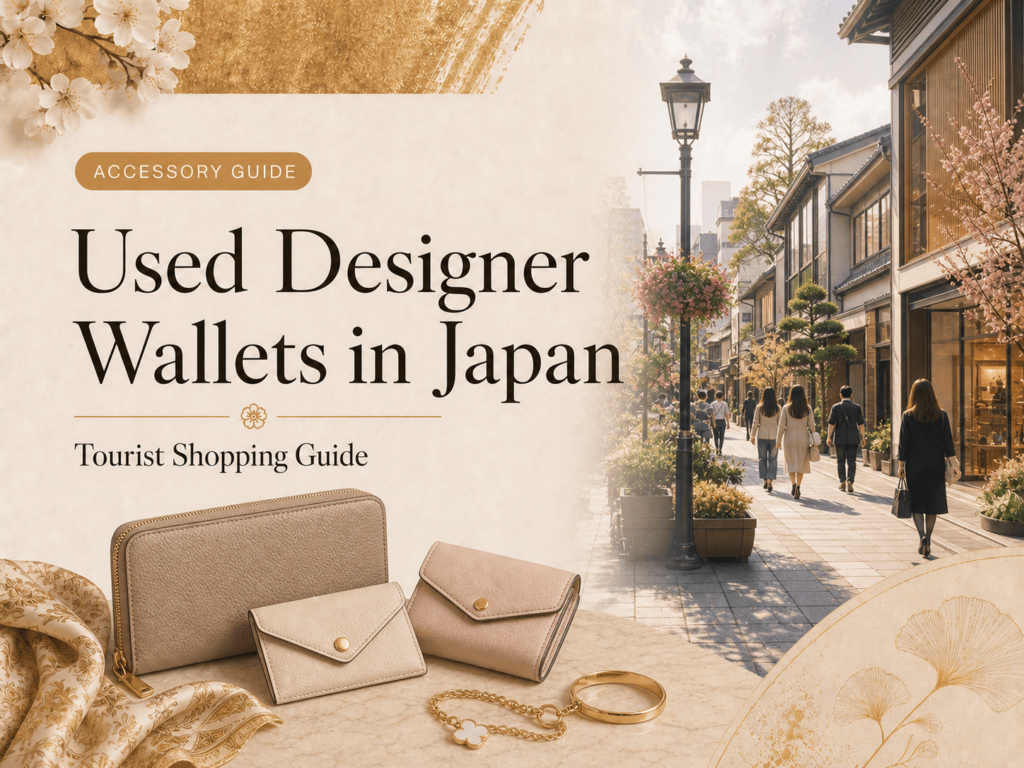
Japan's second-hand market can be useful for travelers comparing designer wallets, but a good purchase starts with the product rather than the store count. Inventory changes frequently, and two similar-looking items can differ in size, construction, condition, included accessories, and everyday practicality.
This guide explains how international visitors can plan a search, compare store formats, inspect the details that matter, and build a realistic route in Japan. It does not promise current inventory, prices, opening hours, tax-free service, authenticity guarantees, returns, warranties, or language support. Check official shop information and confirm item-specific details before buying.
Instagram DM
Not sure which shops to visit?
Quick Answer for Tourists
Choose one main shopping district, identify two contrasting resale formats, and keep one nearby backup. Start with a broad luxury or designer resale shop to understand the available formats and condition language. Use the second stop to compare a curated boutique or fashion-led store. Add a third only if it answers a clear question about size, design, condition, or price.
If you need one exact brand, model, color, material, or size, check current official listings or contact the shop before changing your itinerary. A category guide can help you choose where to search, but it cannot confirm what will remain available on the day of your visit.
JVG Editorial View
Wallets are a useful entry point to Japanese luxury resale because they are compact and easier to include in a travel route than large luggage. They still deserve careful comparison: edges, folds, card slots, coin compartments, closures, materials, and included items can affect everyday usefulness.
The most useful route is not the one with the greatest number of stores. It is the one that gives you enough contrast to understand the product. Build a shortlist before the trip, use the first shop as a reference, and leave time to revisit the strongest option after a break.
Where to Look in Japan
Ginza for a Polished Luxury Comparison
Ginza offers a concentration of established luxury-resale formats within a major shopping district. It suits travelers who want to compare designer wallets with other bags, accessories, watches, or jewelry. Building floors and separate avenues can slow a route, so save the exact address and entrance for each priority stop.
Shibuya, Harajuku, and Omotesando for Style Range
These neighboring Tokyo areas provide different perspectives. Shibuya and Harajuku are useful for fashion-led resale, while Omotesando adds a more curated luxury environment. Do not assume they form one effortless walk; hills, crowds, and side streets make a focused two-area route more realistic.
Shinsaibashi and Namba for Osaka Shopping
Shinsaibashi is the strongest Kansai base for combining luxury resale with designer fashion, while Namba can fit an Osaka Minami itinerary. Choose one central cluster and add the other only when it expands the comparison. Check the map before visiting because store names may use Osaka, Shinsaibashi, or nearby district labels.
Regional Cities for a Smaller, Focused Search
Nagoya, Fukuoka, Sapporo, Kobe, Hiroshima, Sendai, Kanazawa, and other regional cities may support useful resale stops. Their strength is often convenience rather than huge category depth. Confirm that the branch handles bags or accessories before making a special trip for designer wallets.
What to Compare Before Buying
Format and Daily Use
Compare bifold, long-wallet, compact, card-holder, and coin-purse formats against what you actually carry. Count cards, test access within shop rules, and consider whether local currency, receipts, and travel documents change your needs.
Edges, Corners, Folds, and Interior
Inspect high-contact areas, including corners, glazing, folds, card slots, coin compartments, lining, snaps, and zippers. Ask staff to explain any condition note and avoid treating a clean exterior as a complete condition assessment.
Materials and Hardware
Leather, coated canvas, fabric, metal hardware, and interior materials wear differently. Confirm the shop's item description rather than identifying a material from appearance alone. Check whether closures and hardware operate as expected during the permitted inspection.
Size and Travel Practicality
A wallet should fit the bags and pockets you expect to use in Japan and at home. Compare dimensions with your current wallet and allow for cards, cash, coins, and receipts. Compact does not automatically mean convenient if the layout does not suit you.
Included Items and Written Details
Dust bags, boxes, cards, tags, straps, pouches, receipts, and other accessories vary by item. Ask exactly what is included. Their presence does not replace a condition check, and their absence does not automatically make an item unsuitable. Keep the item description and receipt organized for the rest of your trip.
Price in Context
Compare price together with size, condition, material, practicality, included items, and the shop's current terms. Exchange rates and card-provider fees can affect the final amount in your home currency. Avoid treating the lowest displayed price as the answer when the products are not truly equivalent.
How to Choose the Right Store Format
Multi-Category Luxury Resale
Use a broad luxury reseller to learn which formats, materials, and price ranges appear in the current local market. These stores can also help when a traveler wants to compare designer wallets with bags, jewelry, watches, or other accessories. The category shown online does not guarantee that a particular design will be available in the branch.
Curated Vintage or Designer Boutiques
Curated stores can provide a clearer style perspective and may make it easier to compare distinctive eras or design directions. Their usefulness is curation, not a promise of wider stock or lower prices. Ask the same condition and practical-use questions you would ask in a larger store.
Fashion-Led Second-Hand Stores
Fashion resale is valuable when the item needs to work with clothing, footwear, or a particular look. It can reveal options outside a traditional luxury display. Confirm current bag and accessory categories before visiting, because the branch may focus more heavily on apparel.
Specialist Versus Convenient
A destination store is worthwhile when it answers a product question that nearby shops cannot. A convenient store near your hotel or station is useful when the category is broad and time is limited. Choose between them based on what remains unknown after the first comparison.
Managing the Purchase During the Rest of the Trip
Keep the receipt, item description, and supplied accessories together. Avoid overfilling, crushing, or placing the item loosely with liquids, sharp objects, or heavy luggage. Follow any care guidance provided by the shop and consider how the product will be carried through airports, trains, hotels, and changing weather.
If the purchase is valuable to you, decide where it will stay before continuing the shopping day. Do not assume that a shop, hotel, airline, card provider, or travel policy covers loss or damage. International shipping, customs, and declarations can involve separate rules, so confirm relevant requirements through the appropriate official sources.
When to Slow Down or Leave Without Buying
Pause when the dimensions are unclear, high-wear areas cannot be checked, closures do not feel right, a material description is uncertain, included items differ from your expectation, or purchase terms are not understood. Travel deadlines and the thought of limited stock can create pressure. Step away from the display, compare your notes, and ask one focused question at a time. If an essential concern remains unresolved, leaving without buying protects both the trip and the budget. A successful route can produce a clearer shortlist even when no purchase is made that day.
Suggested Shopping Route
Half-Day Route
Choose Ginza for a luxury-led comparison or Shibuya and Omotesando for a wider style range. Visit one broad reseller first, then one curated or fashion-led store. Take a break, review the dimensions and condition notes, and return to the stronger option if needed. Keep the route within one main district and one adjacent area.
One-Day Route
Use the morning to establish product format, fit, and acceptable condition. After lunch, compare a second district only when it offers a different resale environment. In Osaka, Shinsaibashi can serve as the main cluster with Namba as an optional extension. In Tokyo, pair Ginza with one other district instead of trying to cover the entire city.
Route Rules That Protect the Purchase
- Save official map pins, building names, and one nearby backup.
- Bring measurements from a product you already use.
- Photograph or write down item references and condition notes when permitted.
- Keep large luggage away from a detailed comparison route when possible.
- Check current category information before adding a distant branch.
- Leave enough time to return to a preferred item without rushing.
Best For Breakdown
Best for First-Time Luxury Resale Shoppers
- A wallet can be a manageable category for learning how Japanese resale shops describe condition and included items.
- Confirm current inventory before making a special journey.
- Compare the individual item rather than relying only on the brand.
Best for Travelers With Limited Luggage
- The compact format is easier to carry, but the purchase still needs a deliberate item check.
- Confirm current inventory before making a special journey.
- Compare the individual item rather than relying only on the brand.
Best for Gift Research
- Confirm dimensions, format, material, condition, and the recipient's preferences instead of choosing only by logo.
- Confirm current inventory before making a special journey.
- Compare the individual item rather than relying only on the brand.
Best for Design Comparison
- Use multi-category stores and curated boutiques to compare practical formats with more distinctive styles.
- Confirm current inventory before making a special journey.
- Compare the individual item rather than relying only on the brand.
JVG Shop Selection Notes
The shops below represent different resale environments for a designer wallets search in Japan. They are not ranked, and inclusion does not confirm live inventory. Use the shortlist to choose districts and store formats, then check official information before visiting.
ALLU Ginza
- Area: Ginza
- Best for: Curated luxury resale in ginza
- Why it fits this guide: It provides a polished starting point for comparing wallets with other designer accessories.
- Before visiting: Check the official website and map before visiting. Confirm current categories, inventory, hours, and purchase terms directly.
BRAND OFF Ginza Main Store
- Area: Ginza
- Best for: Multi-category luxury comparison
- Why it fits this guide: It gives travelers a broad resale format in a central luxury district.
- Before visiting: Check the official website and map before visiting. Confirm current categories, inventory, hours, and purchase terms directly.
KOMEHYO Ginza
- Area: Ginza
- Best for: Bags, wallets, and other luxury categories
- Why it fits this guide: It is relevant for comparing small leather goods within a wider pre-owned assortment.
- Before visiting: Check the official website and map before visiting. Confirm current categories, inventory, hours, and purchase terms directly.
AMORE Vintage Omotesando
- Area: Omotesando
- Best for: Curated vintage luxury accessories
- Why it fits this guide: It adds a boutique perspective for shoppers interested in distinctive design.
- Before visiting: Check the official website and map before visiting. Confirm current categories, inventory, hours, and purchase terms directly.
BRAND OFF Shibuya Store
- Area: Shibuya
- Best for: Central tokyo luxury resale
- Why it fits this guide: It offers a Shibuya alternative for travelers combining wallets with fashion shopping.
- Before visiting: Check the official website and map before visiting. Confirm current categories, inventory, hours, and purchase terms directly.
ALLU Shinsaibashi
- Area: Shinsaibashi
- Best for: Curated luxury resale in osaka
- Why it fits this guide: It gives Kansai travelers a central Shinsaibashi comparison point.
- Before visiting: Check the official website and map before visiting. Confirm current categories, inventory, hours, and purchase terms directly.
BRAND OFF Shinsaibashi Store
- Area: Shinsaibashi
- Best for: Multi-category osaka resale
- Why it fits this guide: It adds another Osaka format for checking small leather goods and accessories.
- Before visiting: Check the official website and map before visiting. Confirm current categories, inventory, hours, and purchase terms directly.
How to Compare These Shops
Start With Store Format
A multi-category luxury reseller can provide a broad reference. A curated boutique may emphasize design and presentation. A fashion-led resale store can help you understand styling and practical use. Compare different roles before visiting several shops that offer almost the same experience.
Repeat the Same Product Checks
Use the same checklist for every item: dimensions, capacity or layout, material, visible condition, closures, high-wear areas, included items, total price, and shop terms. Consistent questions reveal meaningful differences and reduce the effect of lighting or presentation.
Separate Product Appeal From Travel Pressure
Limited vacation time can make an item feel more urgent than it is. Take a break after the first serious option, review photographs or notes when permitted, and ask whether the product still fits your use. A clear route should reduce pressure rather than create it.
Confirm Terms Before Payment
Payment methods, tax-free procedures, returns, repairs, warranties, shipping, and other services vary. Ask the current shop about the individual purchase and understand the written terms before paying. Bring your passport if you plan to ask about tax-free shopping, but do not assume eligibility.
Shopping Without Speaking Japanese
Save the product name, reference or photo, preferred dimensions, color, material, and budget range on your phone. Short questions are easier to translate than a long explanation. Show the item tag and ask staff to clarify any condition or policy note that affects the decision.
Useful questions include:
- "Can I check the condition?"
- "What are the dimensions?"
- "What is included with this item?"
- "Could you explain this note?"
- "May I try it on?"
- "What are the return terms for this item?"
English support varies. Translation apps can help, but important measurements, prices, included items, and purchase terms should be confirmed directly.
What to Check Before Visiting
- Check the official website and map before visiting.
- Confirm that the branch currently handles bags or designer accessories.
- Remember that inventory, prices, and displayed items change frequently.
- Bring product dimensions, reference images, and your practical requirements.
- Ask directly about tax-free procedures, returns, repairs, warranties, and shipping.
- Confirm all included items and the total price before payment.
Related JVG Guides
- vintage bags in Japan
- how to buy second-hand luxury goods in Japan
- used designer tote bags in Japan
- used designer crossbody bags in Japan
- complete guide to second-hand stores in Japan
- shopping tips for international visitors
- how to shop second-hand in Japan without speaking Japanese
Planning Support
If you are looking for specific categories such as vintage bags, watches, or designer resale, consider planning your route before visiting shops. JVG can help organize areas, shop types, and a realistic sequence for your travel day.
Need help planning your vintage shopping route in Japan? Contact JVG for private shopping support.
Shopping Support: /shopping-support/
FAQ
Is Japan a useful place to look for used designer wallets?
Japan has many resale formats that may carry designer bags and accessories. Use official category information and current listings to choose shops, because inventory changes frequently.
Can I expect a specific brand or model?
No. Check official listings or contact the shop when one brand, design, size, color, or material is essential. Keep a nearby alternative in the route.
How should I compare condition?
Inspect the high-wear areas, structure, closures, interior, hardware, and the shop's written condition notes. Ask staff to explain anything unclear and compare similar products using the same checklist.
Is tax-free shopping available?
Availability, eligibility, procedures, and item treatment vary by shop and purchase. Bring your passport if you plan to ask, but confirm the current process before payment.
What should I confirm before buying?
Confirm dimensions, material, visible condition, operation of closures, included accessories, total price, payment method, and the current return or service terms for that item.
Continue the shopping journey