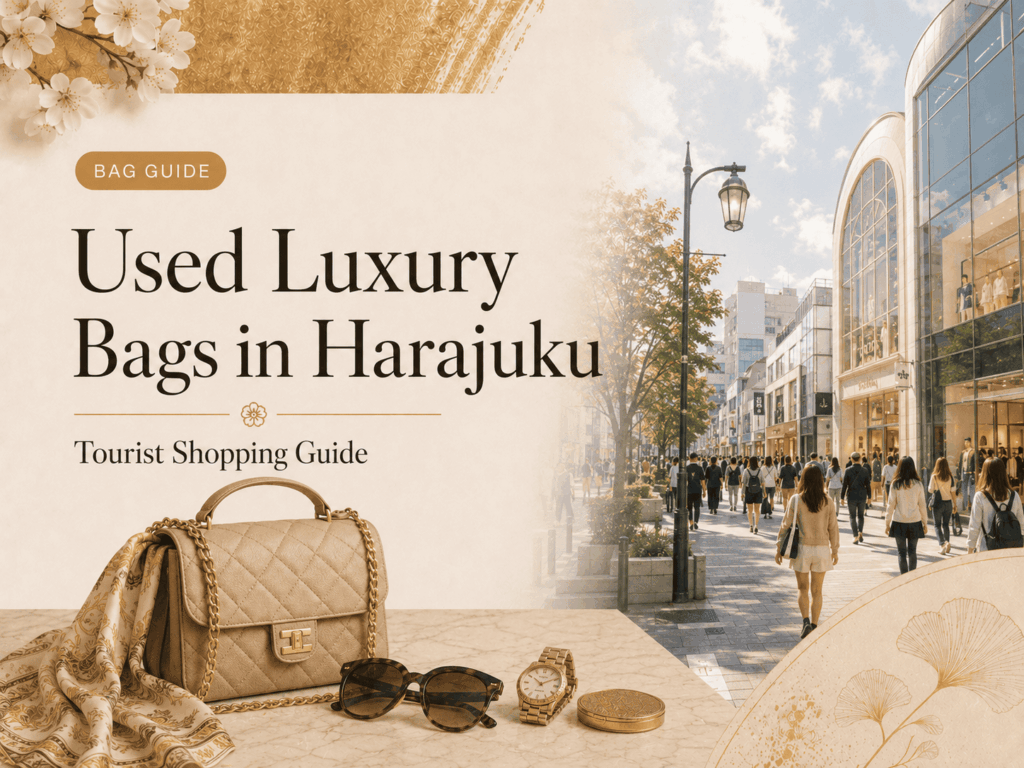
Harajuku combines used designer bags with second-hand fashion, streetwear, and accessories in a way that feels different from Tokyo's formal luxury districts. It works best for travelers who want bags to be part of a wider style-focused route. This guide focuses on used luxury bags, how different shopping zones compare, and what international visitors should check before spending time on high-value or one-of-a-kind purchases.
The short answer is to begin with one primary area, compare several shop formats, and keep alternatives nearby. You may find designer handbags, shoulder bags, crossbody bags, totes, small leather goods, and fashion accessories, but availability changes continuously and this guide does not imply that a particular item, brand, size, material, or price will be available when you visit. Check official store information and the map before traveling.
Instagram DM
Not sure which shops to visit?
Quick Answer
Harajuku should not be approached as a smaller version of Ginza. Its strength is the ability to compare bags within a wider designer-fashion and street-style context. Travelers seeking only formal luxury resale may prefer Ginza or Shinjuku, while those comparing bags with clothing and accessories can find Harajuku more coherent.
For most visitors, a useful plan is not the route with the greatest number of stops. It is the route that gives enough comparison without exhausting the traveler before a purchase decision. Start with a reference shop, add two or three alternatives with different strengths, and leave time to reconsider. If a shop does not have the right item, the route should still be worthwhile because the surrounding district fits the rest of the day.
JVG Editorial View
JVG's view is that used luxury bags should be treated as a comparison task rather than a promise of discovery. The value of a Harajuku shopping plan comes from seeing differences in shop format, presentation, category emphasis, and route convenience. A specialist environment may help with focused research, while a multi-category resale shop can show how the same budget compares across jewelry, bags, watches, fashion, or accessories.
The guide is especially relevant to fashion-focused visitors who want to include used designer bags in a Harajuku shopping day. It is less suitable for anyone expecting current inventory to be predictable from an old photograph, social post, or previous travel report. Second-hand stock is individual and can change before arrival. Use official links to confirm locations and current store information, then treat the actual visit as the point where detailed comparison begins.
Understanding the Main Shopping Areas
The useful planning zones in this guide are Harajuku Station, Meiji-jingumae, and Jingumae and the Omotesando edge. They should not be treated as interchangeable. Each has a different balance of transport convenience, shop format, surrounding attractions, and time required for comparison.
Choose the area before choosing the final sequence of stores. Look at the station you will actually use, the side of the station or district where each shop sits, and where you want to finish the day. Large stations can add walking and navigation time even when two addresses appear close. In shopping streets, crowds and traffic signals may also change the practical order. Check the map shortly before visiting.
Harajuku Station
Use Harajuku Station when it best matches the main purpose of the day. Begin with a shop that provides a broad reference, then compare one or two different formats. Avoid making the first attractive item the automatic purchase. Record the details that matter to you and decide what would justify returning after another comparison.
Meiji-jingumae
Choose Meiji-jingumae when transport, accommodation, sightseeing, or another planned activity makes it more efficient. A convenient area can be more useful than a famous district if it gives you enough credible options without a cross-city transfer. Keep the route compact and confirm where each entrance is located.
Jingumae and the Omotesando edge
Treat Jingumae and the Omotesando edge as an alternative or extension, not a compulsory part of every route. It is most useful when the area already fits the trip or offers a meaningfully different shop type. If adding it creates a rushed schedule, save it for another day.
What You May Find
Travelers may encounter designer handbags, shoulder bags, crossbody bags, totes, small leather goods, and fashion accessories. The exact mix depends on the shop and the day. Some stores present tightly edited designer goods, some combine several luxury categories, and others operate as broader fashion or reuse shops. A larger floor does not automatically mean a better match for one category, and a smaller store does not guarantee specialized inventory.
Before comparing price, confirm that the items are actually comparable. Differences in model, year, material, size, condition, accessories, and store service can make a direct numerical comparison misleading. Ask for clarification when a label or description is unclear. Do not infer current policies from another branch of the same company.
JVG Shop Selection Notes
The following shops give this guide a mix of locations and store formats. Their inclusion is for route planning, not a permanent ranking. Current inventory, opening details, payment methods, tax-free procedures, returns, guarantees, and aftercare should be checked directly with the shop.
2nd STREET Harajuku
- Area: Harajuku
- Best for: A broad fashion and bag comparison
- Why it fits this guide: It helps travelers understand the role of a general second-hand fashion store in Harajuku.
- Before visiting: Confirm the current location from Meiji-jingumae Station and check the official website before visiting. Inventory and store services can change.
BRAND COLLECT Harajuku
- Area: Harajuku
- Best for: Designer and streetwear resale
- Why it fits this guide: It suits shoppers who want bags to sit within a wider branded-fashion search.
- Before visiting: Check the official website and map before visiting. Inventory and store services can change.
BRAND COLLECT Harajuku Takeshita St.
- Area: Harajuku
- Best for: A Takeshita Street-area option
- Why it fits this guide: It can fit a compact route when the exact location works with the visitor's map.
- Before visiting: Check the official website and map before visiting. Inventory and store services can change.
Kindal Harajuku
- Area: Harajuku
- Best for: Curated designer fashion and accessories
- Why it fits this guide: It is relevant for travelers comparing bags with clothing, shoes, and accessories.
- Before visiting: Confirm the current location from Harajuku Station and check the official website before visiting. Inventory and store services can change.
RAGTAG Harajuku
- Area: Harajuku
- Best for: Used designer fashion
- Why it fits this guide: It provides another fashion-led perspective instead of treating Harajuku as a luxury-only district.
- Before visiting: Check the official website and map before visiting. Inventory and store services can change.
How to Compare These Shops
Use the first shop as a reference rather than as the automatic winner. Note the category mix, how clearly condition is presented, whether staff can provide the information you need, and how the displayed item fits your actual travel plans. Then use the second and third stops to test whether the first option remains convincing.
Compare dimensions, strap condition, corners, handles, lining, hardware, included accessories, displayed price, and store policies. For a high-value purchase, slow down enough to inspect the item under normal light and understand what is included. If measurements matter, write them down in advance. If you are carrying the item internationally, consider size, weight, packaging, and your own customs responsibilities.
Compare Like with Like
Two items from the same brand are not necessarily equivalent. Model, production period, material, dimensions, condition, and accessories can differ. Compare the complete purchase rather than the logo alone. When information is unavailable, treat that uncertainty as part of the decision instead of filling the gap with an assumption.
Separate Route Convenience from Product Fit
A convenient shop is valuable, but convenience should not replace product fit. Conversely, crossing a city for one uncertain stop may not be sensible if several relevant options are already near the day's main area. Balance the potential value of an additional comparison against travel time and energy.
Keep a Short Decision Record
For serious comparison, note the shop, item description, displayed price, condition points, included accessories, and any question that remains unanswered. Follow each shop's rules about photography. A short written record is more reliable than trying to remember several similar items at the end of the day.
Best For Breakdown
Best for First-Time Visitors
First-time visitors should choose the easiest transport base and limit the route to three or four meaningful stops. A broad reference shop followed by two more focused comparisons is usually enough to understand the local range without turning the day into a race.
Best for Category-Focused Shoppers
Category-focused shoppers should prioritize stores whose descriptions and overall format align with used luxury bags. Still keep one broader resale option in the route. It can reveal alternatives, provide context, and prevent the plan from depending on one highly specific inventory assumption.
Best for Travelers with Limited Time
Travelers with limited time should stay within one district or station area. Choose the route that fits the rest of the trip and verify the map before leaving. The theoretical best shop is not useful if reaching it removes the time needed to inspect and compare.
Best for Comparing Several Shop Types
A mixed route is useful for visitors who are still deciding between a specialist, luxury resale store, designer-fashion shop, and general reuse store. The purpose is to learn which format matches the purchase, not to declare one format universally better.
Suggested Shopping Route
For a half day, select one main zone such as Harajuku Station or Meiji-jingumae. For a fuller day, a second zone can be added only after checking the map and transport. Do not assume that every store is close merely because it shares the same city or neighborhood label.
Half-Day Route
Begin after checking official opening information for the day. Visit one broad reference point first and spend enough time understanding the category range. Continue to a second shop with a different format, then take a short break before the final comparison. Use the break to review notes rather than adding more stops automatically.
End near transport, accommodation, or another planned attraction. If the route has produced one strong option, return only if the time and store schedule allow. Do not assume an item will be held unless the shop explicitly confirms its current policy.
Full-Day Route
A full day can include two areas, but only when the connection is straightforward. Complete the first area's comparison before transferring. After lunch or a rest, use the second area to test a different shop style or category emphasis. Avoid moving back and forth repeatedly across the city.
Leave a buffer at the end of the day. High-value shopping often takes longer than expected because questions, inspection, payment, packaging, or a second look can add time. Check the map before visiting and keep a backup plan if one stop is closed or no longer fits the route.
Shopping Without Speaking Japanese
Many travelers complete second-hand shopping in Japan without fluent Japanese, but preparation helps. Save the product category, preferred size or dimensions, material, color, and budget range on your phone. Use short questions and confirm numbers carefully. Translation tools can help with simple communication, but they should not replace checking written store information.
Useful questions include whether an item can be viewed more closely, what accessories are included, and where the shop's current policy is written. If a detailed answer is important to the purchase, ask the staff to show the relevant information rather than relying on a guess. Respect the pace and rules of the shop.
Price, Condition, and Inventory
Prices vary because second-hand items are not standardized. Brand, model, age, material, demand, visible wear, repairs, included accessories, and the shop's service model may all affect the displayed price. This guide does not provide a universal price benchmark. Compare the actual items available during your trip.
Condition descriptions and grading systems can also differ. Read the specific notes, inspect the areas most relevant to the category, and ask questions before buying. Do not assume that the same word or rank means exactly the same thing at every company. Inventory changes frequently, including within the same day.
Tax-free procedures, accepted payment methods, returns, guarantees, reservations, and aftercare can vary by store and purchase. Prepare a passport if you plan to ask about tax-free shopping, but do not assume eligibility or availability. Check official store information before visiting and confirm the current terms directly.
What to Check Before Visiting
- Check the official website for the current location and store information.
- Confirm the entrance and route on a current map.
- Make sure the shop format is relevant to used luxury bags.
- Keep at least one alternative because inventory changes frequently.
- Compare item condition, measurements, accessories, and displayed price before buying.
- Confirm payment, tax-free, return, guarantee, reservation, and delivery policies directly.
- Plan how the purchase will fit in luggage and check your own customs responsibilities.
- Avoid building a route around an item shown in an undated or unofficial post.
Common Planning Mistakes
The first mistake is adding too many stores. A long list can reduce the time available for inspection and make every stop feel rushed. The second is choosing areas by reputation without checking the actual map. The third is assuming that a brand or category shown online will still be available.
Another mistake is comparing displayed prices without comparing the items themselves. Condition, size, accessories, material, and service may differ. Finally, do not make the route dependent on tax-free availability, a return policy, or a guarantee that has not been confirmed for the exact store and purchase.
Related JVG Guides
- vintage bag shopping in Japan - Continue with a guide focused on this part of the trip.
- vintage and second-hand shops in Harajuku - Continue with a guide focused on this part of the trip.
- Harajuku and Omotesando vintage shopping - Continue with a guide focused on this part of the trip.
- Shibuya versus Harajuku for vintage bags - Continue with a guide focused on this part of the trip.
- second-hand shopping tips for international visitors - Continue with a guide focused on this part of the trip.
Need help planning your vintage shopping route in Japan? Contact JVG for private shopping support.
Shopping Support: /shopping-support/
FAQ
Is Harajuku good for used luxury bags?
It can be, especially when the areas and shop formats in this guide match your category and travel route. The practical value comes from having several comparison options, not from assuming every store will carry a particular item. Check official information and maps before visiting.
How many shops should I visit in one day?
Three to five meaningful stops are usually enough for a focused comparison. The right number depends on distance, station size, how long inspection takes, and whether you plan to return to an earlier shop. Quality of comparison matters more than the total count.
Can I confirm inventory before visiting?
Some shops may publish or discuss current items, but availability can change and procedures differ. Check the official website or contact the shop through its current official channel. Do not treat an old listing, photograph, or third-party post as confirmation.
Is tax-free shopping available at second-hand stores?
It may be available for eligible purchases at some stores, but participation, documentation, and procedures can vary. Bring your passport if relevant and confirm the current rules directly with the store before purchase.
What should I compare before buying?
Compare the exact item's condition, dimensions, materials, visible wear, included accessories, displayed price, and applicable store policies. For an expensive purchase, take enough time to resolve important questions before payment.
Continue the shopping journey