Instagram DM
Not sure which shops to visit?
Overview
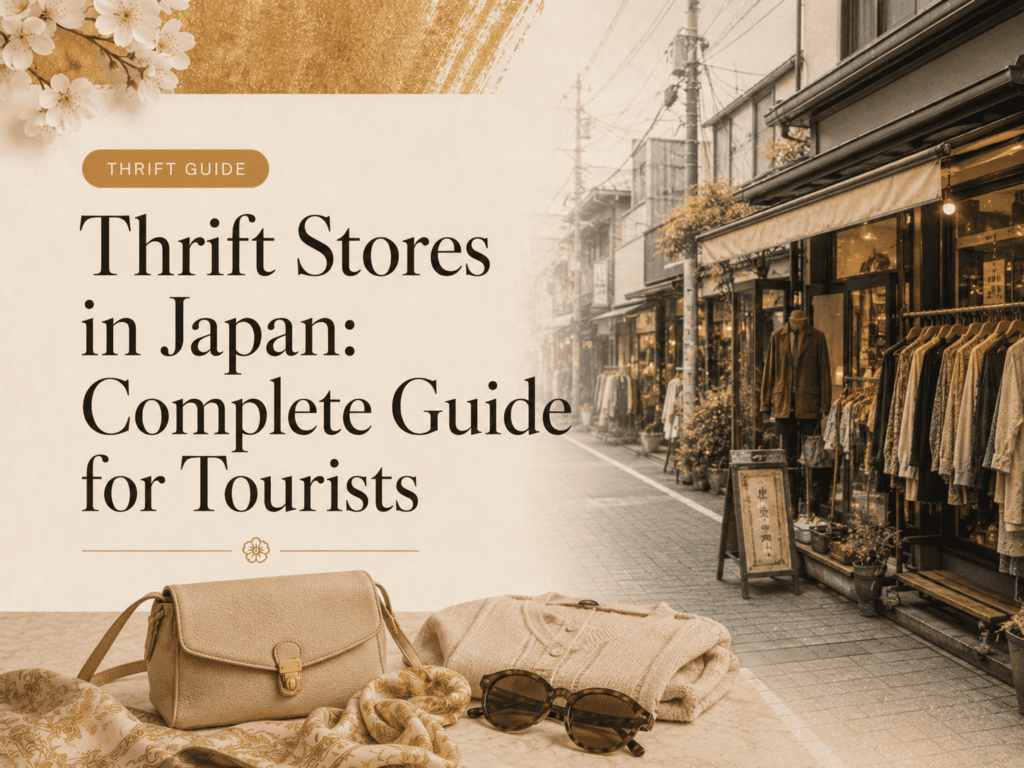
Travelers searching for thrift stores in Japan will find an excellent second-hand market, but the store names and business models may be different from those at home. Japanese reuse shops, used clothing stores, vintage boutiques, and brand resale shops can all appear in a thrift-shopping search, yet they serve different budgets and shopping goals.
The quick answer is to search more broadly than the English word "thrift." Use reuse shop, second-hand store, used clothing, and vintage shop alongside the city or neighborhood you plan to visit. This guide explains those differences and helps tourists choose areas and store types without assuming current inventory, prices, tax-free service, or branch policies.
JVG Editorial View
JVG uses the word thrift when it matches how international visitors search, while keeping the Japanese store landscape accurate. A traveler looking for bargains, used clothing, curated vintage, or luxury resale may need four different store types. The most helpful guide explains those differences before recommending a route.
For a first trip, choose the category and area first, then compare a few relevant shops. This avoids treating every second-hand business as a charity-style thrift store and gives travelers a more realistic shopping day.
Are There Thrift Stores in Japan?
Yes, but the word "thrift store" can be misleading if you expect the same model you know from another country. In some Western countries, thrift stores are often connected to charities, donations, community organizations, or very low-price second-hand goods. Japan has second-hand and reuse businesses, but many are commercial resale shops with structured buying, selling, inspection, pricing, and category organization.
That does not make them less interesting. It simply means that a traveler should adjust expectations. A Japanese reuse shop may feel clean, organized, and commercial. A vintage shop may be curated and style-focused rather than bargain-focused. A brand resale shop may feel closer to a boutique than a thrift store. A used clothing shop may be affordable in one area and premium in another.
If your goal is bargain hunting, search broadly and compare several store types. If your goal is vintage fashion, focus on neighborhoods with clothing culture. If your goal is luxury resale, use brand resale shops and take more time to compare condition.
Common Japanese Store Types Behind the Word "Thrift"
Reuse Shops
A reuse shop is one of the most important concepts for travelers to understand. These shops resell used goods and may handle clothing, bags, electronics, home items, hobby goods, books, watches, furniture, or mixed categories. Some well-known Japanese chains use different formats depending on category and location.
Reuse shops can be useful for thrift-style browsing because they are often broader and more everyday than a curated vintage boutique. They may be good for clothing, accessories, lifestyle goods, hobby items, and unexpected finds. However, not every reuse shop is designed for tourists, and not every branch will have the same category mix. Check official store information before building a route around a specific location.
Used Clothing Stores
Used clothing stores are closer to what many travelers imagine when they think about thrift shopping for fashion. They may sell casual second-hand clothing, vintage clothing, streetwear, designer pieces, denim, jackets, military clothing, or seasonal fashion. Some are affordable and relaxed. Others are highly curated.
In Tokyo, areas such as Harajuku, Shibuya, Koenji, Shimokitazawa, Kichijoji, Daikanyama, and parts of Setagaya can be useful for clothing-focused routes. In Osaka, Shinsaibashi, Namba, and nearby fashion areas may be useful. The best area depends on whether you want street fashion, vintage clothing, luxury resale, or casual browsing.
Vintage Shops
Vintage shops in Japan are often more curated than general thrift stores. They may focus on specific eras, styles, countries, brands, or fashion subcultures. Prices can vary widely. A vintage shop might be excellent for quality and styling, but not necessarily cheap.
This is important for expectations. If you search for thrift stores and arrive at a curated vintage boutique, do not assume the prices will match bargain thrift stores in your home country. You are paying for selection, condition, curation, location, and sometimes rarity.
Brand Resale Shops
Brand resale shops are a major part of Japan's second-hand market. They handle pre-owned luxury bags, wallets, watches, jewelry, accessories, and sometimes designer fashion. These are not thrift stores in the casual sense. They are better understood as used luxury or designer resale shops.
If you are shopping for high-value items, compare condition carefully. Ask about accessories, store policy, and any important details before buying. Avoid assuming that every store has the same inspection, return, tax-free, or warranty process.
Specialty Second-Hand Shops
Japan also has specialty second-hand shops for watches, cameras, records, instruments, books, anime goods, toys, and hobby items. These can be excellent for travelers with a specific interest, but they are not usually "thrift" in the low-price general sense. They are category specialists.
What Thrift-Style Shoppers Can Buy in Japan
If your goal is to enjoy the thrill of second-hand discovery, Japan offers many categories. Clothing is the most obvious. You may find outerwear, shirts, denim, knitwear, jackets, dresses, bags, shoes, hats, accessories, and streetwear. Sizes can differ from what you are used to, so check measurements and try items on when possible.
Small accessories can also be rewarding: scarves, belts, wallets, jewelry, watches, sunglasses, pins, and bags. For tourists, portable items are easier than bulky goods. If you buy fragile items, think about luggage protection before paying.
Books, records, toys, anime goods, home goods, and hobby items can also be fun, especially if you enjoy browsing. For electronics or cameras, inspect carefully and confirm compatibility with your home country before buying.
For luxury items, the shopping mindset should shift from thrift to careful comparison. A used designer bag or watch may be second-hand, but it is still a high-consideration purchase. Compare condition, accessories, price, store policy, and your own confidence level.
Price Expectations: Is Thrift Shopping in Japan Cheap?
Sometimes, but not always. Japan has affordable second-hand shopping, but it also has premium vintage and luxury resale. The price depends on category, condition, location, brand, rarity, and store type. A casual used shirt may be inexpensive. A curated vintage jacket may be more expensive than expected. A pre-owned luxury bag or watch can still be a serious purchase.
Travelers should avoid judging every store by the word "thrift." Instead, ask what kind of store it is. Is it a reuse chain? A curated vintage boutique? A designer resale shop? A watch specialist? A camera specialist? Each type has its own pricing logic.
Condition also affects price. A lower price may reflect visible wear, missing accessories, repair history, odor, stains, or less popular size or color. A higher price may reflect better condition, included accessories, a desirable model, or a more curated retail environment. Compare before deciding.
Condition and Inventory: What to Check
Thrift-style shopping rewards curiosity, but careful inspection still matters. For clothing, check stains, fading, seams, zippers, buttons, lining, fabric thinning, holes, odor, and alterations. Look at the item under good light if possible. Try it on or check measurements, because size labels may not match your usual system.
For bags, check corners, handles, straps, zipper movement, interior, hardware, glazing, smell, and whether accessories are included. For shoes, check soles, insoles, heel wear, odor, and fit. For watches, cameras, and electronics, inspect more slowly and ask questions before buying.
Inventory changes often. A shop that looked amazing on social media may have a completely different selection when you visit. That is normal. The best thrift route is flexible. Build a route with several shops in one area so you can compare and keep moving if one shop does not match your taste.
How to Search for Thrift Stores in Japan
Use more than one search phrase. In English, try:
- thrift stores in Japan
- thrift shopping Japan
- second-hand stores Japan
- used clothing stores Japan
- vintage shops Japan
- second-hand clothing Tokyo
- vintage shopping Tokyo
- reuse shop Japan
In Japanese map searches, useful terms may include:
- furugi, meaning used clothing
- riyusu, meaning reuse
- risaikuru shoppu, meaning recycle shop
- chuko, meaning used or pre-owned
- burando kaitori or burando riyusu, often related to brand resale
You do not need to speak Japanese fluently to use these terms. Copy them into a map app or search engine, then confirm the official store information. When in doubt, save the shop name, address, nearest station, and official website before you go.
Where to Go for Thrift-Style Shopping
Tokyo is the easiest city for many first-time visitors because it has many different store types. Harajuku and Shibuya can work for fashion and streetwear. Koenji and Shimokitazawa are useful for vintage clothing. Ginza and Omotesando are more relevant for luxury resale and polished shopping. Nakano can be useful for watches and subculture shopping. Ueno and Ikebukuro can support broader second-hand routes.
Osaka is strong for energetic shopping routes, especially around Shinsaibashi, Namba, and Umeda. Kyoto is better approached with a calmer route around sightseeing and central shopping areas. Regional cities such as Nagoya, Fukuoka, Sapporo, Kobe, Yokohama, Sendai, Hiroshima, Kanazawa, and others can also be useful, especially if you are already visiting those destinations.
The best city is not always the biggest. The best city is the one that fits your itinerary and gives you enough time to compare shops without rushing.
How to Shop Without Speaking Japanese
Many tourists shop successfully with limited Japanese. Preparation is the difference. Save store information in advance. Use map apps to confirm entrances and floors. Prepare simple questions in a translation app. Keep your request specific and polite.
Useful phrases to prepare include:
- I am looking for used clothing.
- May I try this on?
- May I check the condition?
- Are there any stains or damage?
- Is tax-free shopping available here?
- What payment methods can I use?
- Can I return or exchange this item?
- May I take a photo?
Some shops may have English-speaking staff, but do not rely on it. If a policy matters, confirm slowly. For practical help, read JVG's guide to shopping second-hand in Japan without speaking Japanese.
Suggested Shopping Route
For a half-day route, choose one neighborhood and keep the route simple. If your priority is clothing, choose Harajuku, Shibuya, Koenji, or Shimokitazawa rather than mixing too many areas. If your priority is luxury resale, choose Ginza or Omotesando. If your priority is broad second-hand browsing, choose an area with multiple shop types and easy transport.
For a full day, choose two areas at most. A Tokyo fashion day might combine Harajuku and Shibuya, or Koenji and Shimokitazawa. A luxury resale day might combine Ginza and Omotesando. An Osaka day might focus on Shinsaibashi and Namba. Leave space for breaks, fitting rooms, and decision time.
Do not make the route too tight. Thrift-style shopping is unpredictable, and that is part of the pleasure. A looser route gives you room to follow your taste while still staying organized.
How Thrift Shopping Expectations Change in Japan
A traveler who loves thrift stores at home may need to adjust three expectations in Japan: purpose, price, and curation.
The first difference is purpose. In some countries, thrift stores are strongly connected to donations, local charities, and community reuse. In Japan, many second-hand stores are commercial resale businesses. They may buy items from customers, evaluate condition, and price them according to demand. This can make stores feel more organized and retail-like than expected.
The second difference is price. Japan can be excellent for affordable finds, but not every used item is cheap. A vintage jacket in a carefully curated shop may be priced for style and selection. A used luxury bag may still be expensive because it is a high-value item. A watch may be priced based on condition, accessories, and reference demand. If you expect every second-hand store to be low-cost, Japan can feel confusing. If you expect a spectrum from bargain to premium, it becomes much easier to navigate.
The third difference is curation. Many Japanese vintage and used clothing shops have a clear taste. That taste can be part of the value. You may find clean displays, edited racks, careful styling, and items selected for a specific customer. This is not always bargain thrift. It is often second-hand fashion retail.
Best For Breakdown
Clothing and Outerwear
Clothing is the easiest category for many visitors because it is portable and fun to browse. Jackets, denim, shirts, knitwear, military pieces, workwear, dresses, and streetwear can all be rewarding. The main issue is sizing. Try items on when possible, and check measurements instead of trusting labels.
Small Accessories
Accessories are excellent for travelers with limited luggage space. Belts, scarves, wallets, hats, sunglasses, jewelry, pins, and small bags can be easier to carry than coats or shoes. They also make good souvenirs because they are usable after the trip.
Records, Books, and Hobby Goods
Japan can be rewarding for records, books, manga, toys, figures, and hobby items. These categories are fun if you enjoy browsing, but language, weight, and fragility may matter. Check condition carefully and think about packing.
Cameras and Electronics
Used cameras and electronics can be exciting, but they require more caution. Check whether the item works, whether accessories are included, whether language settings are usable, and whether the item is compatible with your needs. A low price is not useful if the item cannot be used when you return home.
Luxury Items
Luxury resale is part of Japan's second-hand market, but it should be treated differently from casual thrift shopping. Compare condition, accessories, store policy, and official details before buying. If you are new to the category, read JVG's buying guides before visiting shops.
How to Combine Thrift and Vintage Routes
A strong thrift-style route often combines several store types. For example, a fashion route in Tokyo might include a used clothing store, a vintage boutique, and a broader second-hand shop. This gives you a better sense of price and selection.
In Harajuku and Shibuya, expect a stronger style and street fashion angle. In Koenji and Shimokitazawa, expect more vintage clothing discovery. In Ginza and Omotesando, the route shifts toward luxury resale and curated shopping. In Osaka, Shinsaibashi and Namba can provide a lively mix. In Kyoto, keep the route shorter and more relaxed.
A traveler with limited time should avoid mixing too many purposes. If your main goal is affordable clothing, do not fill the day with luxury resale. If your main goal is a vintage bag, do not spend all your energy on general thrift browsing. Decide what success looks like before you begin.
What to Check Before Visiting
Most second-hand shopping problems come from rushing. Slow down if the item is expensive, if the condition is unclear, if the size is uncertain, if the shop policy matters, or if you are buying because you feel afraid you will never see it again.
For clothing, slow down when you notice stains, odor, fabric wear, missing buttons, or sizing doubts. For bags, slow down when corners, handles, interior, zipper, hardware, or smell need more inspection. For watches and electronics, slow down whenever you cannot confirm operation, accessories, or policy.
A good thrift route should leave room for not buying. Sometimes the best decision is to learn the market on the first day and return later with a clearer idea of what you want.
JVG Shop Selection Notes
Central Tokyo Reuse Options
- Area: Ginza, Shibuya, Shinjuku, and Ueno
- Best for: Travelers comparing familiar reuse-shop formats across major visitor areas
- Why it fits this guide: These locations help explain how branch category mix and neighborhood context can change the thrift-style experience.
- Before visiting: Confirm the exact branch, map, and current categories through official information.
Sapporo and Regional Comparison
- Area: Sapporo and wider Japan
- Best for: Visitors adding second-hand browsing outside the largest Tokyo shopping districts
- Why it fits this guide: A regional stop shows why thrift-style searches should include reuse shops and area-specific planning.
- Before visiting: Check branch details and do not assume the same inventory or services as a Tokyo location.
Related JVG Guides
Use these JVG guides to move from thrift-style planning into specific areas and categories:
- Tokyo vintage shopping guide for a broad Tokyo overview.
- Tokyo vintage fashion shopping guide for fashion-focused planning.
- Harajuku and Omotesando vintage shopping guide for a style-focused route.
- Shibuya vs Harajuku vintage shopping guide for comparing two fashion areas.
- Osaka vintage shopping itinerary for Kansai planning.
- How to shop second-hand in Japan without speaking Japanese for language preparation.
Shopping Support
If you are planning a focused second-hand shopping day in Japan, JVG can help you organize areas, shop types, and realistic routes. This is especially useful if your idea of "thrift" includes several different Japanese store types, such as vintage clothing, reuse shops, brand resale, and used watches.
Need help planning your vintage shopping route in Japan? Contact JVG for private shopping support.
Shopping Support: /shopping-support/
FAQ
Are thrift stores common in Japan?
Japan has many second-hand and reuse stores, but they may not match the charity-shop model common in some countries. Search for thrift stores, reuse shops, used clothing stores, second-hand stores, and vintage shops.
What is the difference between a thrift store and a reuse shop in Japan?
A reuse shop is usually a commercial resale store that buys and sells used goods. It may carry many categories. A thrift store, in English, often suggests donation-based or charity-linked shopping, which is not always the Japanese model.
Is thrift shopping in Japan cheap?
It can be, but not always. Casual used goods may be affordable, while curated vintage, designer resale, and specialist items can be priced higher. Compare condition and store type before judging value.
Where should first-time visitors go for thrift-style shopping in Tokyo?
Harajuku, Shibuya, Koenji, Shimokitazawa, and Kichijoji can be useful for clothing. Ginza and Omotesando are better for luxury resale. Choose based on category, not just distance.
Can I use tax-free shopping at thrift stores in Japan?
Some stores may offer tax-free shopping, but it depends on the store and conditions. Check official store information and ask staff before buying.
Continue the shopping journey