Instagram DM
Not sure which shops to visit?
Overview
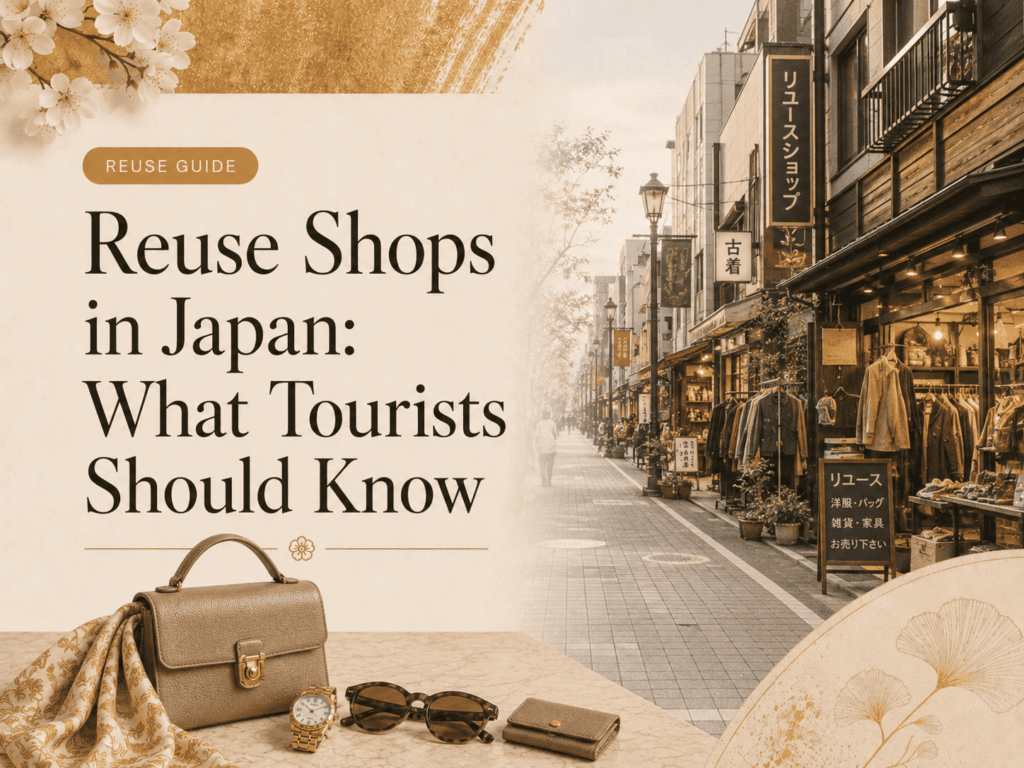
Reuse shops are a central part of second-hand shopping in Japan. They buy and resell used items across categories that may include clothing, bags, watches, electronics, books, hobby goods, furniture, and accessories, although the selection varies by chain and branch.
For tourists, the key is understanding that a reuse shop is usually a commercial second-hand business rather than a charity thrift store. This guide explains the Japanese reuse-shop concept, the kinds of stores you may encounter, useful search terms, and what to confirm before visiting. Current stock, prices, hours, tax-free service, payment options, and return policies should always be checked with the individual shop.
JVG Editorial View
JVG treats reuse shops as a distinct and essential part of Japan's second-hand market. They are useful not because every branch promises the same items, but because they help travelers compare everyday resale formats, categories, and neighborhoods beyond curated vintage boutiques.
The most effective plan starts with a purpose: clothing, bags, watches, books, electronics, hobby goods, or broad browsing. From there, choose branches and areas that fit the trip rather than assuming the nearest reuse shop handles every category.
What Is a Reuse Shop in Japan?
A reuse shop is a second-hand store that gives used items a second life. In Japanese, you may see words related to reuse, recycle, or chuko, meaning used or pre-owned. The category is broad. One reuse shop may sell clothing and accessories. Another may focus on electronics, instruments, cameras, outdoor gear, furniture, hobby goods, books, or luxury items.
This broadness is both useful and confusing. A traveler may hear "reuse shop" and imagine one specific store type, but the actual experience depends on the chain, branch, location, and category. Some reuse shops are large and practical. Some are small. Some are bargain-oriented. Some are more curated. Some are better for everyday browsing, while others are useful for specific categories.
The safest way to understand a reuse shop is this: it is a commercial second-hand store, not necessarily a vintage boutique, not necessarily a charity thrift store, and not necessarily a luxury resale specialist. It may overlap with all of those ideas, but it should be judged by the actual store format.
Why Reuse Shops Are Important for Tourists
Reuse shops are important because they reveal how everyday second-hand shopping works in Japan. They can help travelers find clothing, bags, accessories, electronics, watches, cameras, hobby items, and home goods beyond the polished tourist shopping districts. They are also useful for understanding price and condition across a wider market.
For tourists, reuse shops can be especially good when you want flexible browsing. If you are not searching for one exact item, you may enjoy the variety. You might find a jacket, a small bag, a camera accessory, a record, a book, or a home item that would never appear in a luxury-focused guide.
Reuse shops can also be useful when traveling outside central Tokyo. Many regional cities have second-hand and reuse options near stations or shopping areas. These shops may not always be written about in English, so checking official information and maps becomes important.
Reuse Shops vs. Thrift Stores
Many English speakers use "thrift store" for any second-hand store. In Japan, this can cause confusion. A thrift store in some countries may be donation-based, charity-linked, and very bargain-oriented. Japanese reuse shops are usually commercial resale businesses. They buy items, evaluate them, price them, and resell them.
That does not mean reuse shops are expensive. Some items can be affordable. But the pricing logic is not always the same as a charity thrift store. A reuse shop may price based on brand, condition, demand, age, accessories, and location. A designer item in good condition may still cost a significant amount.
When writing your shopping plan, use both terms. Search for thrift stores if that is your natural English keyword, but also search for reuse shop, recycle shop, second-hand store, used clothing, and vintage shop.
Reuse Shops vs. Vintage Shops
Vintage shops are usually more curated. They often focus on clothing, fashion, style, era, subculture, or designer items. A vintage shop may have a stronger editorial point of view. It may feel like a boutique.
A reuse shop may be broader. It may carry many unrelated categories, and the selection can feel more practical. That can be an advantage if you enjoy discovery. It can be a disadvantage if you want a carefully edited fashion experience.
For example, if your goal is a stylish vintage fashion day in Tokyo, you may want Harajuku, Shibuya, Koenji, Shimokitazawa, or Daikanyama. If your goal is broad second-hand browsing or everyday used goods, reuse shops may be more relevant. If your goal is a specific luxury bag or watch, you may need brand resale or specialist shops.
Reuse Shops vs. Brand Resale Shops
Brand resale shops focus more clearly on luxury or designer goods. They may handle bags, watches, jewelry, wallets, accessories, and sometimes designer clothing. They often provide more detailed item information than a general reuse shop, but policies and presentation still differ by store.
A reuse shop can carry brand goods too, but a traveler should not assume the same level of specialization. For high-value purchases, compare carefully. Check condition, included accessories, store policy, payment options, tax-free information, and official store details before buying.
If you are shopping specifically for used luxury goods, JVG's guide to buying second-hand luxury goods in Japan is a better starting point.
Well-Known Reuse and Second-Hand Chain Names
Travelers may encounter chain names such as BOOKOFF, HARD OFF, 2nd STREET, KOMEHYO, and other Japanese resale businesses. These names can be useful for search and route planning, but each brand and branch may have different categories, layouts, policies, and inventory.
For example, one chain may be associated with books, media, fashion, electronics, hobby goods, luxury resale, or mixed categories depending on the store format. Do not assume that every branch carries the same items. Check the official store information, map, category notes, and current details before visiting.
When mentioning chain names in your own planning notes, write down the exact branch, not only the chain. A branch in a major shopping district may feel very different from a suburban branch.
What You Can Buy at Reuse Shops
The range can be broad. Common categories include:
- Used clothing and shoes
- Bags, wallets, and small leather goods
- Watches and accessories
- Books, manga, CDs, records, and games
- Cameras, lenses, and electronics
- Musical instruments and audio gear
- Toys, figures, hobby items, and collectibles
- Home goods, kitchenware, and interior items
- Outdoor gear and sports goods
- Designer goods and jewelry at some stores
For tourists, portability matters. Clothing, accessories, small bags, watches, cameras, and hobby goods are easier than furniture or large electronics. Before buying anything bulky, think about luggage, airline rules, customs rules, and whether shipping is available.
Price, Condition, and Inventory at Reuse Shops
Reuse shop pricing can be practical, but it is not random. Prices may reflect brand, condition, category, demand, age, accessories, season, and store location. A small flaw may reduce price. A popular brand or rare color may increase price. A missing accessory can matter for some items and not for others.
Condition labels may be available, but they are not a substitute for your own inspection. Check the item yourself. For clothing, inspect stains, seams, fabric, zippers, buttons, lining, and odor. For bags, check corners, handles, interior, hardware, and smell. For electronics or cameras, check operation, accessories, compatibility, and store policy. For watches, check fit, visible condition, accessories, service information if available, and any warranty or policy details.
Inventory changes frequently. A reuse shop can be excellent one day and less relevant the next day for your specific goal. That is normal. Use reuse shops as part of a route, not as a guaranteed source for a specific item.
How to Search for Reuse Shops in Japan
In English, try search terms such as:
- reuse shop Japan
- second-hand stores Japan
- Japanese second-hand shops
- recycle shop Japan
- used clothing stores Japan
- used camera shops Japan
- used watches Japan
- used brand stores Japan
In Japanese, useful terms may include:
- riyusu shoppu, meaning reuse shop
- risaikuru shoppu, meaning recycle shop
- chuko, meaning used or pre-owned
- furugi, meaning used clothing
- burando riyusu, related to brand reuse
Search results may be mixed, so confirm the category before visiting. A store that appears under a second-hand search may not carry the item category you want.
How to Visit Reuse Shops Without Speaking Japanese
You do not need fluent Japanese to visit reuse shops, but you should prepare. Save the store name, branch name, address, nearest station, and official website. Take screenshots of important map details in case mobile data is slow. Use a translation app for condition labels and policy signs.
Useful questions include:
- May I check this item?
- Does this item work?
- Are there any missing accessories?
- Is there any damage?
- Can I try this on?
- What payment methods are accepted?
- Is tax-free shopping available here?
- What is the return or exchange policy?
Staff may not be able to explain everything in English. Keep questions simple and be patient. If the answer affects your purchase decision, confirm carefully.
Suggested Shopping Route
A good route depends on category. If you want clothing, combine reuse shops with used clothing and vintage shops. If you want cameras or electronics, choose category specialists and confirm store details. If you want luxury items, combine reuse shops with brand resale stores and condition-checking guides.
For a first Tokyo route, use a broader city plan such as the Tokyo vintage shopping guide and add reuse shops only where they fit your area. For Osaka, start with the Osaka vintage shopping itinerary. For Kyoto, keep the route realistic around sightseeing and central shopping.
Do not try to visit too many branches in one day. Reuse shops can be larger than expected, and browsing takes time. A short route with fewer stores often gives you better decisions.
How Reuse Shops Fit Into a Larger JVG Route
Reuse shops are most useful when they are part of a broader route. They do not need to replace vintage shops, brand resale shops, or specialist stores. Instead, they can add range and context. A traveler might start with a curated vintage shop, then visit a reuse shop to compare price and variety. Or a traveler might start with a reuse shop, then move to a specialist when they realize they want a more specific category.
For example, a visitor looking for vintage fashion in Tokyo could combine a used clothing route with one or two reuse shops nearby. A visitor looking for bags could compare a general reuse or resale store with a bag-focused luxury shop. A watch buyer could visit broader resale stores but should also include watch specialists. A camera buyer should prioritize stores that clearly handle cameras and related accessories.
This route logic is important because reuse shops are broad. A broad store is useful for discovery, but it may not answer a narrow question. If your question is "Where can I browse second-hand goods near this station?" a reuse shop may be perfect. If your question is "Where can I compare several pre-owned watches carefully?" a specialist route is usually better.
Tourist-Friendly Ways to Use Reuse Shops
Use Them for Market Learning
Reuse shops are excellent for learning how Japan presents used goods. You can observe condition tags, category organization, pricing differences, and how items are displayed. Even if you do not buy anything, you may leave with a better sense of what is normal.
Use Them for Flexible Finds
If your shopping list is flexible, reuse shops can be fun. You might find a jacket, a camera accessory, a small bag, a record, a figure, or a kitchen item that was not on your original list. This is one of the pleasures of second-hand shopping.
Use Them for Regional Routes
In regional cities, reuse shops can be especially useful because not every city has a dense vintage boutique district. A station-based second-hand route may include reuse shops, local used clothing stores, and broader resale stores. Always check maps and official information before visiting.
Use Them as a Comparison Stop
If you are considering a category such as bags, watches, or clothing, a reuse shop can help you compare price and condition. It may not be the final purchase location, but it can make you a smarter shopper before you visit a more specialized store.
What to Check Before Visiting
Do not assume that every reuse shop sells the same categories. Do not assume that every branch has tax-free shopping. Do not assume that staff can explain policies in English. Do not assume that a chain name tells you the exact shop experience. Do not assume that an item shown online is still available.
These cautions are not meant to discourage you. They simply help you shop realistically. Japan's reuse market is rich, but it is also branch-specific and inventory-specific. Good planning keeps the experience enjoyable.
Practical Route Examples
A first-time Tokyo visitor might combine the Tokyo vintage shopping guide with one major area such as Shibuya, Harajuku, Ginza, or Shinjuku. Add reuse shops only if they fit the area's purpose. Do not force a reuse shop into the route just because it appears on a map.
A traveler in Osaka might use Shinsaibashi or Namba as the base, then compare broader second-hand options with vintage and luxury resale shops. Osaka can be energetic, so keep the route manageable.
A traveler in Kyoto might keep reuse shopping lighter. Kyoto sightseeing can take more time than expected, so a short second-hand stop near a central area may be better than a long route.
A regional traveler might search station areas for reuse shops, second-hand stores, and used clothing. The key is to confirm that the store category matches your goal before you spend time traveling there.
How to Judge Whether a Reuse Shop Is Worth Visiting
Before adding a reuse shop to your route, ask four questions.
First, does the store appear to carry the category you want? Second, is it near another shop or area you already plan to visit? Third, does the official information look current enough to rely on? Fourth, would the route still make sense if the store does not have anything you want?
If the answer to the fourth question is no, the shop may be too risky for a limited travel day. If the answer is yes, it can be a worthwhile stop.
Best For Breakdown
Reuse shops are especially helpful when your shopping goal is broad rather than exact. They are good for travelers who enjoy browsing, comparing everyday prices, or adding one flexible stop to a larger route. They are less ideal when the whole day depends on one rare item.
Use a reuse shop when you want to understand local second-hand culture, when you have extra time near a station, when you are open to several categories, or when you want to compare general resale pricing before visiting a specialist. Skip or shorten the stop when your category is highly specific and time is limited.
JVG Shop Selection Notes
2nd STREET Area Examples
- Area: Ginza, Shibuya, Shinjuku, Ueno, and Sapporo
- Best for: Understanding how a broad reuse chain can fit different city routes
- Why it fits this guide: Comparing several area examples makes it clear that branch location and category mix matter more than the chain name alone.
- Before visiting: Check the official branch page and map because inventory and services vary.
BOOKOFF and Fashion-Resale Examples
- Area: Ueno, Shinjuku, and Okachimachi
- Best for: Travelers comparing general reuse and fashion-led second-hand formats
- Why it fits this guide: These stops show that a reuse route can mix store types when each one answers a different shopping question.
- Before visiting: Confirm the branch category and current visitor information before building the route around it.
Related JVG Guides
Use these related JVG guides to continue planning around the same area, category, or shop type:
- 2nd STREET Japan guide - A practical chain example for reuse-shop planning.
- second-hand stores in Japan - Use the main hub to compare store types.
- second-hand stores in Sapporo - A regional reuse-shop route example.
- second-hand stores in Ginza - A central Tokyo resale route example.
- second-hand stores in Ueno - A compact Tokyo route example.
- Fukuoka Tenjin vintage shopping route - A regional route that can include reuse-shop planning.
- useful Japanese second-hand shopping terms - Review common words before visiting a reuse shop in Japan.
Need help planning your vintage shopping route in Japan? Contact JVG for private shopping support.
Shopping Support: /shopping-support/
FAQ
What does reuse shop mean in Japan?
A reuse shop is a second-hand store that buys and resells used goods. It may carry clothing, electronics, books, bags, watches, home goods, or other categories depending on the store.
Are reuse shops good for tourists?
Yes, especially for flexible browsing and everyday second-hand shopping. They are less predictable if you need one exact item, so build a route with several options.
Are reuse shops the same as vintage shops?
Not exactly. Vintage shops are usually more curated and fashion-focused. Reuse shops are often broader and may carry many categories.
Can I find luxury goods at reuse shops?
Some reuse shops may carry brand goods, but high-value purchases should be compared carefully. For luxury items, also consider brand resale and specialist shops.
Should I check official information before visiting?
Yes. Store categories, inventory, hours, services, and policies can differ by branch. Check the official store information and map before visiting.
Continue the shopping journey