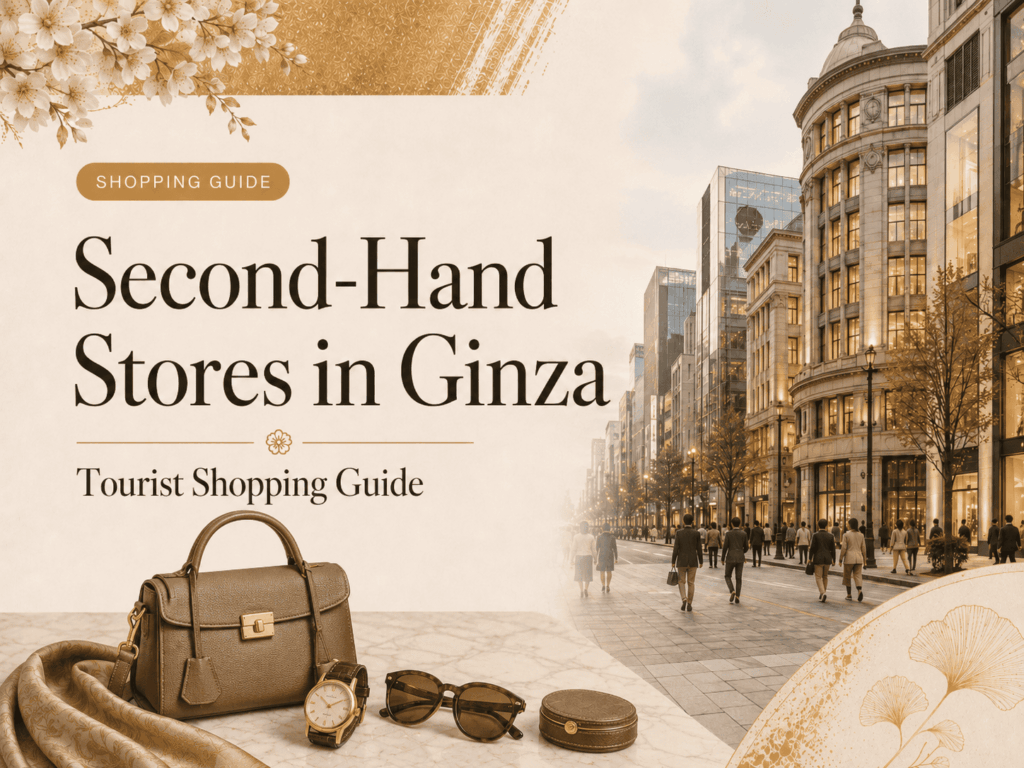
Second-Hand Stores in Ginza: Tourist Shopping Guide is for international visitors who want to make a practical shopping plan before arriving in Japan. The goal is not to promise a fixed list of items, prices, opening hours, or services. The goal is to help you understand how Ginza works as a shopping area, what kinds of second-hand stores may be useful, and how to compare shops without wasting limited travel time.
Ginza can be a strong choice for Ginza as a high-intent second-hand shopping area where tourists compare luxury resale, fashion, jewelry, watches, and bags. For many travelers, the challenge is not finding a single shop name. It is deciding which area deserves half a day, which stops fit together naturally, and which details should be checked before you walk across town with a suitcase, passport, or specific item in mind.
Use this guide as a planning layer. Shop information can change, inventory changes frequently, and policies such as tax-free handling, payment methods, repairs, warranty terms, and returns can vary by shop and by item. Before visiting, check the official website, confirm the location on a map, and keep your route flexible enough to adjust on the day.
Instagram DM
Not sure which shops to visit?
Quick Answer for Tourists
Ginza is worth considering if you are looking for luxury resale, bags, watches, jewelry, designer fashion, and general second-hand shopping research. It is especially useful for luxury shoppers and first-time Tokyo visitors who want an efficient, central route with several resale options nearby. The strongest approach is to choose a small number of realistic stops, confirm official details before visiting, and keep enough time to compare condition, location, and shop atmosphere.
A good first plan is to start with the most central or category-relevant shop, then add nearby resale or reuse stops if they fit naturally. For this guide, useful planning examples include 2nd STREET Ginza, ALLU Ginza, BRAND OFF Ginza Main Store, Daikokuya Ginza, and 4 more route options. These are not ranked in a permanent order. They are starting points for building a route that matches your category, budget, and travel schedule.
If you only have one or two hours, stay close to the easiest station area. If you have a half day, add one secondary area or a specialist stop. If you are comparing higher-value items such as watches or luxury bags, leave enough time to pause, review photos or notes, and avoid making a decision only because a shop is convenient.
JVG Editorial View
Ginza has strong shopping intent, but travelers should still confirm each stop before visiting because shop focus and available items can change. This guide is written for people who want to shop intelligently during a Japan trip, not for people who want a long list of names without context. The most useful second-hand route is the one that matches your real travel day: where you are staying, how much time you have, what you want to buy, and how comfortable you are comparing details in another language.
Ginza is particularly suitable for visitors who value route efficiency. It can work for first-time visitors, luxury shoppers, watch collectors, bag shoppers, fashion-focused travelers, and buyers who want a calm shortlist before deciding whether to expand to other districts. The area is also useful when you want to combine shopping with meals, sightseeing, or transportation rather than treating resale shopping as a separate expedition.
The editorial recommendation is to avoid treating any single shop as the answer. Instead, use each shop as one comparison point. Check official details, prepare your route, and decide in advance what would make a purchase feel comfortable. For some travelers, that means comparing several shops in one area. For others, it means visiting one specialist shop, then using nearby stores only for context.
How Second-Hand Shopping Works in This Area
Second-hand shopping in Ginza is easier when you think in shop types rather than a single universal category. A reuse chain may be useful for clothing, bags, accessories, and everyday second-hand items. A brand resale shop may be more relevant for luxury goods, watches, jewelry, or designer accessories. A fashion resale shop may be better for clothing-focused travelers who want to compare labels, condition, and styling.
This matters because overseas visitors often search for thrift stores, but Japan's second-hand market does not always match the charity-shop image that word suggests in other countries. Many Japanese stores are professionally operated resale or reuse shops. Some feel casual and accessible; others feel closer to luxury retail. Your best route depends on what you want to compare, how much Japanese you can read, and whether you prefer browsing or targeted purchasing.
In Ginza, plan with a flexible mindset. Use central shops for quick comparison, add specialist stops only when they match your purpose, and avoid assuming that every store will have the same product mix. If a shop is important to your route, check the official website before visiting and confirm the map location, especially when station exits or underground passages are involved.
Suggested Shopping Route
Start With the Clearest Purpose
Begin with the shop that best matches your main purpose. If you are looking for watches, start with the most watch-relevant stop. If you are looking for used luxury bags, start with a resale shop where bags are a natural category. If you are browsing second-hand stores more generally, choose the most central store first so you can learn the local price and condition range before widening the route.
This first stop should be treated as a reference point. Take mental notes about category mix, condition labels, staff communication, and how easy the shop is to browse. If you see something interesting, you do not have to decide immediately. In Japan, many travelers find that the first shop teaches them what questions to ask at the next one.
Build a Half-Day Loop
For a half-day plan, choose three to five stops at most. build a compact route around Ginza Station, nearby luxury shopping streets, and optional links toward Yurakucho or other central Tokyo areas. Check the map before visiting, especially if your route crosses large stations, underground shopping areas, or busy intersections. Travel time can feel different when you are carrying shopping bags or navigating with a phone in a crowded area.
A relaxed route might include one specialist shop, one broader reuse shop, and one fashion or luxury resale shop. That gives you a better sense of category differences without turning the day into a checklist. If one shop takes longer than expected, cut the least relevant stop rather than rushing through every location.
Use Breaks as Comparison Time
Build in a cafe, lunch, or station break after the first two or three stops. This is not wasted time. It helps you compare photos, notes, model names, sizes, and condition details before buying. For higher-value categories, the pause can be the difference between a thoughtful purchase and a travel impulse.
If you are not sure about an item, ask whether the shop can explain key details, then confirm what you understand. Language support varies, so prepare simple phrases, screenshots, and translated notes. Avoid relying only on verbal impressions when the item is expensive or difficult to return.
Best For Breakdown
Best for First-Time Visitors
- Travelers who want a simple, central route rather than a long train itinerary.
- Visitors who are still learning the difference between reuse shops, vintage shops, and luxury resale stores in Japan.
- People who want to compare several shop types before choosing a more focused area later in the trip.
Best for Category-Focused Shoppers
- Visitors researching luxury resale, bags, watches, jewelry, designer fashion, and general second-hand shopping research.
- Travelers who want to compare item condition and shop atmosphere before buying.
- Buyers who prefer official shop information, map checks, and a calm route over spontaneous searching.
Best for Limited Travel Time
- Travelers staying nearby or passing through Ginza.
- Visitors who want second-hand shopping to fit between sightseeing, meals, or train connections.
- People who would rather visit fewer shops properly than rush through too many stops.
Best for Careful Comparison
- Shoppers who want to compare condition, accessories, sizing, and store communication.
- Visitors who need time to check official websites before visiting.
- Travelers who want to keep purchase decisions flexible until they have seen more than one option.
Shop Comparison Notes
2nd STREET Ginza
- Area: Ginza
- Category: General reuse / luxury resale
- Best for: second-hand shopping route planning
- Why it fits this guide: 2nd STREET Ginza is a practical reference point for travelers building a Ginza second-hand shopping route.
- Before visiting: Check the official website and map before visiting.
ALLU Ginza
- Area: Ginza
- Category: General reuse / luxury resale
- Best for: second-hand shopping route planning
- Why it fits this guide: ALLU Ginza is a practical reference point for travelers building a Ginza second-hand shopping route.
- Before visiting: Check the official website and map before visiting.
BRAND OFF Ginza Main Store
- Area: Ginza
- Category: General reuse / luxury resale
- Best for: second-hand shopping route planning
- Why it fits this guide: BRAND OFF Ginza Main Store is a practical reference point for travelers building a Ginza second-hand shopping route.
- Before visiting: Check the official website and map before visiting.
Daikokuya Ginza
- Area: Ginza
- Category: General reuse / luxury resale
- Best for: second-hand shopping route planning
- Why it fits this guide: Daikokuya Ginza is a practical reference point for travelers building a Ginza second-hand shopping route.
- Before visiting: Check the official website and map before visiting.
KOMEHYO Ginza
- Area: Ginza
- Category: General reuse / luxury resale
- Best for: second-hand shopping route planning
- Why it fits this guide: KOMEHYO Ginza is a practical reference point for travelers building a Ginza second-hand shopping route.
- Before visiting: Check the official website and map before visiting.
KOMEHYO Ginza Plus
- Area: Ginza
- Category: General reuse / luxury resale
- Best for: second-hand shopping route planning
- Why it fits this guide: KOMEHYO Ginza Plus is a practical reference point for travelers building a Ginza second-hand shopping route.
- Before visiting: Check the official website and map before visiting. Confirm the nearest station details around Ginza Station before setting your route.
BRAND COLLECT Ginza
- Area: Ginza
- Category: Designer fashion / resale
- Best for: second-hand shopping route planning
- Why it fits this guide: BRAND COLLECT Ginza is a practical reference point for travelers building a Ginza second-hand shopping route.
- Before visiting: Check the official website and map before visiting.
Kindal Ginza
- Area: Ginza
- Category: Designer fashion / resale
- Best for: second-hand shopping route planning
- Why it fits this guide: Kindal Ginza is a practical reference point for travelers building a Ginza second-hand shopping route.
- Before visiting: Check the official website and map before visiting. Confirm the nearest station details around Ginza Station before setting your route.
JVG Shop Selection Notes
The shops in this guide are useful because they give travelers different ways to approach Ginza rather than repeating the same kind of stop. Some are better for specialist comparison, some are better for broad browsing, and some are useful because they sit in a practical shopping area. The point is to help you build a route that has enough variety to be useful, but not so many stops that the day becomes tiring.
When using these notes, focus on fit. A shop can be a strong stop for one traveler and unnecessary for another. If your goal is a particular watch, bag, or designer category, prioritize the most relevant shops and use broader reuse stores as secondary checks. If your goal is general second-hand shopping, a wider mix can make the route more interesting.
How to Compare These Shops
Compare the Shop Type First
Before comparing prices or items, compare the type of shop. A reuse chain, fashion resale store, luxury resale shop, and watch specialist can all belong to the second-hand ecosystem, but they serve different shopping behaviors. A general reuse store may be easier for browsing. A luxury resale shop may be better for higher-value categories. A specialist shop may be more useful when you already know what you want to compare.
Compare Condition Calmly
Condition is one of the most important parts of second-hand shopping. Look at visible wear, smell, stitching, hardware, sizing, accessories, and how clearly the shop explains the item. Do not assume two similar-looking items are equivalent. If a detail matters to you, ask about it or take time to compare before deciding.
Compare Route Effort
A shop that looks close on a map may still take time to reach because of station exits, crowds, elevators, luggage, or weather. This is especially true in large Japanese cities. If two shops feel equally relevant, choose the one that fits your route better. Saving energy can make the final purchase decision clearer.
Compare After-Visit Confidence
For tourists, the best purchase is not only about finding a good item. It is also about feeling clear after leaving the shop. Make sure you understand the price, included accessories, payment process, and any terms that matter to you. For policies such as tax-free procedures, repairs, warranty terms, shipping, or returns, check the official store information and confirm directly before buying.
What to Check Before Visiting
- Check the official website before visiting.
- Confirm the location on Google Maps or another map app, especially around large stations.
- Do not assume current inventory, prices, tax-free handling, warranty terms, repair options, or return policies.
- Compare item condition, accessories, size, and total price before buying.
- Prepare your passport if you plan to ask about tax-free shopping, but do not assume every shop or item qualifies.
- Save the shop name in both English and Japanese if available, because taxi drivers, station staff, or maps may display names differently.
- If you are searching for a specific brand, model, color, or size, check official information before building the whole day around one stop.
Useful Internal Guides
- Second-Hand Stores in Japan: Complete Guide for Tourists - Use this as a broader planning guide before choosing individual shops.
- Reuse Shops in Japan: What Tourists Should Know - Use this as a broader planning guide before choosing individual shops.
- Shopping Tips for International Visitors: Second-Hand Shopping in Japan - Use this as a broader planning guide before choosing individual shops.
- Vintage and Second-Hand Shops in Ginza for Tourists - Use this to connect the current area with a more specific route guide.
- Pre-Owned Luxury Bags in Ginza: Where to Shop in Japan - Use this when your trip is centered on bags, designer resale, or higher-value comparison shopping.
- Pre-Owned and Vintage Watch Shops in Ginza: Tourist Guide - Use this when you want to compare watch-focused routes beyond this article.
- Second-Hand Jewelry in Ginza: Tourist Shopping Guide - Use this to connect the current area with a more specific route guide.
Planning Tips for International Visitors
If you do not speak Japanese, prepare simple screenshots before visiting. A photo of the item type, model reference, approximate size, or brand spelling can be more useful than a long translated sentence. Keep your questions short and specific. For example, ask whether you can check condition, whether accessories are included, or where to find the item category inside the shop.
Payment methods can vary, so prepare more than one option when shopping for higher-value items. If you plan to use a credit card, make sure your card is ready for overseas purchases. If you plan to ask about tax-free shopping, bring your passport and confirm the shop's current process directly. These details should be checked with the shop rather than assumed from another visitor's experience.
For route planning, avoid scheduling second-hand shopping at the very end of a packed day. You may need time to compare, think, or return to a previous shop. If you are buying something valuable, leave enough time to inspect it carefully and ask questions without feeling rushed by a dinner reservation or train departure.
Shopping Support
If you are planning a focused second-hand shopping day in Japan, JVG can help you organize areas, shop types, and realistic routes. This can be especially useful when you are comparing several categories, traveling with limited time, or looking for a route that balances shopping with sightseeing.
Need help planning your vintage shopping route in Japan? Contact JVG for private shopping support.
Shopping Support: /shopping-support/
FAQ
Is Ginza good for second-hand shopping?
Yes, Ginza can be useful for second-hand shopping when the route matches your category and schedule. It is best approached with a shortlist and a map rather than a vague plan to browse everywhere.
Can I find specific brands or models in these shops?
You may find different brands depending on the shop and timing, but current inventory changes frequently. Check official shop information before visiting if you are searching for a specific brand, model, color, or size.
Should I expect tax-free shopping?
Do not assume tax-free shopping is available for every shop or item. Bring your passport if you plan to ask, and confirm the current process directly with the shop before buying.
How much time should I allow?
For a light route, allow one to two hours around the most central shops. For careful comparison, a half day is more realistic. If you are comparing watches, luxury bags, or higher-value items, add time for breaks and decision-making.
Is it better to buy immediately or compare first?
If the item is inexpensive and you feel comfortable, a quick decision may be fine. For higher-value items, compare condition, accessories, price, shop communication, and route alternatives before deciding. A short pause can make the purchase feel much clearer.
Related JVG Guides
Use these related JVG guides to continue planning around the same area, category, or shop type:
- Ginza vintage shopping guide - Use this to compare vintage and luxury resale stops in the same area.
- pre-owned luxury bags in Ginza - Best for bag-focused Ginza shopping.
- vintage watch shops in Ginza - Useful for watch-focused comparison.
- second-hand jewelry in Ginza - Helpful when jewelry is part of your route.
- second-hand stores in Japan - Return to the main hub for wider planning.
Continue the shopping journey