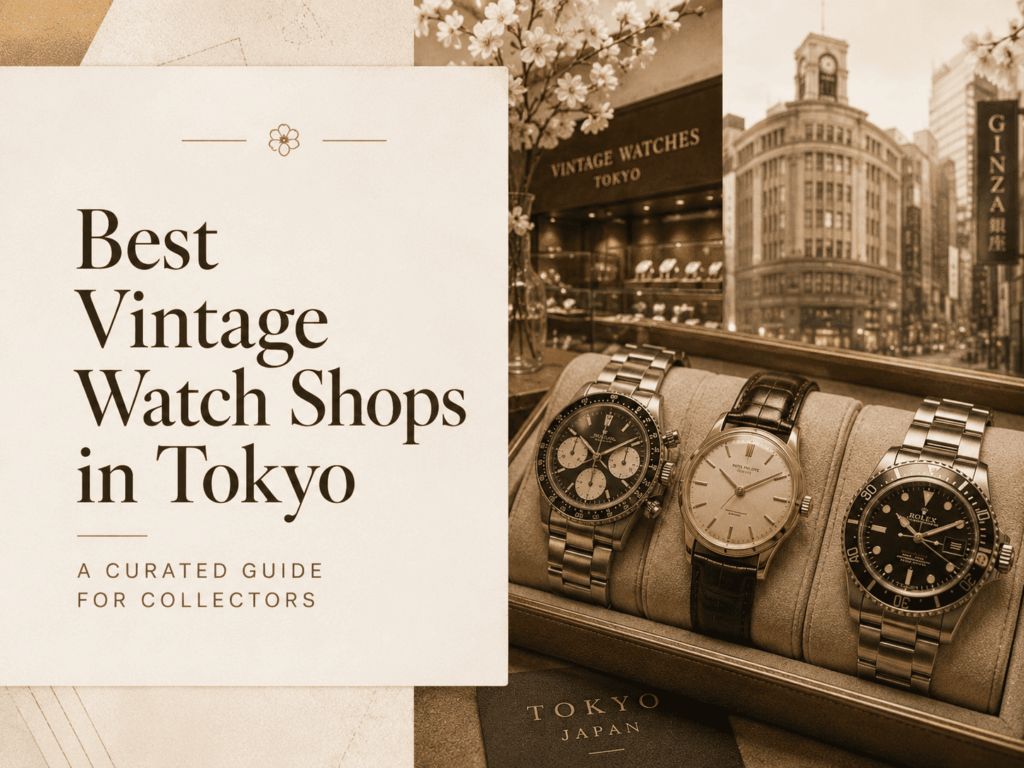
Tokyo is one of the most useful cities in Japan for travelers who want to compare pre-owned and vintage watches, but it is also a city where a clear plan matters. Watch shops are spread across areas such as Ginza, Shinjuku, and Nakano, and each area has a different shopping rhythm. This guide focuses on practical shop options and route planning. It does not promise that any shop has a specific model, price, year, dial, bracelet, box, paper, tax-free process, or service history available on the day you visit. Use this guide to build a safer comparison route, then check official websites before visiting.
Instagram DM
Not sure which shops to visit?
JVG Editorial View
JVG treats Tokyo watch shopping as a comparison exercise, not a one-stop hunt. A visitor may arrive with a dream reference in mind, but current inventory changes often. The better strategy is to compare several credible shop options, learn how condition and accessories are presented, and avoid rushing because one watch looks close to what you imagined.
Tokyo works well for watch collectors because it gives you different shopping environments. Ginza feels polished and central. Shinjuku is easy to combine with transport and other shopping. Nakano is well known among watch shoppers and can be useful for focused browsing. The right route depends on your available time, your comfort with comparison, and whether you want to prioritize convenience or depth.
For first-time visitors, Ginza can be the easiest place to start because the area is simple to combine with other plans. ALLU Watch Ginza, Quark Ginza, Quark Ginza 888, WATCHNIAN Ginza 2-chome, and WATCHNIAN Ginza Main Store are practical Ginza watch-related options in the shop guide. They are useful for building a central watch route, but the details should be checked before visiting.
For collectors who want a broader Tokyo view, adding Shinjuku and Nakano can make sense. GMT Shinjuku and Jubilee Shinjuku give the route a west-side Tokyo angle, while Jack Road Nakano and Kamekichi Nakano help create a Nakano-focused watch comparison. The goal is not to visit every shop. It is to compare enough options to make a calm decision.
Suggested Shopping Route
Half-Day Watch Route
For a half-day route, choose one area. Ginza is the simplest choice if you want a polished route with several watch-related options close to other central Tokyo plans. Start with one high-priority Ginza shop, then add two or three nearby options. Do not try to include Shinjuku and Nakano in the same half-day unless you have already confirmed exact locations and travel timing.
Before the first visit, write down your target references, acceptable condition range, wrist size needs, bracelet or strap preferences, and whether box or papers matter to you. If you are flexible, write down categories instead of exact models. This makes the shopping day less stressful.
After each shop, take a short note. Record the model, approximate condition impression, accessories mentioned by staff or shown with the watch, and any questions you need to confirm. If taking photos is not allowed, respect the shop's policy and use written notes.
One-Day Watch Route
For a full day, choose two areas at most. A practical route is Ginza first, then Shinjuku or Nakano. Ginza is useful for polished comparison. Shinjuku can be convenient if your hotel or evening plans are nearby. Nakano can be useful when your priority is a deeper watch-focused browsing session.
Do not schedule the route around exact travel times unless you have checked the map yourself. Stations, building entrances, and shop floors can add time. Leave space for lunch and decision breaks. Watch shopping is mentally demanding because small details matter.
At the end of the day, compare your top two or three options. Ask yourself which one you would still want if you saw it tomorrow, whether the condition matches your expectations, and whether the included accessories matter enough to affect the decision. If a detail is unclear, check with the shop before buying.
Best For Section
Best for First-Time Watch Shoppers
Ginza is a strong starting point because it is central and easy to navigate. It can help travelers learn the basic comparison language of Tokyo watch shopping before moving to another area.
Best for Rolex-Focused Research
Several Tokyo watch shops are relevant to Rolex research, but JVG should not claim current stock. If a specific reference matters, use official websites or contact the shop before visiting.
Best for Comparing Multiple Areas
Collectors with a full day may benefit from comparing Ginza with Shinjuku or Nakano. This gives you a clearer sense of presentation style, item mix, and route convenience.
Best for Careful Buyers
Watch shopping rewards patience. The best route is the one that gives you time to inspect condition, bracelet fit, accessories, and any documents provided, without rushing into a purchase.
Best for Travelers With Limited Time
If time is limited, choose one area and build a focused list of three to five shops. A short, disciplined route is better than a long route that leaves no time for comparison.
Shop Comparison Notes
ALLU Watch Ginza
- Area: Ginza
- Category: Watches
- Best for: Visitors building a central Ginza watch route
- Why it fits this guide: ALLU Watch Ginza is a practical watch-category row in the JVG and is useful for starting a polished central Tokyo comparison.
- Before visiting: Use the official store list and map to confirm details before visiting.
Quark Ginza
- Area: Ginza
- Category: Watches
- Best for: Watch comparison in a central shopping area
- Why it fits this guide: Quark Ginza adds another Ginza watch-focused option for visitors comparing several shops in one area.
- Before visiting: Confirm current details through the official website.
Quark Ginza 888
- Area: Ginza
- Category: Watches
- Best for: Adding depth to a Ginza watch shortlist
- Why it fits this guide: This shop gives travelers another Ginza watch stop to compare with nearby watch options.
- Before visiting: Check official links before building a route around it.
WATCHNIAN Ginza 2-chome
- Area: Ginza
- Category: Watches
- Best for: Ginza watch browsing
- Why it fits this guide: WATCHNIAN Ginza 2-chome helps visitors compare several Ginza watch options without assuming a specific model is available.
- Before visiting: Confirm current details through official shop information.
WATCHNIAN Ginza Main Store
- Area: Ginza
- Category: Watches
- Best for: Central Tokyo watch comparison
- Why it fits this guide: WATCHNIAN Ginza Main Store is useful for travelers who want a watch-focused stop within a broader Ginza route.
- Before visiting: Check the official website and map before visiting.
GMT Shinjuku
- Area: Shinjuku
- Category: Watches
- Best for: A west-side Tokyo watch route
- Why it fits this guide: GMT Shinjuku gives the route a Shinjuku option for travelers staying near or already visiting the area.
- Before visiting: Confirm location and current details through official sources.
Jack Road Nakano
- Area: Nakano
- Category: Watches
- Best for: A focused Nakano watch-shopping route
- Why it fits this guide: Jack Road Nakano is relevant for travelers who want to compare Ginza with another Tokyo watch area.
- Before visiting: Check official shop information and map details before visiting.
Kamekichi Nakano
- Area: Nakano
- Category: Watches
- Best for: Nakano watch comparison
- Why it fits this guide: Kamekichi Nakano helps round out a watch-focused Tokyo shortlist beyond Ginza and Shinjuku.
- Before visiting: Check official links before visiting.
JVG Shop Selection Notes
ALLU Watch Ginza is included because the JVG marks it as a Ginza watch shop with official links for travelers to check and a verification date. It is useful for travelers building a central Ginza watch route.
Quark Ginza and Quark Ginza 888 are included because they add more Ginza watch options. They should be used for comparison planning, not as a promise that a particular reference will be available.
WATCHNIAN Ginza 2-chome and WATCHNIAN Ginza Main Store are included because they provide additional practical Ginza watch stops. They help travelers compare several watch-focused options within one central area.
GMT Shinjuku is included to represent a Shinjuku watch route option. It can be useful for travelers staying near Shinjuku or connecting watch shopping with other west-side Tokyo plans.
Jack Road Nakano and Kamekichi Nakano are included because Nakano is a meaningful watch-shopping area in Tokyo, and JVG includes both as watch-category rows with official or source URLs.
What to Check Before Visiting
Check the official website before visiting. This is important for current location details, store guidance, and any visit-related notes.
Confirm the exact location on Google Maps before leaving. Watch shops may be located inside buildings, near station exits, or in shopping complexes where the entrance is not obvious.
Do not assume current inventory. A guide can identify relevant shops, but it cannot confirm that a specific model, dial, year, bracelet, size, or condition is available.
Compare condition carefully. Look at case condition, bracelet stretch or fit, crystal, dial, hands, bezel, service information if provided, and accessories shown with the watch. Ask politely when something is unclear.
Think about documentation and accessories. Box, papers, warranty cards, service records, extra links, and other accessories can matter, but availability varies by item. Confirm what is included before buying.
Prepare your passport if you plan to ask about tax-free shopping, but confirm procedures and eligibility directly with the shop. Do not assume the same process applies everywhere.
How to Compare Watches Without Rushing
A useful method is to create a three-column note on your phone: model, condition, and question. After each shop, record what you saw and what still needs confirmation. If two watches are similar, compare the small differences: case sharpness, bracelet fit, accessories, service information if provided, and how comfortable you feel wearing it.
Avoid buying only because the watch appears early in the route. Tokyo can offer many comparison points, and a short pause often changes how you feel. At the same time, do not assume a watch will remain available. The safest balance is to ask clear questions, compare quickly but calmly, and decide based on condition and confidence.
Watch Buyer Decision Checklist
Before making a decision, separate your emotional reaction from your inspection notes. It is normal to feel excited when you see a watch that matches your target reference, but excitement should not replace checking the details. Write down what you know, what you only assume, and what you still need to ask.
Start with fit. A watch can be beautiful but uncomfortable if the bracelet does not sit well or if the case size feels wrong on your wrist. Ask about extra links only if they matter to your purchase, and confirm what is included with the item. Do not assume links, boxes, papers, or other accessories are included unless the shop clearly says so.
Next, compare visible condition. Look at the case, bezel, crystal, dial, hands, crown, clasp, and bracelet. A small mark may not matter to one buyer but may matter a lot to another. The point is not to find a perfect watch every time. The point is to understand whether the condition fits the price and your expectations.
Then compare route value. If you saw a similar watch in Ginza and another in Nakano, ask whether the difference is worth returning to one area. Tokyo is large, and going back across the city takes time. Save exact shop locations and keep your notes clear so you can make that decision without guessing.
Finally, remember that a watch purchase should still fit the rest of your trip. Think about secure storage, insurance needs, customs rules in your home country, and how comfortable you feel carrying the watch while traveling. When in doubt, slow down and confirm details directly with the shop.
If you are traveling with someone who is not shopping for watches, keep the route humane. Add breaks, avoid long backtracking, and choose areas where food or other shopping is nearby. A calmer schedule usually leads to better watch decisions.
Related JVG Guides
Use these related JVG guides to compare nearby areas, shop types, and practical shopping questions before you visit:
- Start with vintage watches in Japan.
- For practical shopping preparation, see second-hand shopping tips for international visitors.
- For area planning, use Tokyo vintage shopping guide.
- For purchase-focused planning, read guide to buying pre-owned watches in Japan.
- For purchase-focused planning, read vintage watch shops in Ginza.
Need help planning your vintage shopping route in Japan? Contact JVG for private shopping support.
Shopping Support: /shopping-support/
FAQ
Where should I start vintage watch shopping in Tokyo?
Ginza is a practical starting point for first-time visitors because it is central and easy to combine with other plans. If you have more time, compare Ginza with Shinjuku or Nakano.
Can JVG confirm current watch inventory?
No. JVG can help identify relevant shop options, but inventory changes frequently. Check official websites or contact shops directly when a specific reference matters.
Is one day enough for Tokyo watch shopping?
One day can be enough for a focused comparison route if you choose one or two areas. Trying to cover too many neighborhoods can reduce the time available for condition checks.
What should I check before buying a pre-owned watch?
Check condition, bracelet fit, accessories, service information if provided, and the details explained by the shop. If anything is unclear, ask before buying.
Should I bring my passport?
Bring your passport if you plan to ask about tax-free shopping, but confirm availability, conditions, and procedures directly with the shop.
Continue the shopping journey