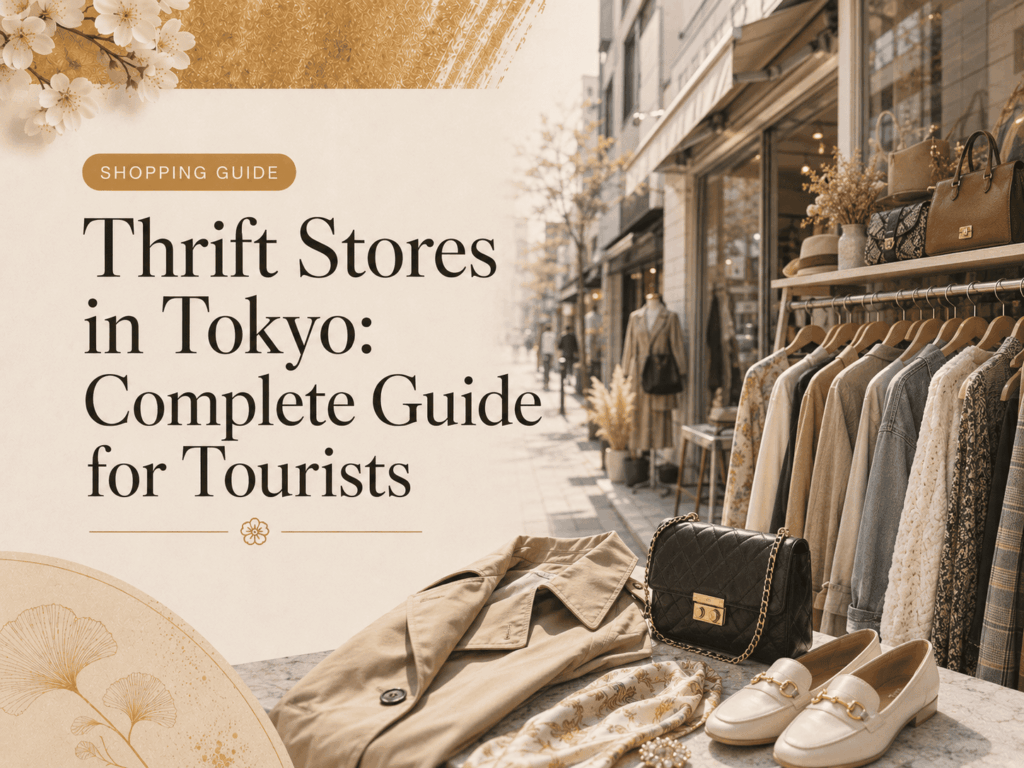
Thrift Stores in Tokyo: Complete Guide for Tourists is written for international visitors who want to find realistic thrift-style shopping areas in Tokyo without assuming that Japanese stores work exactly like charity shops overseas. It focuses on practical planning rather than hype. Japan can be excellent for second-hand shopping, but the most useful plan is not simply a list of famous names. It is a route that helps you compare shop type, condition, category fit, and travel time before making a decision.
Tokyo is useful for thrift-style shopping, but visitors should understand that many Japanese options are reuse shops, second-hand fashion stores, vintage boutiques, or chain resale stores rather than donation-based charity shops. The best approach is to choose one area, compare several shop types, and check official information before visiting. Prices, opening hours, inventory, tax-free procedures, documentation, and aftercare policies can change by shop and by day. Use this guide as a planning framework, then check the official website and map before visiting.
For travelers, the main challenge is usually not whether Japan has enough second-hand options. It is deciding where to start. A trip can become tiring if you try to visit too many areas, especially when you are comparing items that require careful inspection. The better approach is to choose a primary area, add one or two contrast stops, and leave time to review your notes before buying.
Instagram DM
Not sure which shops to visit?
Quick Answer for Tourists
If you are planning Tokyo thrift shopping, start with one clear goal. Decide whether you are browsing, comparing, or ready to buy. Browsing can be flexible. Comparing needs at least two or three shops. Buying requires more time for condition checks, policy questions, and a calm final decision.
The most useful areas or store types for this topic include Shimokitazawa, Koenji, Harajuku, Shibuya, Ueno. These are not promises of current inventory. They are planning anchors that can help you decide how to organize your day. If a specific item, brand, model, size, or condition matters, check official sources or contact the shop before making the trip.
A good tourist route usually has three parts. First, visit a strong match for your goal. Second, add a contrast stop so you can compare condition and presentation. Third, keep a backup option nearby in case the first plan is crowded, closed, or not relevant when you arrive.
JVG Editorial View
This article connects the international search term thrift stores with the way Tokyo second-hand retail actually works. JVG's view is that second-hand shopping in Japan should be practical, calm, and evidence-based. The excitement of finding a special item is real, but it should not replace condition checks, route planning, and direct confirmation from the shop.
For international visitors, the best guide is one that respects limited travel time. Many shoppers have only a half day between sightseeing, meals, hotel check-in, and train transfers. That makes area choice more important than a long list of names. A shorter route with better comparison time is usually more useful than a crowded itinerary.
JVG also separates shop relevance from purchase certainty. A shop can be relevant to a guide because of its area, category, and general role in a route, but that does not mean it carries a specific item today. This is especially important for used designer bags, watches, jewelry, clothing, and other one-of-one resale items.
How This Type of Shopping Works in Japan
Japan uses several overlapping words and store types. A traveler searching for thrift stores may find reuse shops, recycle shops, second-hand stores, vintage boutiques, brand resale shops, and used clothing stores. These are not always the same as donation-based thrift stores in North America or Europe. Some are chain resale stores. Some are curated boutiques. Some focus on luxury goods. Others are better for casual browsing.
In Japanese, you may see words such as riyusu for reuse, chuko for used or second-hand, furugi for used clothing, and burandohin for brand goods. You do not need to speak Japanese fluently to shop, but knowing these concepts helps you understand signs, search results, and store pages.
Condition presentation can also vary. Some shops may show condition ranks, notes, or tags. Others may expect the buyer to inspect carefully in person. Always compare visible wear, included accessories, and practical usability. If something is unclear, ask staff or check official information before buying.
Best Areas and Store Types to Start With
For this topic, the strongest planning areas are Shimokitazawa, Koenji, Harajuku, Shibuya, Ueno. Choose based on your route, not only on reputation. If you are already staying near Shinjuku, it may be better to compare nearby shops first instead of crossing Tokyo for one uncertain stop. If your goal is luxury resale, Ginza, Omotesando, Aoyama, Shinjuku, or Shibuya may fit better than a casual clothing area. If your goal is used clothing, neighborhoods with several fashion-led shops can be more efficient.
Chain stores can be useful because they are easier to recognize and often have multiple branches. Boutique stores can be useful because they may have a more curated point of view. Specialist shops can be useful when you have a precise category in mind. The best route may combine two of these formats.
Do not judge an area only by the first shop you visit. A single shop may be quiet, crowded, very curated, or simply not aligned with your taste that day. The value of a shopping area is often the ability to compare multiple stops without using too much transit time.
Suggested Shopping Route
Half-Day Route
For a half-day plan, choose one main area and two to four shops. Start with the shop or area that best matches your goal. Then add one nearby contrast stop. Keep the final stop optional. This structure helps you avoid rushing condition checks.
Before leaving your hotel, open the map and check the exact route. Some shops are inside buildings, near side streets, or close to similarly named branches. A neighborhood name alone is not enough. Save the official website or store page in your phone so you can confirm details if plans change.
After each shop, write a short note. Include the shop name, area, item type, visible condition, price impression if relevant, included accessories if mentioned, and any question you still have. This is simple, but it prevents every shop from blending together later.
One-Day Route
For a full-day route, divide the day into two clusters. For example, use one fashion or reuse area in the morning and one luxury or specialist area in the afternoon. Avoid adding a distant stop unless it clearly gives you a different comparison point.
Take breaks. Second-hand shopping can be mentally tiring because you are constantly comparing condition, price, size, and uncertainty. A short coffee break can prevent rushed decisions. This matters even more for high-consideration categories such as designer bags, watches, jewelry, and cameras.
End the day with a review. Look at your notes and ask whether any item still feels right after comparison. If a purchase depends on tax-free procedures, warranty terms, accessories, adjustment, repair history, or return policy, confirm directly with the shop before buying.
Best For Breakdown
Used clothing discovery
Good for travelers who want casual second-hand clothing, everyday fashion, and lower-pressure browsing.
Vintage fashion areas
Useful when you want streets with several fashion-led shops rather than one isolated stop.
First-time visitors
Helpful if you need a simple route and want to understand Japanese reuse shop vocabulary.
Budget-conscious comparison
Good for comparing condition and styling, while remembering that prices and stock change frequently.
How to Compare These Shops
Use the shops below as route candidates, not as a fixed ranking. The goal is to compare roles. One shop may be useful as a first reference point. Another may be better as a specialist stop. A third may be a backup in the same area. This is more practical than trying to decide which shop is permanently best.
Compare in the same order each time. Start with category fit, then condition, then location, then price context, then policy questions. If the item is wearable, consider fit and comfort. If the item is a bag, consider size, strap length, corners, handles, hardware, interior, odor, and shape. If the item is jewelry, consider sizing, material information, wear, documents if available, and aftercare questions. If the item is a camera, consider body condition, lens condition, shutter or operation checks, batteries, chargers, compatibility, and return policy.
Be careful with urgency. A second-hand item can disappear, but that does not mean every quick decision is a good one. If you are unsure, step outside, review your notes, and decide whether the uncertainty is acceptable.
Shop Comparison Notes
2nd STREET Shimokitazawa
- Area: Shimokitazawa
- Category: general
- Best for: broad second-hand and resale route comparison
- Why it fits this guide: 2nd STREET Shimokitazawa can work as one planning stop for Tokyo thrift shopping because it gives travelers a concrete place to compare shop style, route convenience, and category fit. 2nd STREET Shimokitazawa is part of 2nd STREET, a large reuse chain selling second-hand clothing, bags, shoes, and fashion items. It is suitable for travelers looking...
- Before visiting: Confirm the route from Shimokitazawa Station and check the official website before visiting.
2nd STREET Koenji
- Area: Koenji
- Category: general
- Best for: broad second-hand and resale route comparison
- Why it fits this guide: 2nd STREET Koenji can work as one planning stop for Tokyo thrift shopping because it gives travelers a concrete place to compare shop style, route convenience, and category fit. 2nd STREET Koenji is part of 2nd STREET, a large reuse chain selling second-hand clothing, bags, shoes, and fashion items. It is suitable for travelers looking for acc...
- Before visiting: Confirm the route from Koenji Station and check the official website before visiting.
2nd STREET Harajuku
- Area: Harajuku
- Category: general
- Best for: broad second-hand and resale route comparison
- Why it fits this guide: 2nd STREET Harajuku can work as one planning stop for Tokyo thrift shopping because it gives travelers a concrete place to compare shop style, route convenience, and category fit. 2nd STREET Harajuku is part of 2nd STREET, a large reuse chain selling second-hand clothing, bags, shoes, and fashion items. It is suitable for travelers looking for a...
- Before visiting: Confirm the route from Meiji-jingumae Station and check the official website before visiting.
2nd STREET Shibuya
- Area: Shibuya
- Category: general
- Best for: broad second-hand and resale route comparison
- Why it fits this guide: 2nd STREET Shibuya can work as one planning stop for Tokyo thrift shopping because it gives travelers a concrete place to compare shop style, route convenience, and category fit. 2nd STREET is a nationwide Japanese reuse shop chain offering second-hand fashion, bags, watches, accessories, and lifestyle items. This draft row should be reviewed a...
- Before visiting: Check the official website and map before visiting.
BOOKOFF PLUS Ueno-Hirokoji
- Area: Ueno
- Category: fashion
- Best for: used clothing and designer fashion browsing
- Why it fits this guide: BOOKOFF PLUS Ueno-Hirokoji can work as one planning stop for Tokyo thrift shopping because it gives travelers a concrete place to compare shop style, route convenience, and category fit. BOOKOFF PLUS Ueno-Hirokoji is a resale shop candidate for JVG visitors looking for second-hand fashion, brand goods, watches, bags, or reuse items in Japan. The listin...
- Before visiting: Check the official website and map before visiting.
RAGTAG Shimokitazawa
- Area: Shimokitazawa
- Category: fashion
- Best for: used clothing and designer fashion browsing
- Why it fits this guide: RAGTAG Shimokitazawa can work as one planning stop for Tokyo thrift shopping because it gives travelers a concrete place to compare shop style, route convenience, and category fit. RAGTAG Shimokitazawa is part of RAGTAG, a used designer and vintage fashion store group in Japan. It is suitable for visitors looking for curated second-hand fashion a...
- Before visiting: Check the official website and map before visiting.
Kindal Koenji
- Area: Koenji
- Category: fashion
- Best for: used clothing and designer fashion browsing
- Why it fits this guide: Kindal Koenji can work as one planning stop for Tokyo thrift shopping because it gives travelers a concrete place to compare shop style, route convenience, and category fit. Kindal Koenji sells curated second-hand designer fashion and accessories. It is a useful stop for visitors interested in Japanese resale and vintage fashion culture.
- Before visiting: Confirm the route from Koenji Station and check the official website before visiting.
TreFac Style Shimokitazawa
- Area: Shimokitazawa
- Category: fashion
- Best for: used clothing and designer fashion browsing
- Why it fits this guide: TreFac Style Shimokitazawa can work as one planning stop for Tokyo thrift shopping because it gives travelers a concrete place to compare shop style, route convenience, and category fit. TreFac Style Shimokitazawa is a resale shop candidate for JVG visitors looking for second-hand fashion, brand goods, watches, bags, or reuse items in Japan. The listin...
- Before visiting: Check the official website and map before visiting.
What to Check Before Visiting
Check the official website before visiting. Store location, floor, holidays, opening information, and visitor guidance can change.
Confirm the exact location on Google Maps. Some shops are inside department stores, shopping buildings, basements, or streets with similar names. If you are moving between stations, check exits and walking routes before you go.
Do not assume current inventory. A shop can be relevant to Tokyo thrift shopping without carrying the exact item you want on the day you visit. If a specific item is the reason for your trip, contact the shop or check official channels first.
Prepare your passport if you plan to ask about tax-free shopping, but do not assume eligibility or availability. Tax-free handling can depend on the shop, item, purchase amount, current rules, and procedure. Confirm directly before buying.
Compare condition before price. A lower price is not automatically better if the condition, accessories, size, or usability do not fit your needs. For higher-value purchases, ask about included items and shop policy in simple, direct language.
How to Shop Without Speaking Japanese
You can shop in Japan without fluent Japanese, but preparation helps. Save the shop name in Japanese or English, the map location, and your target item description. Use short phrases and show photos only as references, not demands. Staff may not be able to confirm stock or policy in the way you expect, so stay patient and specific.
Useful questions include: Do you have this category today? Can I check the condition? Are any accessories included? Can you show me the condition notes? Is tax-free shopping available for this item? What should I confirm before buying? If the answer is unclear, slow down and ask again or move on.
Translation apps can help, but do not rely on them for fine legal or policy details. For expensive items, ask staff to point to written information where possible. Keep receipts and documents organized during your trip.
Condition, Price, and Inventory Mindset
Second-hand shopping rewards comparison. Inventory changes frequently, and two similar items can differ in condition, accessories, age, and usability. A guide can help you find useful areas and shop types, but it cannot replace in-person judgment.
Prices should be read together with condition. For bags, look at corners, handles, glazing, hardware, interior, odor, and shape. For clothing, check fabric, seams, stains, fading, size, and care tags. For watches, check case, bracelet, dial, movement questions, accessories, service history if available, and shop policy. For jewelry, check size, material information, stones, clasps, wear, and documentation if available. For cameras, check body, lens glass, fungus or haze concerns, shutter or operation, battery, charger, and compatibility.
Do not feel pressured to buy from the first promising shop. A strong route should make you more confident, not more rushed. Sometimes the best result is learning what to look for on a second visit or in another area.
Related JVG Guides
- Use JVG's thrift stores in Japan guide to compare this topic with nearby areas and practical buying questions.
- Use JVG's complete guide to second-hand stores in Japan to compare this topic with nearby areas and practical buying questions.
- Use JVG's Tokyo vintage shopping guide to compare this topic with nearby areas and practical buying questions.
- Use JVG's second-hand shopping tips for international visitors to compare this topic with nearby areas and practical buying questions.
- Use JVG's Shibuya vintage shopping guide to compare this topic with nearby areas and practical buying questions.
Need help planning your vintage shopping route in Japan? Contact JVG for private shopping support.
Shopping Support: /shopping-support/
FAQ
Is Tokyo thrift shopping good for first-time visitors?
It can be, especially if you keep the route focused. Choose one main area, compare a small number of shops, and check official information before visiting.
Can JVG confirm current inventory for this topic?
No. Inventory changes frequently, and this guide does not confirm live stock. Contact the shop directly if a specific item, brand, model, size, or condition matters.
Should I bring my passport?
Bring your passport if you plan to ask about tax-free procedures, but do not assume tax-free shopping is available or applicable. Confirm directly with each shop before buying.
How many shops should I visit in one day?
For most travelers, three to six carefully selected shops is more useful than a long list. Leave time for walking, breaks, condition checks, and final comparison.
What should I do before buying an expensive second-hand item?
Step away from the display, review your notes, confirm condition and included accessories if relevant, ask about policy, and make sure the item still fits your travel plans after comparison.
Continue the shopping journey