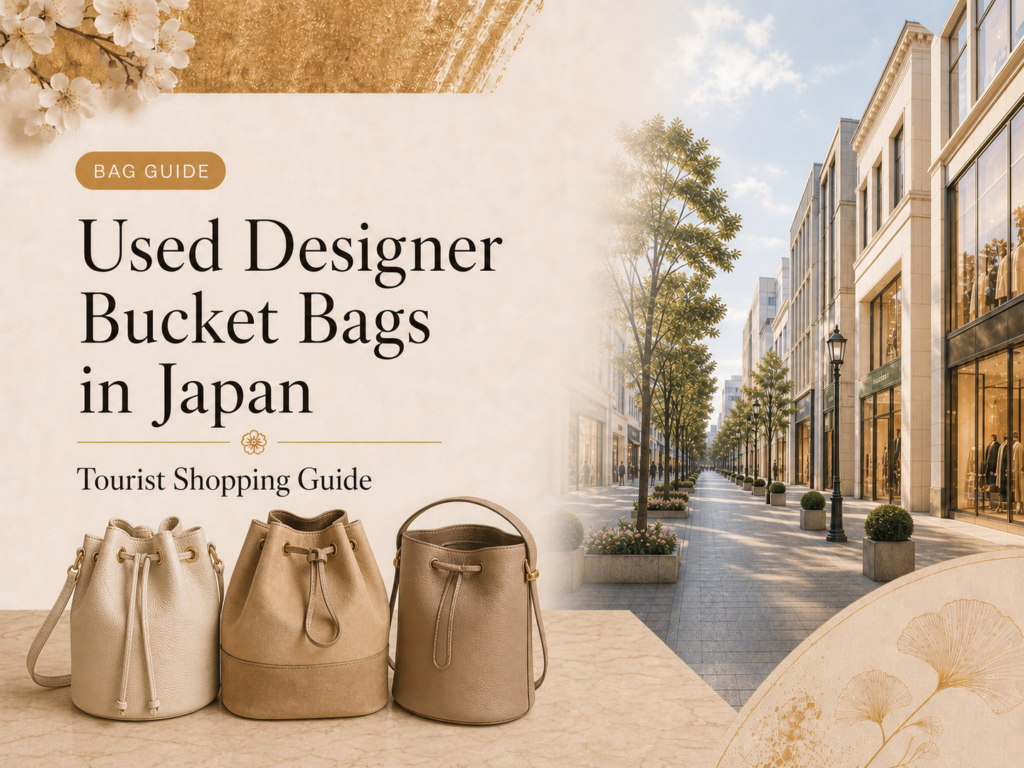
Used designer bucket bags can be appealing in Japan because the format combines a recognizable silhouette with flexible everyday capacity. Yet the same open shape that makes a bucket bag convenient can create practical questions about security, organization, structure, and access. Drawstrings, magnetic closures, inner pouches, straps, and base construction vary widely between individual bags.
Japan's luxury-resale districts give travelers opportunities to compare different store formats and bag styles, but current inventory changes frequently. This guide does not confirm that a specific brand, model, size, color, or condition is available. It explains how to plan a route, inspect a bucket bag, and decide whether the format fits your travel and daily use. Check official shop information before visiting.
Instagram DM
Not sure which shops to visit?
Quick Answer for Tourists
Start by deciding whether you want a compact bucket bag, an everyday medium size, or a larger carryall. Then choose the closure and organization you need. Some designs close tightly; others remain relatively open. Some include a pouch or divider; others offer one main compartment. These differences affect travel use more than the silhouette alone.
Choose one major shopping district and compare two contrasting resale environments. Ginza suits luxury-led comparison, Shibuya and nearby fashion areas add styling context, Shinjuku offers transport convenience, and Shinsaibashi works well in Osaka. Treat each shop as a possible comparison stop, not proof of live bucket-bag stock.
JVG Editorial View
Bucket bags are easy to recognize but difficult to evaluate from a front-facing photograph. The opening, base, depth, strap, and internal organization determine how the bag behaves in real life. A model that looks compact can hold more than expected, while a tall narrow shape can make small items hard to find.
JVG recommends judging a bucket bag in motion. Think about opening it on a train, placing it beside you at a restaurant, carrying it through a full walking day, and packing it for the flight home. Security and organization deserve the same attention as condition and appearance.
The most useful resale route gives you contrast. Compare one structured bucket bag with one softer example, or one minimal open interior with one organized design. This helps you decide whether you like the format itself rather than reacting to a single attractive item.
Choose the Right Bucket Bag Type
Compact bucket bags
Compact versions can work for a phone, wallet, keys, and a few small essentials. Their challenge is usually the opening. A narrow drawstring or rigid top may make access more difficult than the exterior dimensions suggest.
Measure the items you carry and consider how often you need them. Check whether the interior has a pocket or pouch for small valuables. A compact bucket bag without organization may require an additional insert, which changes usable space.
Medium everyday bucket bags
A medium bucket bag may suit daily travel because it can carry a water bottle, small umbrella, compact pouch, and other essentials. Capacity should not be confused with support. Check whether the base, strap, and attachment points feel appropriate for the load you intend to carry.
Consider how the bag changes when filled. A soft body may become wider or lose its shape, while a structured body may remain neat but feel more rigid against the hip.
Large bucket and carryall formats
Larger bucket bags can hold a great deal, but an unstructured interior may make them difficult to organize. They can also become heavy. Inspect handle or strap width, base construction, lining, and closure before assuming that more capacity is better.
Think about where the bag will sit in restaurants, trains, and accommodation. An open large bag may need a pouch or organizer for important items. Confirm whether any removable interior component is included with the individual bag.
Structured versus soft construction
A structured bucket bag usually keeps its silhouette and may stand more easily. Check panels, base stability, edge finishing, and signs of pressure. A soft bucket bag can feel relaxed and pack more easily, but inspect folds, creases, strap pull, and the way the opening collapses.
Neither construction is automatically better. Choose according to comfort, contents, and the way you want the bag to look in use.
Closure and Security
Drawstring closures
Drawstrings can define the bucket silhouette, but they vary in operation and coverage. Check whether the opening closes enough for your comfort, whether the cord moves smoothly, and whether repeated tightening has affected eyelets, leather, or edge areas.
Do not force a stiff drawstring. Ask staff to demonstrate the intended operation when needed. Consider whether you can close and open it easily while wearing the bag.
Magnetic and snap closures
A magnet or snap may improve access without fully covering the opening. Check alignment, operation, and how the bag behaves when filled. A closure that works on an empty display bag may sit differently with contents.
Decide whether this level of security is appropriate for crowded transport and sightseeing. You may still need an interior pouch for valuables.
Open-top designs
An open-top bucket bag can be convenient, but travelers should think carefully about public spaces, weather, and the possibility of contents shifting. Look for interior pockets, a removable pouch, or a shape that keeps essentials lower in the bag.
If the design requires a separate organizer, include that in your capacity and weight calculation. Do not assume an insert or pouch is part of the sale unless it is listed.
Flaps, inner pouches, and other systems
Some bucket bags combine a drawstring with a flap, inner pouch, divider, or zipper. Test each component within shop rules. Confirm what is detachable and included. Additional organization can improve security but may reduce usable space.
Where to Look in Japan
Ginza
Ginza is useful for comparing bucket bags in a wider luxury-resale context. A broad store can help you see structured and soft designs across different labels. The district also works for travelers combining bags with watches, jewelry, or other luxury categories.
Start with one multi-category reseller and add one contrasting stop. Save exact building and floor information. Use the first shop to decide what closure and size you prefer before expanding the route.
Shibuya, Harajuku, and Omotesando
These areas provide fashion context. Shibuya can combine luxury resale with broader designer shopping, Harajuku adds second-hand fashion formats, and Omotesando can offer a more curated environment. They are useful when the bucket bag needs to work with a particular wardrobe or style.
Choose no more than two clusters in a half day. Hills, crowds, and side streets make a careful inspection route slower than a simple map suggests.
Shinjuku
Shinjuku is practical for travelers who want to shop near a major station. Group stops by station side and save the correct exits. Use one shop as a baseline and visit a second only when it offers a different store role or current category lead.
Avoid filling the route with repeated formats. Time spent checking the opening, base, and strap is more valuable than an extra distant stop.
Shinsaibashi and central Osaka
Shinsaibashi provides a compact luxury-resale base for Kansai travelers. It can support a half-day search or form part of a wider Osaka Minami itinerary. Add Namba only when it adds variety or fits naturally with the rest of the day.
Confirm exact branch names and locations. Leave enough time to review condition and practical use before deciding.
How to Inspect a Used Designer Bucket Bag
Opening, edge, and closure
Inspect the top edge, drawstring channel, eyelets, magnets, snaps, flaps, and other closure components. Look for concentrated wear where cords or hardware move. Check operation gently and ask staff about anything unclear.
Consider the opening when the bag is both empty and naturally shaped. A closure can change how easily the contents are reached.
Base and shape
The base controls how a bucket bag stands and how weight is distributed. Inspect corners, piping, seams, feet when present, and the transition between base and body. Place the bag on a flat surface when permitted.
Look for leaning, uneven shape, pressure marks, or softening that affects your use. Decide whether the bag should stand independently or whether a relaxed shape is part of the design you prefer.
Strap and handle attachments
Bucket bags often carry weight from relatively small attachment areas. Check stitching, rings, clips, knots, tabs, and the material surrounding them. Inspect strap edges, adjustment holes, bends, and areas that contact clothing.
Try the bag at the intended length. A deep bag can feel different when worn crossbody, on the shoulder, or by a handle.
Interior and organization
Use available light to inspect the lining, seams, base, pockets, dividers, and removable pouches. Deep interiors can hide marks or residue. Ask before removing fillers or accessories.
Think about how you will retrieve small items. An interior that appears spacious may become inconvenient without pockets or a separate pouch.
Material and surface wear
Use the written description for material information. Leather, coated surfaces, fabric, suede-like textures, and mixed materials show wear differently. Check the back panel, lower sides, base, and opening, not only the front.
Soft materials may show folds or rubbing; structured surfaces may show dents or pressure. Decide which signs are acceptable for your intended use.
Odor and storage
Deep bags can retain odor or show evidence of storage. Take time to evaluate the interior and ask about any condition note. Busy-store scents can make judgment difficult, so do not rush.
If an odor or material concern is important and cannot be clarified, continue the search rather than assuming it will resolve.
Capacity and Organization Test
Create a list of essentials and divide it into frequent-access items, valuables, and occasional items. Frequent-access items should be reachable without emptying the bag. Valuables should have a secure location. Occasional items can sit deeper if they do not damage the lining or shape.
Consider adding a lightweight organizer only if it fits without stretching the bag. An organizer changes weight, interior dimensions, and the way a soft bucket bag hangs. Measure before buying one separately.
If the shop permits a careful fit check, avoid placing personal items directly inside without asking. Use dimensions or a pouch with similar size instead. Respect store handling rules.
Suggested Shopping Route
Half-day Ginza route
Begin at a broad luxury reseller and compare one structured and one soft bucket format if available. Focus first on closure, base, and strap. Continue to a second Ginza store to compare organization and condition presentation.
Take a break and rank candidates by security, access, comfort, and capacity before considering price. Use the third stop only if a question remains unanswered.
Half-day fashion route
Start in Shibuya or Omotesando. Use a curated or fashion-led environment to understand styling, then compare a broader reseller. Try the bag over your travel clothing and think about how it behaves while walking.
Do not add every nearby district. A compact route gives you time to repeat the same inspection and carry test.
One-day Tokyo route
Use the morning in Ginza or Shinjuku for a technical comparison. Move to Shibuya or Omotesando after lunch for styling context. Carry notes on preferred size, closure, and strap length. Leave time to revisit the strongest option.
Osaka route
Use Shinsaibashi as the anchor and compare two resale formats. Add Namba if it offers a different category mix or fits the rest of your itinerary. Review the bag's security and organization before carrying it through the remainder of the day.
Best For Breakdown
Everyday-bag shoppers
- Compare closure, access, strap comfort, and organization.
- Estimate the weight after adding normal contents.
- Check whether the base and shape fit daily use.
Travelers who carry several small items
- Look for pockets, dividers, or a removable pouch.
- Test whether important items remain easy to find.
- Include any planned organizer in the capacity calculation.
Style-focused visitors
- Compare structured and soft silhouettes.
- Try the bag with the clothing layers you packed.
- Do not let presentation replace a security and comfort check.
Buyers with limited time
- Decide size and closure before visiting.
- Select two priority shops and one nearby backup.
- Confirm current categories before making a special journey.
JVG Shop Selection Notes
These stores represent different luxury and designer-resale environments. They are not ranked, and inclusion does not confirm live bucket-bag inventory.
ALLU Ginza
- Area: Ginza
- Best for: A polished starting comparison
- Why it fits this guide: It gives travelers a central place to compare bag construction and luxury-resale presentation.
- Before visiting: Check official details and current categories.
BRAND OFF Ginza Main Store
- Area: Ginza
- Best for: Broad multi-category research
- Why it fits this guide: It can serve as the first reference stop for size, closure, and condition.
- Before visiting: Confirm location and current item information directly.
KOMEHYO Ginza
- Area: Ginza
- Best for: Comparing bags with related luxury categories
- Why it fits this guide: It adds another established format to a compact central Tokyo route.
- Before visiting: Check the exact branch and official information.
BRAND OFF Shibuya Store
- Area: Shibuya
- Best for: A fashion-area luxury comparison
- Why it fits this guide: It connects bucket-bag research with a wider Shibuya shopping day.
- Before visiting: Check current shop categories and map.
RAGTAG Shibuya
- Area: Shibuya
- Best for: Designer-fashion context
- Why it fits this guide: It can help travelers consider how a bucket bag fits a second-hand fashion wardrobe.
- Before visiting: Confirm current bag and accessory categories.
ALLU Shinjuku
- Area: Shinjuku
- Best for: A station-area luxury stop
- Why it fits this guide: It suits travelers who want a focused route close to a major transport hub.
- Before visiting: Save the correct exit and map location.
ALLU Shinsaibashi
- Area: Shinsaibashi
- Best for: An Osaka luxury-resale route
- Why it fits this guide: It gives Kansai travelers a central alternative to Tokyo shopping.
- Before visiting: Confirm current details through official channels.
BRAND OFF Shinsaibashi Store
- Area: Shinsaibashi
- Best for: A second Osaka comparison format
- Why it fits this guide: It can be paired with another nearby stop for a compact route.
- Before visiting: Check the official website and exact entrance.
How to Compare These Shops
Compare different constructions
If possible, use one stop to examine a structured bucket bag and another to examine a softer example. Even when brands differ, this contrast clarifies which construction fits your use.
Compare closure and organization first
Record opening width, closure system, pockets, pouch, base, strap, and intended contents. These details often matter more than exterior dimensions for a bucket bag.
Keep condition notes consistent
Inspect top edge, drawstring area, attachments, lower sides, base, interior, and hardware in the same order. Consistency makes differences easier to evaluate and reduces the effect of presentation.
Shopping Without Speaking Japanese
Prepare a phone note with preferred size, closure, carry style, color range, material preference, and budget. Include the dimensions of important items. Use the item tag when asking staff to clarify condition or accessories.
Useful questions include:
- "Does this bag close completely?"
- "Is the inner pouch included?"
- "Can I adjust the strap?"
- "What are the dimensions?"
- "Could you explain this condition note?"
- "What are the current purchase terms?"
English support varies. Translation apps can help with short questions, but confirm important details directly before payment.
What to Check Before Visiting
- Check the official website and map before visiting.
- Confirm that the branch currently handles designer bags.
- Remember that inventory, prices, and displayed items change frequently.
- Decide whether you need a drawstring, zipper, flap, or interior pouch.
- Bring dimensions for your normal contents.
- Prepare your passport if you plan to ask about tax-free shopping, but confirm current eligibility.
- Ask about payment, returns, warranties, repairs, shipping, and included items before buying.
Related JVG Guides
- Start with the vintage bags in Japan complete shopping guide.
- Use the used designer bags in Japan guide for a broader comparison checklist.
- Compare another flexible format in the used luxury shoulder bags in Japan guide.
- Review smaller options in the used designer mini bags in Japan guide.
- Read how to buy second-hand luxury goods in Japan before purchasing.
- Use the shopping tips for international visitors for practical preparation.
Planning Support
If you are looking for a specific designer bag format, planning a compact route can help you compare closure, organization, store types, and travel practicality. JVG can help organize realistic areas for a focused shopping day.
Need help planning your vintage shopping route in Japan? Contact JVG for private shopping support.
Shopping Support: /shopping-support/
FAQ
Are bucket bags secure for sightseeing?
Security depends on the individual closure, opening, interior organization, and how you carry the bag. Compare drawstrings, magnets, flaps, pouches, and open-top designs carefully.
What size bucket bag is most practical?
There is no universal answer. Use the exact items you carry, preferred weight, strap comfort, and the way you travel to choose compact, medium, or large.
What areas of the bag should I inspect?
Check the opening, drawstring or closure, top edge, attachment points, strap, lower sides, base, interior, pockets, and included pouch or accessories.
Should I add a bag organizer?
An organizer may improve access, but it changes weight, usable space, and shape. Measure carefully and make sure it does not stretch or distort the bag.
Can I expect a particular designer bucket bag in Japan?
No. Inventory changes frequently. Check current official listings or contact shops when one brand, model, size, or color is essential.
Continue the shopping journey