Instagram DM
Not sure which shops to visit?
Overview
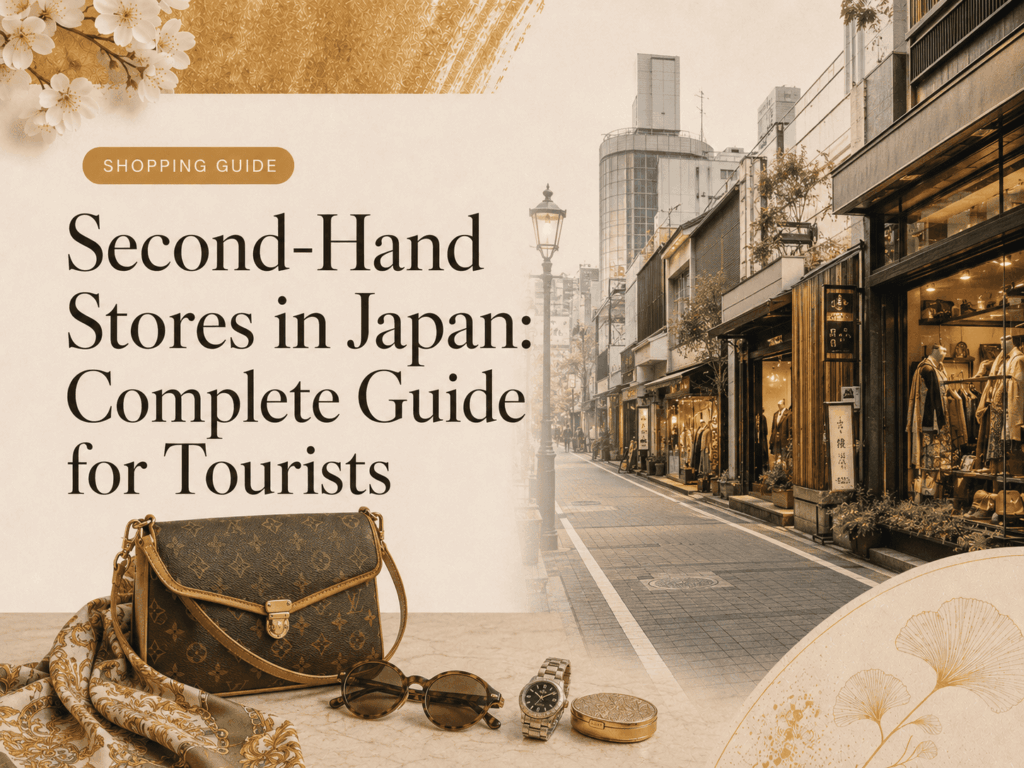
Japan is one of the most rewarding countries in the world for travelers who enjoy second-hand shopping. A single trip can include carefully selected vintage clothing, pre-owned luxury bags, used watches, cameras, books, home goods, streetwear, jewelry, and small accessories. For many visitors, the challenge is not whether Japan has enough second-hand stores. The challenge is understanding what kind of store you are looking at, what each type of shop is useful for, and how to plan a realistic route without wasting precious travel time.
This guide is the main JVG starting point for second-hand stores in Japan. Use it if you are planning a first trip, comparing Tokyo and Osaka, looking for vintage fashion, researching used luxury goods, or simply trying to understand how Japanese resale culture works before you walk into a shop. Japan has many kinds of second-hand businesses, from neighborhood reuse stores to polished designer resale shops and focused watch specialists. The more clearly you understand the differences, the easier it becomes to choose the right areas and avoid rushed decisions.
The short answer is this: second-hand shopping in Japan is best approached as a route-planning exercise. Do not depend on one shop having one exact item. Inventory changes frequently, prices vary by item and condition, and store policies can differ. Instead, choose a category, choose one or two areas, prepare a shortlist, and check official store information before visiting.
Quick Answer: What Counts as a Second-Hand Store in Japan?
In English, travelers often use "second-hand store" as a broad phrase. In Japan, the actual shop types can be more specific. You may see terms such as recycle shop, reuse shop, vintage shop, brand resale shop, used clothing shop, select vintage boutique, pre-owned watch shop, used camera shop, and second-hand book or hobby store. These stores are not all the same.
A second-hand store in Japan may sell everyday used goods, clothing, luxury items, electronics, books, furniture, cameras, watches, or accessories. Some shops feel casual and bargain-oriented. Others feel closer to a luxury boutique. A store can be excellent for browsing but not ideal for a specific high-value purchase. Another store may be focused on a narrow category such as watches or designer bags, making it more useful for comparison shopping.
For travelers, the most practical way to think about second-hand stores in Japan is by shopping purpose:
- If you want casual browsing, look at reuse shops, used clothing stores, and neighborhood second-hand chains.
- If you want vintage fashion, focus on areas known for clothing and street style.
- If you want luxury bags, watches, or jewelry, use brand resale and specialist shops, and compare condition carefully.
- If you want used cameras or electronics, choose shops that clearly focus on that category and check official information before visiting.
- If you have limited time, choose one area with several shop types rather than crossing the city for isolated stops.
Why Japan Is Strong for Second-Hand Shopping
Japan has a deep culture of taking care of possessions, and the resale market reflects that. Many items are presented carefully, with visible attention to condition, packaging, and display. This does not mean every item is perfect or every purchase is simple. It means that travelers can often compare many options in an organized shopping environment, especially in major cities.
Another reason Japan is useful for second-hand shopping is density. In Tokyo, Osaka, Kyoto, Nagoya, Fukuoka, Sapporo, and other cities, travelers can often build routes around train stations or shopping districts. That matters because second-hand shopping is not only about finding a store. It is about comparing enough stores to understand condition, price, style, and route convenience.
The Japanese market is also broad. A visitor who starts with vintage clothing may discover designer resale. A watch collector may combine Ginza, Nakano, and Shinjuku. A traveler looking for bags may compare Ginza, Omotesando, Shibuya, and Osaka. The range is part of the appeal, but it also makes planning important.
Main Types of Second-Hand Stores in Japan
Reuse Shops
Reuse shops are a major part of Japan's second-hand landscape. They may carry clothing, bags, home goods, hobby items, electronics, books, furniture, or mixed categories depending on the chain and location. Some are large and practical. Others are more compact and category-focused.
For tourists, reuse shops are useful because they show the everyday side of Japanese resale culture. They can be good for casual browsing, affordable finds, and understanding how used goods are organized in Japan. However, a reuse shop is not always the same as a curated vintage boutique. If your goal is a specific designer bag, watch reference, or rare vintage clothing piece, you may need a more specialized shop.
When visiting reuse shops, check current store information before you go. Chain names and store formats can be familiar, but each branch may differ in layout, category mix, and available items.
Vintage Shops
Vintage shops usually focus on clothing, accessories, fashion subcultures, designer pieces, or curated second-hand items. Some shops specialize in American vintage, European vintage, Japanese designer clothing, streetwear, military clothing, denim, or luxury fashion. The atmosphere can be very different from a large reuse chain.
Vintage shops are often best for travelers who want style, story, and curation. They can be especially rewarding in areas such as Shibuya, Harajuku, Omotesando, Koenji, Shimokitazawa, Daikanyama, and parts of Osaka or Kyoto. The tradeoff is that prices, sizes, and stock can vary widely. A vintage shop may be perfect for browsing even if it does not have the exact piece you imagined.
Brand Resale and Used Luxury Shops
Brand resale shops focus on pre-owned luxury goods such as bags, wallets, watches, jewelry, and accessories. Some shops have a polished boutique feel. Others operate as broader resale stores with multiple categories. These shops are important for travelers researching used luxury bags in Japan, especially in areas like Ginza, Omotesando, Shinjuku, Shibuya, Shinsaibashi, and Umeda.
For high-value items, avoid making a decision based only on brand name. Compare condition, accessories, visible wear, store policy, price, and your own comfort level. If a store provides information about inspection, warranty, returns, tax-free shopping, or accessories, read the details carefully and confirm anything important before buying. Do not assume that policies are identical across stores.
Pre-Owned Watch Shops
Used and vintage watch shopping in Japan can be excellent, but it requires patience. Watches involve small details that matter: case condition, bracelet stretch, dial condition, service history, accessories, warranty terms, movement condition, and whether the watch fits your wrist and your expectations. Tokyo areas such as Ginza, Nakano, Shinjuku, and Ueno are especially relevant for watch-focused routes.
A traveler should not build a watch route around one expected model unless the shop has confirmed current availability. Instead, prepare a range of references, condition expectations, and questions. For more detail, see JVG's vintage watch shops in Tokyo and guide to buying pre-owned watches in Japan.
Used Camera and Electronics Shops
Japan is also known among travelers for used cameras, lenses, audio equipment, hobby electronics, and related gear. This category can be very rewarding, but it is also technical. Check compatibility, condition, language settings, included accessories, battery health, lens haze or fungus, shutter count where relevant, and whether returns or support are available for visitors. Store policies can vary, so official store information matters.
Books, Records, Toys, Hobby Goods, and Home Goods
Second-hand shopping in Japan is not limited to fashion. Many travelers enjoy used books, records, anime goods, toys, instruments, furniture, ceramics, and homeware. These categories are often less predictable but can be fun when you have time to browse. If you are flying internationally, consider luggage space, weight, fragility, and customs rules in your home country.
What Tourists Can Realistically Buy
The best items for tourists are usually items that are portable, easy to inspect, and not too difficult to bring home. Clothing, bags, wallets, watches, jewelry, small accessories, cameras, lenses, records, and small home goods are common categories. Larger furniture, fragile ceramics, and bulky electronics may be harder unless you have a shipping plan.
For fashion shoppers, Japan can be strong for jackets, denim, shirts, outerwear, streetwear, designer pieces, leather goods, and accessories. Sizes may differ from your home country, so try items on when possible and check measurements instead of relying only on labels.
For luxury shoppers, bags and wallets are popular because they are portable and easy to compare visually. Still, condition details matter. Corners, handles, hardware, interior, odor, zipper movement, strap comfort, and included accessories can affect your decision.
For watch shoppers, portability is an advantage, but the evaluation process is more complex. Take time to compare the watch on your wrist, read any documents provided, and ask about service or warranty terms without assuming that every shop offers the same policy.
Price, Condition, and Inventory: How to Think About Them
Second-hand shopping is different from buying new goods. Price is connected to condition, category, demand, accessories, store type, and timing. Two similar-looking items may be priced differently because of wear, age, color, size, accessories, repairs, material, popularity, or other details. A low price is not automatically a bargain, and a high price is not automatically unreasonable.
Condition is the most important thing to slow down for. Check visible wear in natural light if possible. For clothing, look at seams, stains, lining, buttons, zippers, fabric thinning, odors, and alterations. For bags, check corners, glazing, stitching, handles, interior, hardware, strap length, and smell. For watches, look at case shape, bracelet, dial, crystal, bezel, movement information, accessories, and service notes if available. For cameras, inspect the lens, viewfinder, buttons, shutter, battery compartment, screen, mount, and included accessories.
Inventory changes frequently. A shop that appeared in a guide or social post may not have the same item when you arrive. This is why JVG recommends building a shortlist of areas and shop types, not a fantasy route around a single product. Before visiting, check the official website, map, and current store information where available.
How to Shop If You Do Not Speak Japanese
You can still shop second-hand in Japan without speaking Japanese, but preparation helps. Save shop names and addresses in your map app. Keep the Japanese store name if available. Use translation apps for product descriptions, condition notes, and policy signs. Prepare simple phrases or translated questions before you enter the shop.
Useful questions include:
- May I check the condition?
- Are there any visible flaws I should know about?
- Does this item come with accessories?
- Can I try this on?
- May I take a photo?
- What payment methods are accepted?
- Is tax-free shopping available at this store?
- What is the return or exchange policy?
- Is shipping available?
Ask politely and accept that staff may not be able to answer every question in English. When the answer matters to your purchase, use a translation app and confirm slowly. Do not rely on assumptions.
For a deeper language-focused guide, see how to shop second-hand in Japan without speaking Japanese.
Planning a Second-Hand Shopping Route in Japan
A good route starts with category and area. Choose your priority first: vintage clothing, luxury bags, watches, general second-hand, cameras, or casual browsing. Then choose one or two areas that match that goal.
For first-time visitors in Tokyo, start with a broad city guide such as the Tokyo vintage shopping guide. If you want polished luxury resale, Ginza and Omotesando may be useful. If you want youth fashion and vintage style, Shibuya, Harajuku, Koenji, and Shimokitazawa may be stronger. If you want watches, Ginza, Nakano, and Shinjuku deserve attention. If you want a more general route, Shinjuku, Ueno, Ikebukuro, or regional station areas can be practical.
For Osaka, start with the Osaka vintage shopping itinerary. Shinsaibashi, Namba, and Umeda can serve different roles in a shopping day. For Kyoto, use the Kyoto second-hand shopping guide and keep the route realistic around sightseeing.
Do not plan too many shops in one day. Second-hand shopping takes mental energy because every item requires evaluation. A focused half-day route with three to five shops can be more useful than a long list that leaves no time to compare.
How to Choose the Right Store Type for Your Trip
The most common mistake is starting with a shop name instead of a shopping purpose. A famous store is not always the right store for your trip. Before you choose where to go, decide which of these traveler types sounds closest to you.
First-Time Visitors
If this is your first time shopping second-hand in Japan, choose a central area with several shop types and easy transport. Tokyo, Osaka, and Kyoto are easier than a complicated suburban route. You do not need the most obscure shop on your first day. You need a route that helps you understand how Japanese second-hand stores present items, prices, and condition.
A first-time route should include a broad guide, one or two focused shops, and time to compare. It should also include a pause before buying anything expensive. Many travelers make better decisions after they have seen three or four stores.
Category-Focused Shoppers
If you already know your category, let that category control the route. Vintage bags, watches, cameras, designer fashion, and casual used clothing do not belong to the same perfect route. A bag shopper may need Ginza, Omotesando, or Shibuya. A watch shopper may need Ginza, Nakano, Shinjuku, or Ueno. A clothing shopper may prefer Harajuku, Koenji, Shimokitazawa, or Kichijoji.
This is where JVG's category guides become useful. Start with the broad second-hand overview, then move into the category article that matches your goal. This keeps the day focused and prevents unnecessary travel across the city.
Bargain Hunters
If your main goal is price, keep expectations flexible. Bargain hunting works best when you are open to different brands, sizes, and categories. Do not build the route around one exact item. Instead, choose areas with several second-hand options and give yourself time to browse.
Remember that cheap is not always better. A low price can reflect condition issues, missing parts, awkward sizing, or simply a category that is less in demand. Inspect carefully before buying.
High-Value Buyers
If you are considering a luxury bag, watch, jewelry item, or camera, slow down. Your route should include fewer shops and more time per shop. You need space to ask questions, check condition, compare similar items, and understand store policy. A high-value shopping day should never feel like a race.
For these purchases, plan the route around confidence rather than quantity. It is better to compare three relevant shops carefully than to visit eight shops too quickly.
Common Mistakes to Avoid
Second-hand shopping in Japan is enjoyable, but a few mistakes can make the day harder than it needs to be.
The first mistake is overloading the route. Tokyo looks efficient on a map, but station transfers, building floors, crowds, weather, and decision time all add up. A route that looks easy online can feel tiring in person.
The second mistake is assuming every shop in the same chain is the same. Branches can differ by location, category, size, and customer base. Always check the exact store, not only the brand name.
The third mistake is treating social media stock as current stock. A post, photo, or older article can help you understand a shop's style, but it cannot promise what will be available when you arrive.
The fourth mistake is buying before comparing. This is especially common with luxury goods and watches. If an item looks exciting, step away for a few minutes. Compare condition, price, accessories, and your own feelings after the first excitement passes.
The fifth mistake is forgetting practical travel details. Think about luggage space, weather, restaurant reservations, train timing, and whether you want to carry purchases for the rest of the day.
A Simple JVG Planning Framework
Use this framework before any second-hand shopping day in Japan.
First, choose one main category. Second, choose one main area. Third, prepare three to five shop options. Fourth, add one related guide or how-to article for practical questions. Fifth, check official store information before leaving.
For example, a Tokyo bag shopper might start with the Tokyo vintage shopping overview, then read the vintage bag guide, then shortlist Ginza and Omotesando. A watch shopper might start with the Tokyo watch guide, then compare Ginza and Nakano. A clothing shopper might start with the Tokyo vintage fashion guide, then choose Shibuya and Harajuku or Koenji and Shimokitazawa.
This framework keeps the route flexible. It also makes internal links useful: each JVG article should help the reader move from broad research to a focused shopping plan.
Related JVG Guides
Use these related JVG guides to continue planning around the same area, category, or shop type:
- second-hand stores in Ginza - A central Tokyo second-hand shopping cluster.
- second-hand stores in Sapporo - A regional Japan second-hand shopping cluster.
- second-hand stores in Ueno - A compact Tokyo route around Ueno and Okachimachi.
- 2nd STREET Japan guide - Helpful for chain reuse-shop search intent.
- reuse shops in Japan - Use this to understand Japan-specific shop types.
- second-hand shopping tips for international visitors - Use this before visiting shops in person.
- second-hand stores in Nagoya - Compare Osu, Sakae, and Meieki for a Nagoya shopping day.
- second-hand stores in Yokohama - Plan around Yokohama Station and Motomachi.
- second-hand stores in Osaka - Choose between Shinsaibashi, Namba, and Umeda.
- second-hand stores in Fukuoka - Compare Tenjin, Daimyo, and Hakata before building a route.
- Japanese second-hand shopping terms - Review useful words before visiting shops in Japan.
Need help planning your vintage shopping route in Japan? Contact JVG for private shopping support.
Shopping Support: /shopping-support/
- second-hand stores in Kobe - Compare shopping areas in Kobe before building a route.
- second-hand stores in Hiroshima - Plan a central Hiroshima second-hand shopping day.
FAQ
Are second-hand stores in Japan good for tourists?
Yes, they can be very useful for tourists, especially if you plan by category and area. The key is to check official information before visiting and avoid depending on one store for one exact item.
Are Japanese second-hand stores the same as thrift stores?
Not always. Some stores feel similar to thrift stores, while others are curated vintage shops, reuse chains, or luxury resale boutiques. The English word "thrift" is useful, but the Japanese market has several different store types.
Can I buy luxury goods second-hand in Japan?
Yes, many travelers research used luxury bags, watches, jewelry, and accessories in Japan. For high-value items, compare condition, accessories, store policy, and official information carefully before buying.
Is tax-free shopping available at second-hand stores in Japan?
It may be available at some stores, but it should not be assumed. Check the official store information and ask staff before making a purchase decision.
Should I visit one shop or several shops?
Several shops are usually better for comparison. A focused route of three to five relevant shops in one area is often more useful than visiting one isolated store or rushing across the city.
Continue the shopping journey