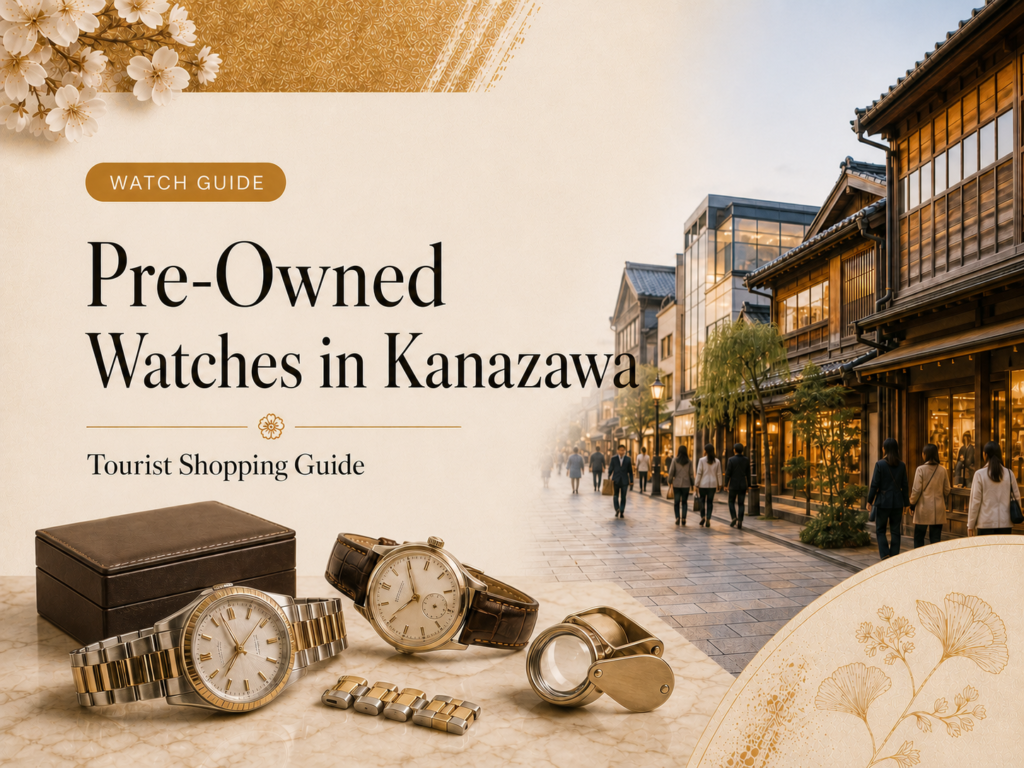
Kanazawa can be a practical place to research pre-owned watches when the route is built around a clear central cluster. The useful question is not how many shops exist across the entire city. It is which two or three stops let an international visitor compare the right products without losing the day to transport.
This guide explains where to begin, how the main areas differ, what to compare, and how to plan a half-day or one-day route. Watch shoppers should compare reference details, fit, visible condition, operation information, service notes, accessories, and written shop terms. Current inventory, prices, opening hours, tax-free procedures, language support, returns, warranties, and other services are not promised here. Check official shop information before visiting.
Instagram DM
Not sure which shops to visit?
Quick Answer for Tourists
Start in the most central district named in this guide and choose one primary shop plus one nearby comparison. Add a third stop only when it offers a different store format or answers a specific product question. Save addresses and building names before leaving your hotel, because station exits and upper-floor locations can consume more time than expected.
If one exact brand, reference, material, size, or design is essential, check current official listings or contact the shop. Second-hand inventory changes as items are sold and new pieces arrive. A useful route therefore needs alternatives, not a promise that one item will remain available.
JVG Editorial View
Kanazawa offers a smaller, more selective resale route than Japan's largest cities. JVG recommends treating the station and central-city options as separate anchors, then deciding whether the category depth justifies an additional trip. This keeps shopping compatible with a sightseeing-heavy visit.
For pre-owned watches, this means separating research from decision-making. The first shop establishes a reference for item details and store format. The second tests that reference. The final stop should fill a clear gap, not simply increase the count. This article has a category-specific role and links back to broader Kanazawa and Japan guides for travelers who want other types of second-hand shopping.
How the Main Shopping Areas Differ
Kanazawa Station for a Convenient First Stop
Kanazawa Station is the easiest reference for visitors arriving by rail. A station-area resale stop can work before hotel check-in or departure, but luggage and building navigation should be considered. Confirm the current tenant information before relying on one commercial complex.
Central Kanazawa for a Dedicated Visit
A central-city shop can fit a separate shopping session between sightseeing plans. Kanazawa's attractions are spread across several areas, so the route should be built around transport and the day's cultural itinerary rather than assuming a Tokyo-style retail cluster.
Wider Reuse Stores as Optional Research Stops
Broader reuse stores may be useful for general browsing, but they require a separate category and transport check. They are most practical for travelers staying nearby or using local transport confidently.
These area roles are planning guidance, not permanent rankings. Shops can move, branch formats can change, and construction or weather may affect access. Confirm official addresses and check the map before visiting.
Making Kanazawa Work for a Category-Focused Trip
Kanazawa is better approached as a selective stop within a cultural itinerary than as a substitute for Tokyo or Osaka category depth. The station area can answer a convenient first question, while a central-city store can provide a second reference. If those options do not produce a suitable comparison, preserve the rest of the sightseeing day and continue the search in another city. The article's value is in showing how to check the available local route without overpromising what a smaller market will contain.
Build a Watch Comparison Sheet
Record the reference information supplied, asking price, visible condition, wrist fit, bracelet or strap details, included accessories, operational or service information, and shop terms. Use the same fields for every watch. A consistent record is more reliable than remembering which display felt most impressive.
Separate Essential Details From Preferences
Essential details might include case size, fit, reference, condition threshold, and information you need before buying. Preferences might include dial color, box, or a particular production period. Keeping the two groups separate helps when regional inventory is limited and prevents an attractive but unsuitable watch from replacing the original goal.
Think Beyond the Day of Purchase
Consider how the watch will travel, whether supplied links and accessories are organized, and what service or warranty information you have in writing. Do not assume future maintenance, water resistance, repair access, or overseas support. The purchase should still make sense after the Japan itinerary ends.
What to Compare When Buying a Pre-Owned Watch
Reference, Size, and Fit
Confirm the model or reference information provided for the individual watch. Case dimensions do not tell the whole fit story; lug shape, bracelet length, strap material, and wrist size also matter. Try the watch on when permitted and ask whether all displayed bracelet links or strap components are included.
Case, Dial, Hands, Crystal, and Bracelet
Inspect visible surfaces in normal light within the shop's rules. Look for wear, dents, scratches, refinishing, discoloration, and bracelet stretch where relevant. Ask staff to explain any note you do not understand. Photos are useful for shortlisting, but they should not replace an in-person comparison.
Operation and Service Information
Ask what operational checks or service information the shop provides for that watch. Do not assume a service history, accuracy level, water resistance, battery condition, or future maintenance interval unless it is stated. The important question is not whether the watch appears to run during a brief visit, but what information supports the purchase.
Accessories and Shop Terms
Boxes, papers, manuals, tags, extra links, service documents, and other accessories vary by item. Confirm exactly what is included. Warranty, repair, return, and after-sales terms also vary by seller and purchase, so ask for the current written terms before payment.
Price and Long-Term Practicality
Compare price with condition, reference, accessories, fit, service information, and likely use. Exchange rates and card fees may change the effective cost. A watch that fits your wrist and expectations may be a better travel purchase than a more famous reference that creates unanswered questions.
When to Slow Down or Walk Away
Pause when the reference information, fit, visible condition, operation notes, service history, included links, or shop terms are unclear. A running display watch does not answer every technical question, and travel deadlines can make uncertainty feel smaller than it is. Ask staff to explain the written information and compare it with your checklist. Revisit the strongest option only after checking the details that originally mattered to you. If an essential detail cannot be confirmed to your satisfaction, continue the search. A useful watch-shopping day can end with better knowledge rather than a purchase.
Price, Condition, and Inventory
Second-hand price differences can reflect condition, specifications, demand, included items, store format, and other factors. Compare the complete purchase rather than treating the lowest displayed number as the only measure of value. Record the item reference or description, visible condition, accessories, total price, and any terms explained by staff.
Inventory changes frequently. An official category page can show that a shop is relevant, but it cannot guarantee what will be available when you arrive. Build the route with a first choice and a nearby alternative. If a shop does not have the category you expected, use that information to refine the next stop instead of crossing the city immediately.
Suggested Shopping Route
Half-Day Route
Choose either the station area or central Kanazawa as the main anchor. Compare two relevant stores and leave time for a return visit. Do not add a wider branch unless official category information supports the detour.
Use the first stop to set a comparison standard. At the second, ask the same questions and note what differs. Take a short break before the final decision so that excitement, fatigue, and travel pressure do not replace item-level checks.
One-Day Route
Integrate one station-area stop with arrival or departure, and use a separate central session around sightseeing. A full day does not need to be entirely devoted to resale shopping to produce a useful comparison.
Divide the day into a morning research phase and an afternoon decision phase. Leave enough time to revisit a preferred item. A one-day route should create a better comparison, not merely a longer list.
Route Rules That Save Time
- Save each priority shop's official map pin and building name.
- Check station exits and do not assume nearby district names mean an easy walk.
- Keep one nearby backup for every specialist or category-focused stop.
- Avoid carrying large luggage through the route when possible.
- Add a distant branch only when its current category has been confirmed.
- Leave time to review item details before payment.
Best For Breakdown
Best for First-Time Pre-Owned Watch Buyers
- Begin with a specialist or clearly watch-focused stop and write down the same questions for every comparison.
- Check current official information before making a special journey.
- Keep the comparison focused on the individual item or category.
Best for Collectors Comparing References
- Prioritize reference details, condition, included accessories, fit, and service information over the number of stores visited.
- Check current official information before making a special journey.
- Keep the comparison focused on the individual item or category.
Best for Luxury Shoppers With Mixed Interests
- Pair one watch-focused shop with one multi-category reseller when bags or jewelry are also relevant.
- Check current official information before making a special journey.
- Keep the comparison focused on the individual item or category.
Best for Buyers With Limited Time
- Use the most central Kanazawa cluster and reserve enough time to return to the strongest option.
- Check current official information before making a special journey.
- Keep the comparison focused on the individual item or category.
JVG Shop Selection Notes
The shops below give travelers different ways to approach pre-owned watches in Kanazawa. They are not ranked, and inclusion does not confirm current inventory or visitor services. Use them as a route shortlist, then check the official website and map before visiting.
BRAND OFF Kanazawa Main Store
- Area: Kanazawa
- Best for: Watches within luxury resale
- Why it fits this guide: Its listed watch and luxury categories make it a relevant central-city comparison.
- Before visiting: Check the official website and map before visiting. Confirm current categories, inventory, hours, and purchase terms directly.
BRAND OFF Kanazawa Forus Store
- Area: Kanazawa
- Best for: Station-area watch and luxury research
- Why it fits this guide: It gives rail travelers a convenient second luxury-resale reference.
- Before visiting: Check the official website and map before visiting. Confirm current categories, inventory, hours, and purchase terms directly.
2nd STREET Kanazawa
- Area: Kanazawa
- Best for: Broader reuse comparison
- Why it fits this guide: It provides a general second-hand alternative, although watch availability should be checked.
- Before visiting: Check the official website and map before visiting. Confirm current categories, inventory, hours, and purchase terms directly.
How to Compare These Shops
Compare Their Role in the Route
Identify whether each stop is a specialist, multi-category luxury reseller, fashion-led shop, or general reuse store. A specialist may answer detailed product questions, while a broader store may help compare categories or price ranges. The best sequence depends on what information you need first.
Use the Same Item Checklist
Write down the details that matter before entering the first shop and use the same checklist at every stop. Consistent questions make differences easier to understand. Do not transfer one shop's grading language, service terms, or product descriptions to another shop.
Compare the Cost of the Route
Transport, time, weather, crowds, and the effort of carrying purchases all affect the shopping day. A distant store may be worthwhile for a specialist category, but it is less useful when it repeats the same format as a central option. Route efficiency creates more time for careful decisions.
Confirm Purchase Terms Before Payment
Payment methods, tax-free procedures, returns, warranties, repairs, shipping, and other services vary. Ask the current shop about the individual purchase and make sure you understand the written terms. Bring your passport if you plan to ask about tax-free shopping, but do not assume every shop or item qualifies.
Shopping Without Speaking Japanese
You do not need fluent Japanese to prepare a useful comparison. Save the shop name, item photo or reference, size or measurement, and a short list of questions. Show the item tag when asking for clarification. Translation apps can support simple communication, but important numbers and purchase terms should be confirmed directly.
Useful questions include:
- "Can I check the condition?"
- "What is included with this item?"
- "Could you explain this note?"
- "May I try this on?"
- "What are the purchase and return terms?"
- "Is tax-free shopping possible for this purchase?"
English support can vary by shop, staff member, and time. Prepare to use short questions and written references rather than assuming language service from the shop name or neighborhood.
What to Check Before Visiting
- Check the official website and map before visiting.
- Confirm that the branch currently handles the category you want.
- Save the shop and building names in Japanese when available.
- Remember that inventory and prices change frequently.
- Prepare sizes, measurements, references, or product photos.
- Ask directly about payment, tax-free procedures, returns, warranties, repairs, and shipping.
- Confirm important item details and included accessories before payment.
Related JVG Guides
- vintage watches in Japan
- how to buy pre-owned watches in Japan
- pre-owned and vintage watch shops in Tokyo
- second-hand shops near Kanazawa Station
- used luxury bags in Kanazawa
- second-hand stores in Japan
- shopping tips for international visitors
- how to shop second-hand in Japan without speaking Japanese
Planning Support
If you are planning a focused second-hand shopping day in Japan, JVG can help you organize areas, shop types, and realistic routes. If you are looking for a specific category, plan the route before visiting so each stop has a clear purpose.
Need help planning your vintage shopping route in Japan? Contact JVG for private shopping support.
Shopping Support: /shopping-support/
FAQ
Is Kanazawa a useful place to buy a pre-owned watch?
Kanazawa can be useful when you combine a watch-focused stop with one or two broader luxury resellers. The right route depends on the reference, budget, and amount of technical comparison you need.
Can I expect a specific watch to be in stock?
No. Inventory changes frequently. Check current official listings or contact the shop when one reference, size, dial, or configuration is essential.
What condition details should I compare?
Compare the case, dial, hands, crystal, bracelet or strap, fit, operation information, service notes, and included accessories. Ask the shop to explain its own condition wording.
Are warranty or return terms the same at every shop?
No. Warranty, repair, return, and service terms can vary by shop and item. Confirm the current written terms before payment rather than assuming one seller's policy applies elsewhere.
Should I visit a specialist first?
A specialist can provide a useful reference for model and condition questions. A broader reseller can then help you compare store format, availability, and related luxury categories.
Continue the shopping journey